
Bread Pudding
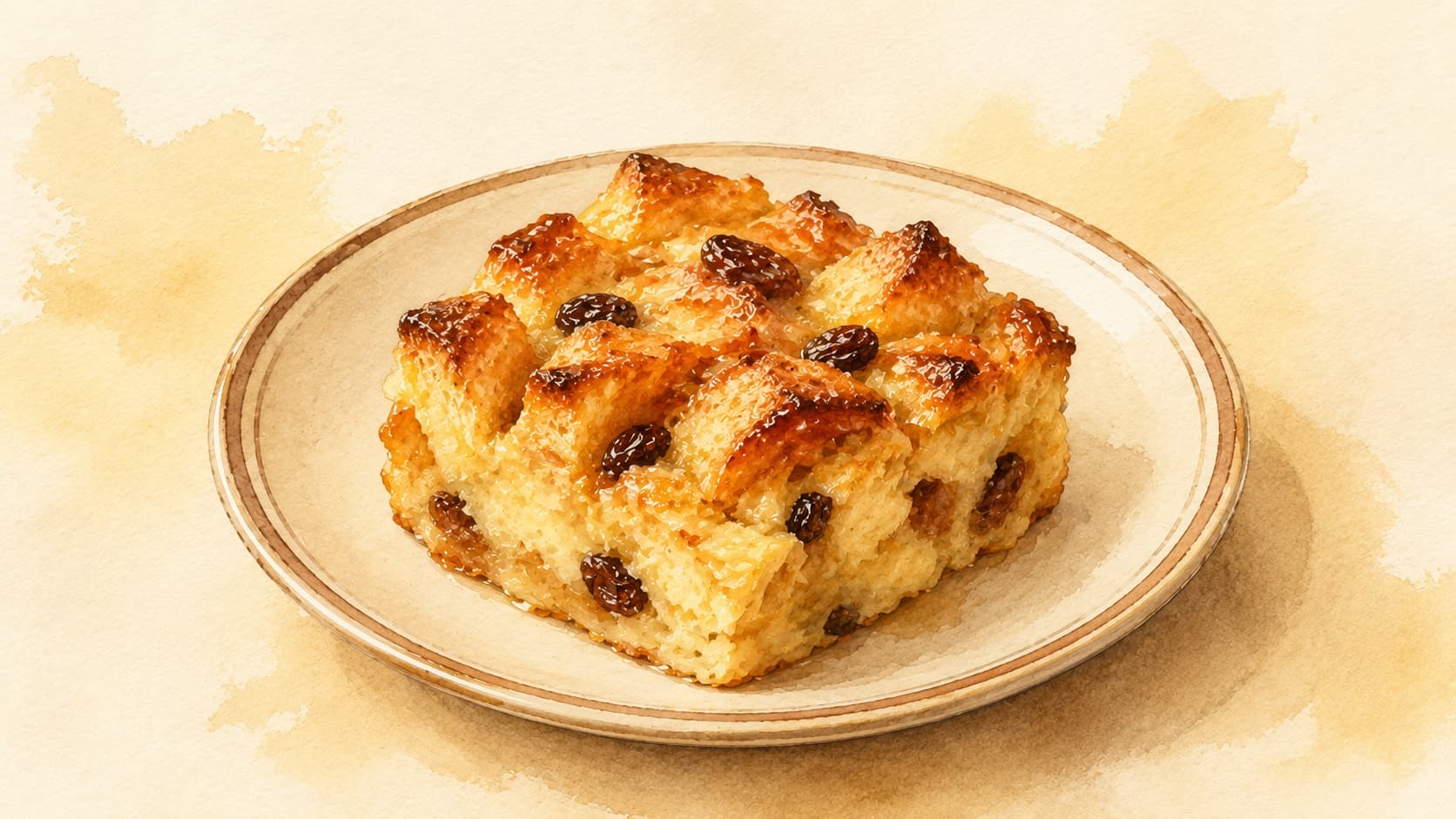
Bread pudding made from stale bread soaked in a custard mixture of eggs, milk, and sugar, then baked until set and slightly firm.
Contents (5 sections)▾
Ingredients
- 300 g stale bread, torn into pieces
- 500 ml whole milk
- 150 ml heavy cream
- 4 large eggs
- 150 g granulated sugar
- 1 tbsp vanilla extract
- 1/2 tsp ground cinnamon
- 1/4 tsp salt
- 50 g raisins or sultanas (optional)
- butter for greasing
Steps
Preheat your oven to 180°C (350°F). This temperature helps create a nice, golden crust while cooking the custard evenly.
In a large bowl, whisk together the milk, cream, eggs, sugar, vanilla extract, cinnamon, and salt until well combined.
Add the torn bread pieces to the custard mixture, ensuring they are fully submerged. Let it soak for about 10 minutes to absorb the flavors.
If using, fold in the raisins or sultanas into the mixture.
Grease a baking dish with butter, then pour the bread mixture into the dish, spreading it evenly.
Bake in the preheated oven for 45 minutes or until the top is golden and a knife inserted comes out clean.
Allow the pudding to cool slightly before serving. This helps the custard set more firmly.
Why this works
Bread pudding is a classic dessert that transforms stale bread into a delicious treat by soaking it in a rich custard (a cooked mix of eggs and milk that sets soft) made from milk, cream, eggs, and sugar. The key is allowing the bread to soak long enough to absorb the custard without becoming too mushy; typically, 10 minutes is sufficient. If the custard seems too runny before baking, you can add an extra egg to help it set. The combination of sweet, creamy custard and the textural contrast of the bread creates a delightful experience. Should the top brown too quickly, cover it loosely with foil to prevent burning while the center continues to cook through. This dessert is also versatile; feel free to add spices, fruits, or nuts to enhance flavors but be cautious not to overwhelm the base custard too much, as the balance is essential for the perfect pudding.
Common mistakes
Not soaking the bread long enough. Target: Submerge the torn bread fully and let it soak at least 10 minutes — longer (20–30 minutes) for dense or very stale bread — pressing it down so every piece drinks the custard. Why it matters: Bread pudding is bread rehydrated by custard (a cooked mixture of egg, milk, and sugar). Dry pieces that never absorb liquid bake into hard, crunchy lumps in an otherwise soft pudding. The soak is what turns toast back into something tender. What to do: Use stale or lightly dried bread — it's like a sponge, while fresh soft bread turns to mush. Press the bread under the custard and wait until it's saturated and floppy before baking.
Baking too hot, which curdles the custard. Target: A moderate oven around 160–180°C (325–350°F); for the silkiest result, set the dish in a water bath (a roasting pan with hot water reaching halfway up the sides). Why it matters: Custard sets because egg proteins unfold and link together (coagulate) as they warm. Too much heat makes them bond too tightly and squeeze out their water, so the custard curdles — grainy, and weeping liquid instead of smooth and set. Gentle, even heat sets it without breaking it. What to do: Keep the oven moderate. A water bath buffers the heat and is the single biggest upgrade for a tender, sliceable pudding rather than a scrambled one.
Pulling it out too late, so it overbakes. Target: Bake until the center is just set with a slight jiggle and a knife inserted off-center comes out mostly clean — not bone-dry. Why it matters: Like any custard, it keeps cooking from residual heat after it leaves the oven (carryover). Baked until completely firm in the oven, it overshoots into dry and rubbery as it cools. A slight wobble in the center now becomes a perfect set in ten minutes. What to do: Start checking early. Look for set edges and a center that wobbles as a single mass (not liquid sloshing underneath), then take it out and let it rest.
Letting the top scorch before the center cooks. Target: An evenly golden, set top over a fully cooked interior. Why it matters: Sugar and the milk's proteins brown on the exposed surface (the Maillard reaction and caramelization — the same browning that makes toast and crust taste good). A thick pudding can darken on top well before the middle is done, leaving a burnt crust over a raw center. What to do: If the top is browning too fast, lay a sheet of foil loosely over it and keep baking until the center sets. Remove the foil for the last few minutes if you want more color.
What to look for
- Soaked bread, before baking: the pieces are floppy and saturated, with custard pooling only slightly around them — fully soaked. Dry edges sticking up or a deep pool of unabsorbed liquid means it needs more soaking time.
- The custard as it sets: the surface puffs gently and the center jiggles as one soft mass — nearly done. Liquid sloshing loosely under the surface means it's still raw inside.
- Doneness: a knife slipped off-center comes out clean or with just a moist crumb, not wet batter — set through. Wet, runny custard on the blade means more time.
- The top: evenly golden brown and slightly crisp at the edges — baked right. Dark brown or blackened spots mean it browned faster than the inside cooked.
A note on history
Bread pudding began as a frugal solution to a daily problem: cooks in 11th- and 12th-century England soaked stale, leftover bread in water to keep it from being wasted, sweetening it with sugar and spice if they had any (Tasting Table; Food Republic). By the 13th century the dish had earned the nickname "poor man's pudding," and the later addition of milk, eggs, and butter is what turned the humble soak into the richer baked custard we know now (Food Republic). A recognizable recipe appeared in print in 1728 in Eliza Smith's The Compleat Housewife (Tasting Table).
Get the essays in your inbox — free
Weekly notes on flavor, fermentation, and food history — the writing behind the Atlas of Flavor. No spam; unsubscribe anytime.