
Banana Bread
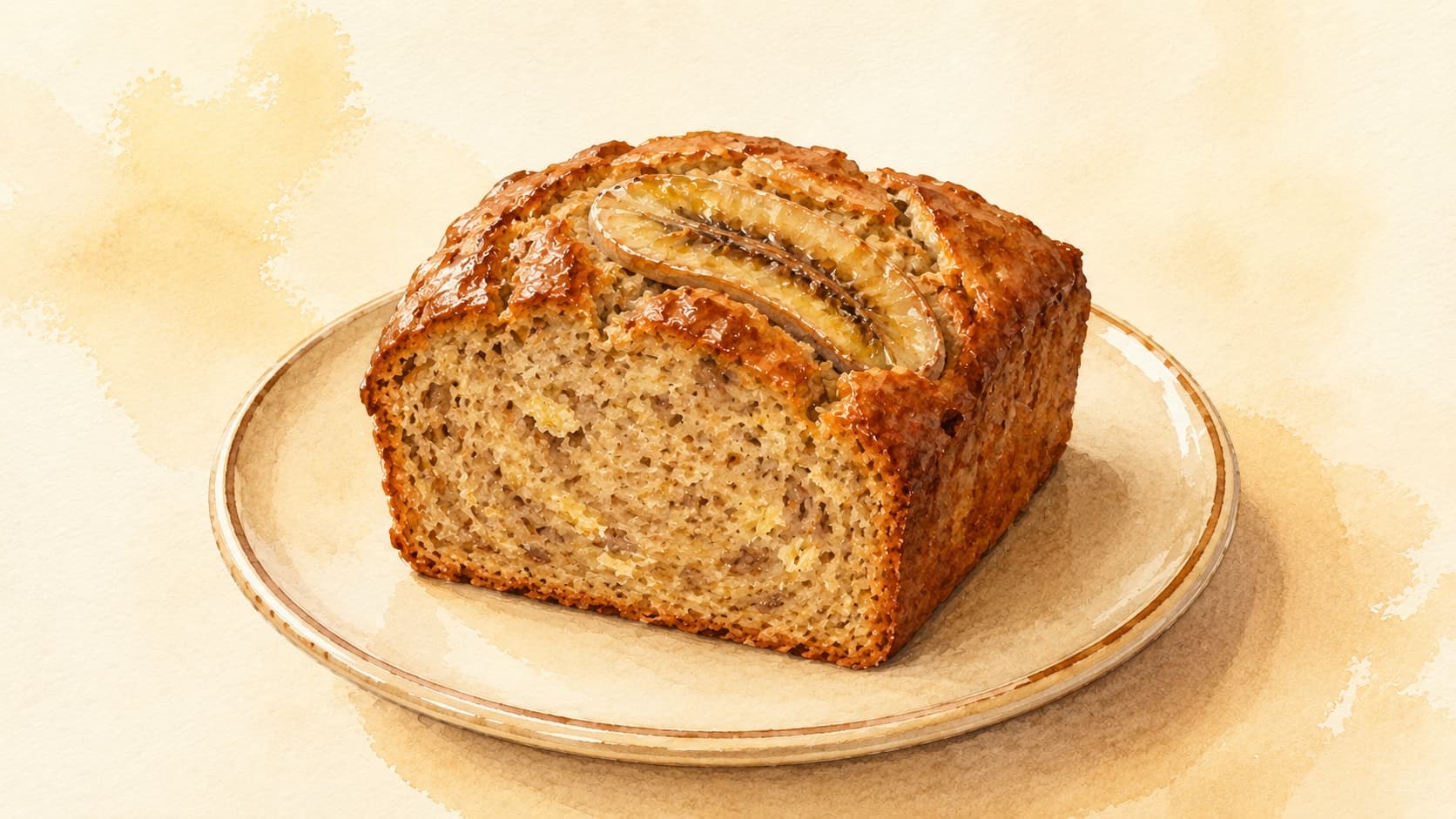
This classic banana bread recipe transforms overripe bananas into a moist and flavorful treat.
Contents (5 sections)▾
Ingredients
- 3 ripe bananas, mashed
- 75 g unsalted butter, melted
- 150 g granulated sugar
- 1 large egg, beaten
- 5 ml vanilla extract
- 200 g all-purpose flour
- 5 g baking soda
- a pinch of salt
Steps
Preheat your oven to 175°C (350°F). This ensures even baking and helps the bread rise properly.
In a mixing bowl, combine the mashed bananas and melted butter until well mixed.
Add the sugar, beaten egg, and vanilla extract to the banana mixture, stirring until combined.
In a separate bowl, whisk together flour, baking soda, and salt.
Gradually add the dry ingredients to the wet ingredients, stirring just until combined to avoid overmixing.
Pour the batter into a greased loaf pan, smoothing the top.
Bake in the preheated oven for 60 minutes or until a toothpick inserted in the center comes out clean.
Let the banana bread cool in the pan for 10 minutes before transferring it to a wire rack.
Why this works
Banana bread is an excellent way to utilize overripe bananas, which are sweeter and more flavorful. The key to a successful banana bread lies in balancing moisture and structure, where the bananas provide natural sugars and moisture, while the flour creates a sturdy loaf. The butter adds richness, while the baking soda serves as a leavening agent, reacting with the acidity in the bananas to create air pockets that help the bread rise. If the batter seems too thick, you can add a splash of milk to achieve the desired consistency. Conversely, if the bread is too dense, ensure you didn't overmix the batter, as this can lead to a tough texture. Using a loaf pan allows for even cooking, but be cautious not to overbake, as this can result in a dry loaf. Remember, the ideal banana bread should be moist with a slightly golden crust, making it a perfect treat for breakfast or dessert.
Common mistakes
Overmixing once the flour goes in.
Target: Stir only until no dry streaks remain — a few lumps are fine.
Why it matters: Flour develops gluten (the stretchy protein network that makes dough chewy) the moment it meets liquid and gets worked. Beating the batter smooth builds too much gluten, giving you a tough, rubbery loaf with long tunnels instead of a tender crumb.
What to do: Fold (gently lift and combine rather than stir hard) the dry into the wet with a few gentle strokes and stop the instant it comes together.
Using under-ripe bananas.
Target: Heavily speckled to nearly black bananas, soft enough to mash with a fork.
Why it matters: Yellow, firm bananas are starchy and bland — their starch has not yet converted to sugar, so the loaf comes out pale-tasting and less moist. The recipe relies on overripe fruit for both sweetness and aroma.
What to do: Wait until the skins are blotchy and brown. To rush it, bake whole unpeeled bananas at 175°C for about 15 minutes until the skins blacken and the flesh softens, then cool before mashing.
Pulling the loaf out before the center is set.
Target: A skewer in the middle comes out clean or with a few dry crumbs.
Why it matters: Banana bread is dense and wet, so the center lags far behind the edges. Cut too soon and the middle is gummy and raw even when the crust looks done.
What to do: Test with a skewer in the thickest part. If the top is browning too fast but the center is still wet, tent loosely with foil and keep baking.
Slicing while still hot.
Target: Cool in the pan 10 minutes, then finish cooling on a rack before cutting.
Why it matters: The crumb is still setting as it cools; cutting hot bread compresses it into a gummy, dense slice and lets moisture escape as steam, drying the loaf.
What to do: Be patient — the flavor and texture both improve as it rests, and many find it even better the next day.
What to look for
- The mashed bananas: loose, soupy, and fragrant, with few firm lumps. Very ripe fruit mashes almost to a purée.
- The batter after folding: thick, lumpy, and just combined — no pockets of dry flour, no glossy over-beaten smoothness.
- In the oven: the loaf domes and cracks down the center, the top turns deep golden brown, and the kitchen smells sweet. The crack is normal and expected.
- Doneness: a skewer in the middle comes out clean; the loaf has pulled slightly from the sides of the pan and springs back when pressed.
A note on history
Banana bread is an American quick bread that took hold during the 1930s, after the spread of baking soda and baking powder made loaves that rose without yeast practical and popular. One of the first widely circulated recipes appeared in Pillsbury's 1933 cookbook Balanced Recipes, and the dish is often linked to Depression-era thrift, when cooks were reluctant to waste overripe bananas. (Wikipedia, Just A Pinch)
Get the essays in your inbox — free
Weekly notes on flavor, fermentation, and food history — the writing behind the Atlas of Flavor. No spam; unsubscribe anytime.