
Asparagus Vinaigrette
Asparagus Vinaigrette is a sauce made by emulsifying cooked asparagus with vinegar, oil, and seasonings to achieve acidity and flavor balance.
Contents (5 sections)▾
Ingredients
- 500 g asparagus, trimmed
- 60 ml extra-virgin olive oil
- 30 ml white wine vinegar
- 1 tsp Dijon mustard
- 1 clove garlic, minced
- 1 tsp honey
- Salt to taste
- Black pepper to taste
Steps
Bring a pot of salted water to a boil over high heat, approximately 100°C (212°F). Add the trimmed asparagus and blanch for 3-4 minutes until bright green and tender-crisp.
Immediately transfer the asparagus to an ice bath to halt cooking, preserving its color and texture. Let it cool for 5 minutes.
In a bowl, whisk together 60 ml of olive oil, 30 ml of white wine vinegar, 1 tablespoon of Dijon mustard, 1 minced garlic clove, 1 teaspoon of honey, 1/2 teaspoon of salt, and 1/4 teaspoon of black pepper until emulsified.
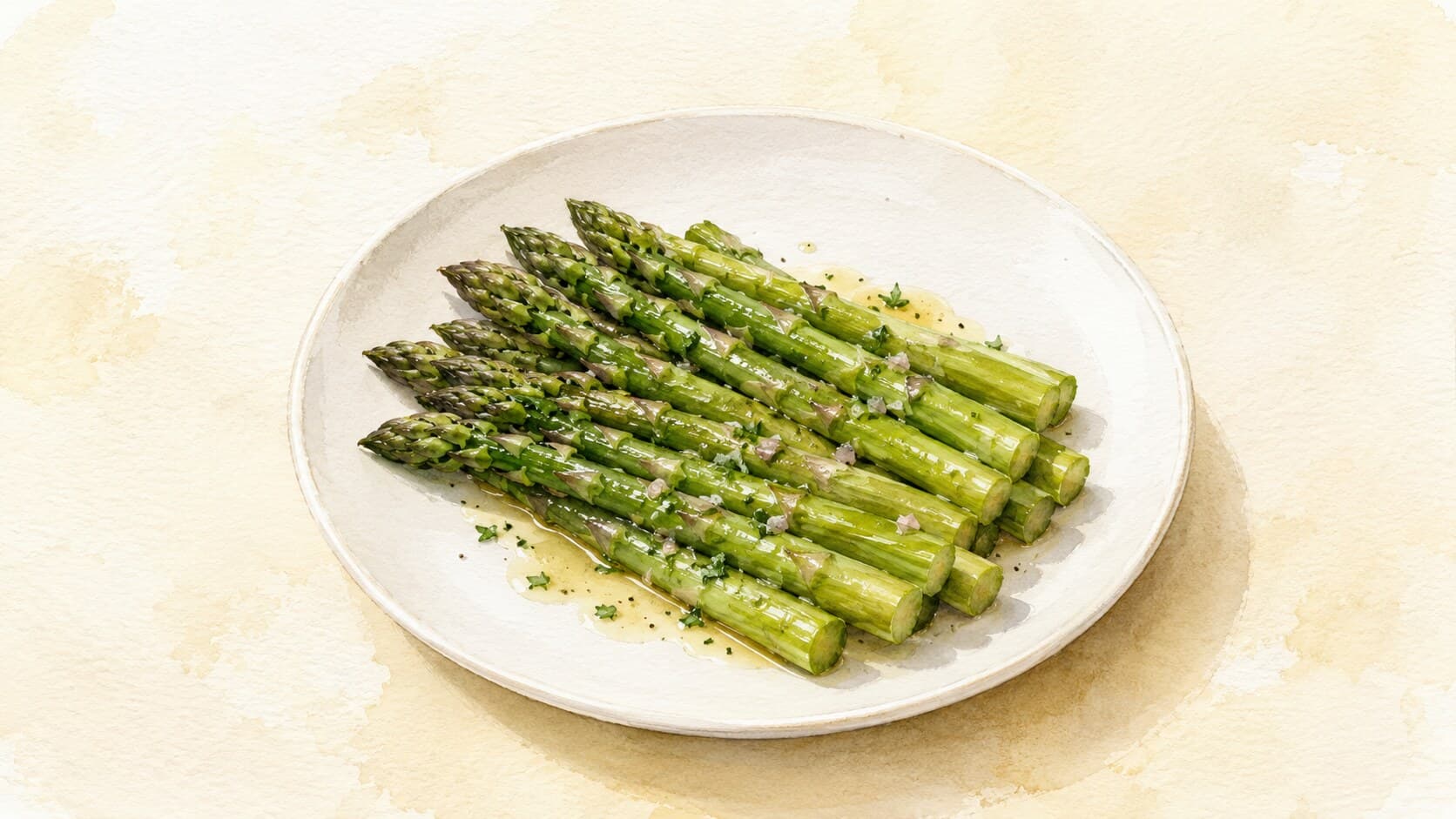
Drain the asparagus and pat dry. Arrange it on a serving plate and drizzle with the vinaigrette just before serving.
Why this works
This asparagus vinaigrette technique balances the fresh, tender crunch of blanched (briefly boiled, then quickly cooled to stop the cooking) asparagus with a tangy dressing that enhances its natural sweetness. Blanching the asparagus in salted water, heated to 100°C (212°F), allows it to cook quickly while retaining its vibrant green color and crisp texture. The ice bath (a bowl of water and ice that rapidly chills the vegetable) is crucial as it stops the cooking process instantly, ensuring the asparagus doesn't become mushy. This vinaigrette combines acidity from the vinegar and brightness from the mustard, creating a harmonious flavor that complements the umami (a savory, mouth-filling depth of taste) of the asparagus. If the dressing seems too thick, whisk in a teaspoon of water to achieve the desired consistency. If the balance of flavors isn't quite right, adjust by adding more honey for sweetness or vinegar for acidity, ensuring the vinaigrette is tailored to your taste preferences. The precise timing of 3-4 minutes for blanching is essential to maintain the asparagus's crispness; overcooking can lead to a loss of texture and flavor.
Common mistakes
Dressing the asparagus while it is still wet.
Target: Spears patted thoroughly dry before the vinaigrette goes on.
Why it matters: Water clinging from the ice bath dilutes the dressing and makes it slide off into a puddle instead of coating the spears. The oil cannot adhere to a wet surface.
What to do: Drain, then roll the asparagus on a clean towel or paper towel until the surface looks matte, not glossy with water. Dress only then.
Overcooking past tender-crisp.
Target: 3-4 minutes in boiling water — a thin spear should bend slightly but not flop.
Why it matters: Asparagus goes from bright and snappy to olive-drab and limp in under a minute. Mushy spears also leak water that thins the dressing.
What to do: Pull the spears at the bright-green, still-firm stage and move them straight to the ice bath. Thicker spears need the full 4 minutes; pencil-thin ones may need only 2.
Skipping or skimping the ice bath.
Target: A genuine ice bath — plenty of ice, not just cold tap water.
Why it matters: Residual heat keeps cooking the spears from the inside (carryover), and a weak bath stops the color from setting. The shock is what locks in the vivid green.
What to do: Set up the ice bath before the water boils so it is ready the instant the asparagus is done.
Dressing too far ahead of serving.
Target: Vinaigrette added just before the plate goes out.
Why it matters: The acid in the dressing slowly dulls the chlorophyll, turning bright green spears khaki and softening their bite.
What to do: Hold the blanched, dried asparagus and the whisked vinaigrette separately, and combine them at the last moment.
What to look for
- Asparagus in the boiling water: the green deepens and turns vivid within the first minute. That brightening is your cue the spears are cooking through.
- Doneness check: a spear bends under its own weight but springs back; a knife tip meets light resistance. Not floppy, not stiff.
- The whisked vinaigrette: cloudy and slightly thickened, with no oil pooling on top. That cloudiness means the mustard has pulled the oil and vinegar into a temporary emulsion (a smooth, stable mix of oil and water-based liquid that would normally separate).
- Dressed and plated: each spear glossy and lightly coated, with only a thin ribbon of dressing on the plate — not sitting in a pool.
A note on history
Serving cool or tepid asparagus napped (lightly coated) with a vinaigrette is a classic of French home cooking, where vinaigrette is treated as a cold sauce for vegetables rather than only a salad dressing. The approach of poaching a vegetable and dressing it in vinaigrette is a French technique that Julia Child helped introduce to American home cooks in the 1960s. (Wikipedia, New England)
Get the essays in your inbox — free
Weekly notes on flavor, fermentation, and food history — the writing behind the Atlas of Flavor. No spam; unsubscribe anytime.