
Brine
Discover the art of brining to enhance the flavor and juiciness of your meat or chicken through the science of salt and osmosis.
Contents (5 sections)▾
Ingredients
- 1 liter water
- 60 g salt
- 50 g sugar
Steps
In a large pot, combine 1 liter of water, 60 g of salt, and 50 g of sugar. Heat over medium until salt and sugar are completely dissolved, about 5 minutes.
Remove the pot from heat and let the brine cool completely, then chill it until cold before using — never add meat to warm brine.
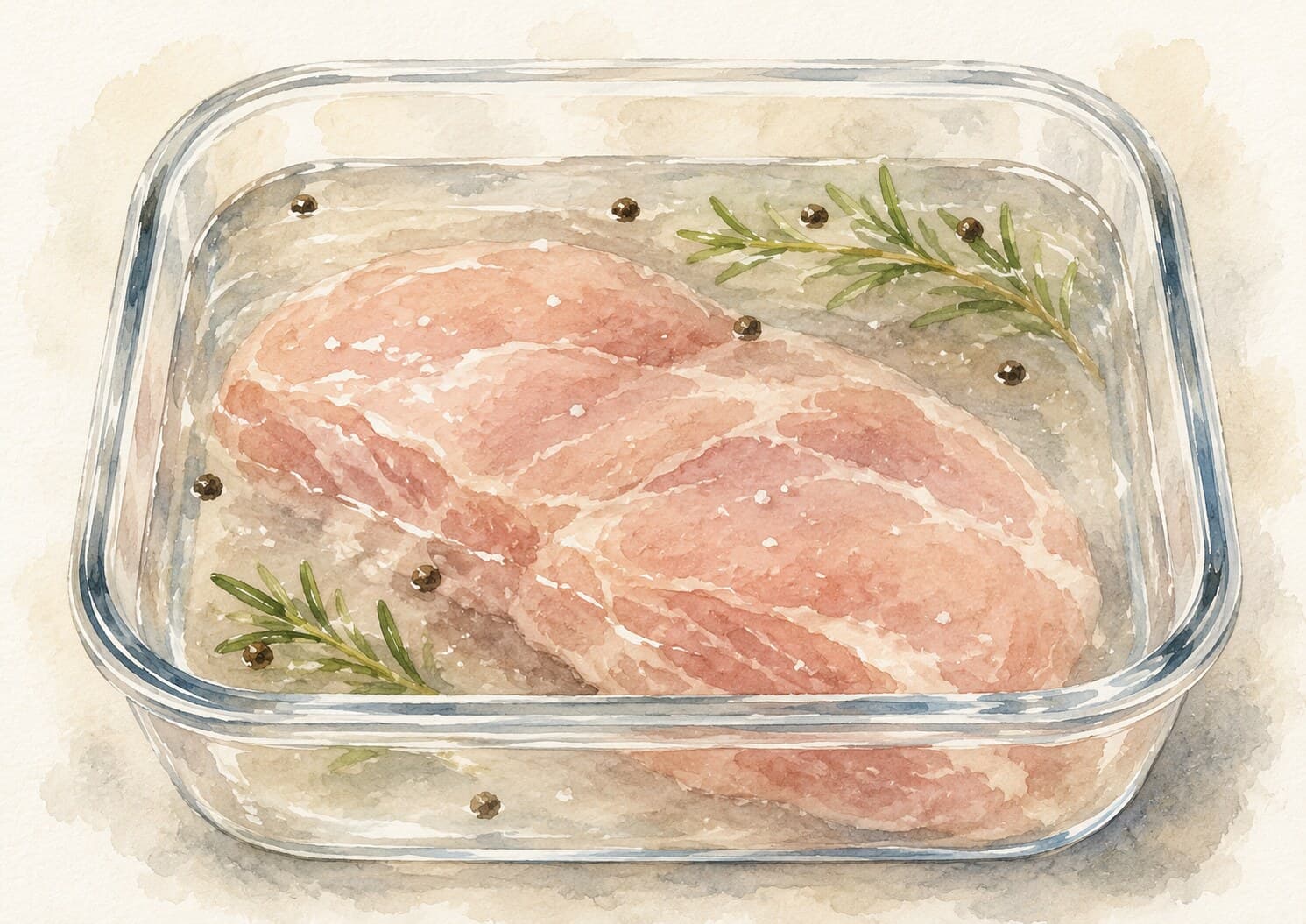
Once cool, submerge your meat or chicken fully in the brine. Refrigerate for at least 4 hours, or up to 24 hours for maximum flavor.
After brining, rinse the meat or chicken under cold water to remove excess salt, then pat dry with paper towels before cooking.
Why this works
Brining (soaking food in salt water before cooking) is a technique that enhances the flavor and moisture of meat by utilizing the principles of osmosis (the natural movement of water toward the saltier side of a barrier). When you soak meat in a saltwater solution, the salt concentration outside the meat is higher than inside. This process causes the meat to absorb the brine and water, leading to a juicier final product. Additionally, the sugar in the brine aids in browning during cooking, creating a delicious crust. If your brine seems too salty after the brining period, you can soak the meat in plain water for a short while to reduce the saltiness before cooking. However, be cautious not to over-soak as it may lead to a mushy texture. Proper timing in the fridge is crucial—too short won't infuse enough flavor, while too long can compromise the meat's integrity.
Common mistakes
Adding meat to warm brine.
Target: Brine fully cooled and chilled cold before the meat goes in.
Why it matters: This is the most important step, and it is a food-safety rule, not just a quality one. Warm brine holds the meat in the temperature range where bacteria multiply. It also starts to gently cook the surface, giving a grey, tacky exterior.
What to do: Follow the recipe — cool the brine completely, then chill it cold. Never shortcut this. To speed it up, dissolve the salt and sugar in part of the water hot, then top up with cold water or ice to bring the whole batch down fast.
Brining too long.
Target: Within the 4–24 hour window for this strength of brine.
Why it matters: Past the right point, osmosis keeps driving salt in and the muscle proteins denature too far (their structure breaks down and stiffens, the way egg white turns solid when cooked) — the texture turns from juicy to mushy or spongy, and the meat reads unpleasantly salty all the way through.
What to do: Stay inside the window and scale time to thickness: a few hours for thin cutlets, the longer end for a whole chicken. When in doubt, brine less.
Skipping the rinse and pat-dry.
Target: Rinsed under cold water, then patted thoroughly dry before cooking.
Why it matters: A salty film clings to the surface after brining; left on, it can make the finished dish too salty and, because the meat is already moist, a wet surface steams instead of browning.
What to do: Rinse briefly, then pat very dry with paper towels. For the best browning, leave it uncovered in the fridge for an hour to dry the surface further.
Salting the dish again as if it weren't brined.
Target: Light hand with added salt during and after cooking.
Why it matters: Brined meat is already seasoned through. Salting the pan and the plate on top of that stacks salt on salt, and there is no easy rescue once it's cooked.
What to do: Season sparingly, taste, and add more only at the end. If a finished piece does come out too salty, serve it with something plain and unsalted — rice, bread, plain vegetables — to balance the plate.
What to look for
- Dissolved brine: clear liquid, no grit at the bottom of the pot — salt and sugar fully dissolved.
- Ready to use: cold to the touch, not warm, not even lukewarm, before the meat goes in.
- Submerged meat: fully under the surface, weighted down with a plate if it floats, so it cures evenly.
- After brining: plump, firm flesh; surface patted dry and no longer slick before it hits the pan.
A note on history
Brining belongs to the ancient family of salt-preservation techniques, which reach back thousands of years to the early use of salt to keep meat and fish from spoiling. The mechanism is osmosis: a high concentration of salt outside the cells draws moisture and lowers the water available to spoilage microbes. Modern cooks brine less for preservation than for the side effect their ancestors noticed — salted meat stays juicier and seasons more deeply through.
Get the essays in your inbox — free
Weekly notes on flavor, fermentation, and food history — the writing behind the Atlas of Flavor. No spam; unsubscribe anytime.