
Bak Kut Teh (Pork Rib Tea Soup)
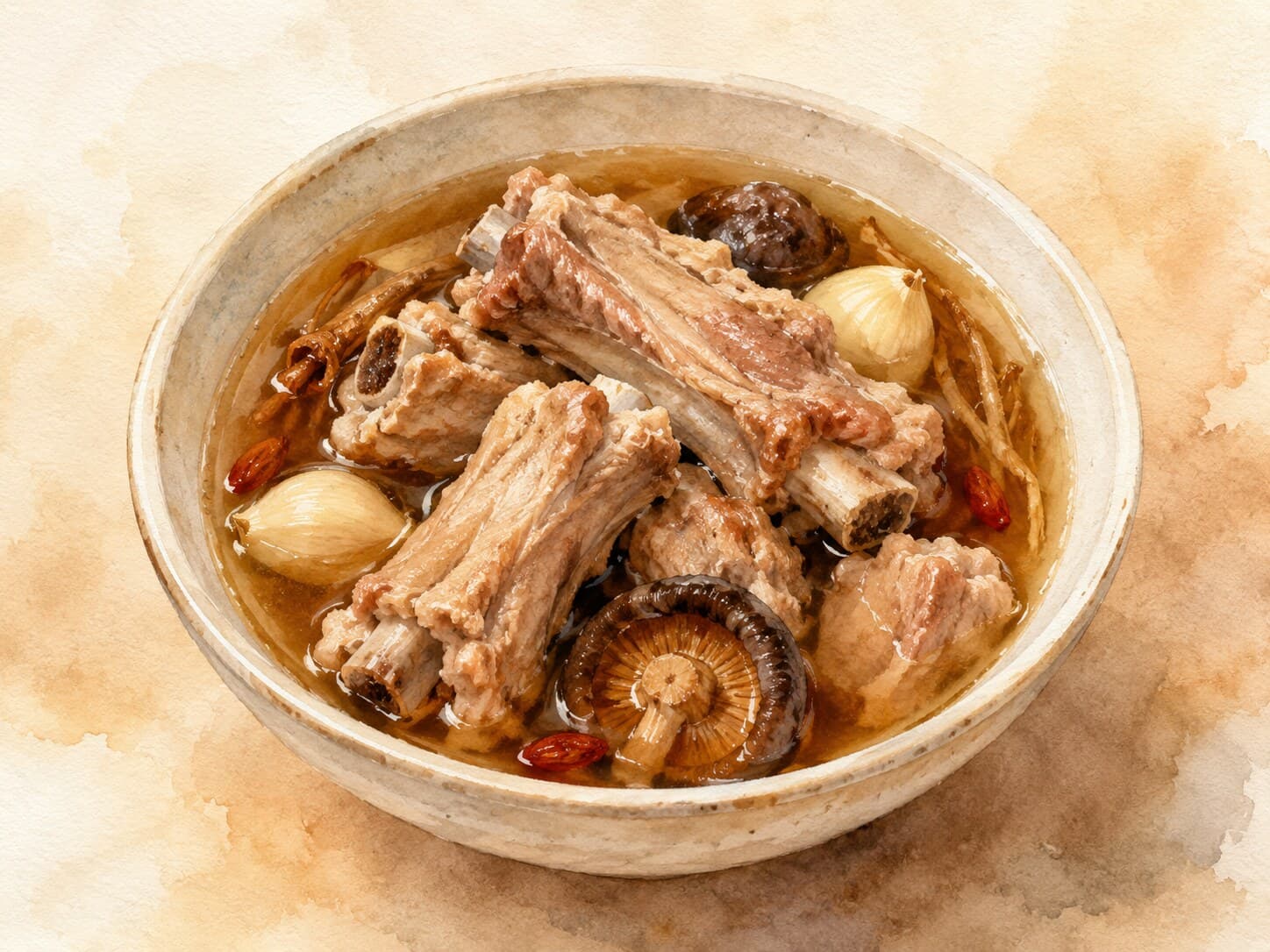
Bak Kut Teh, a fragrant pork rib soup simmered with garlic and spices, offers a restorative warmth.
Contents (5 sections)▾
Ingredients
- 1 kg meaty pork ribs
- 6 cloves garlic, whole
- 1 tbsp white peppercorns
- 1 packet bak kut teh herbal spice mix
- 2 liters water
- 1 tbsp soy sauce, for dipping
- Cooked rice, for serving
Steps
In a large pot, bring 2 liters of water to a boil over high heat, then add the pork ribs.
Once the water returns to a boil, reduce the heat to low and skim off any impurities that rise to the surface, ensuring a clear broth.
Add the whole garlic cloves, white peppercorns, and the bak kut teh herbal spice mix to the pot. Simmer gently for about 2 hours, allowing the flavors to meld and the broth to develop a deep color and richness.
After 2 hours, check the tenderness of the pork ribs. They should be fork-tender. Adjust seasoning with salt or soy sauce if necessary.
Serve the soup hot with a side of cooked rice and dipping soy sauce.
Why this works
The long, gentle simmering of the pork ribs allows the collagen in the meat (the tough connective tissue in meat and bones) to break down, creating a rich, gelatinous broth that feels restorative. Garlic and white pepper infuse the soup with warmth, enhancing the overall flavor. The use of a herbal spice mix adds complexity and depth, which is characteristic of bak kut teh. If the broth seems too oily after simmering, you can skim off excess fat with a spoon for a cleaner taste. Additionally, if the soup is too strong, simply add more water and simmer for a few additional minutes to balance the flavors without losing its essence.
Common mistakes
Not blanching the ribs first (briefly boiling them, then draining off the dirty water), then never skimming.
Target: A broth kept clear by removing the gray scum that rises in the first 15–20 minutes.
Why it matters: As the ribs first heat, they throw off coagulated blood and proteins as gray foam. Left in, it clouds the broth and gives it a muddy, slightly livery edge that no amount of spice covers. A good bak kut teh broth is dark from the soy and herbs but still clear, not murky.
What to do: After the water returns to a boil with the ribs in, drop the heat and patiently spoon off the scum as it surfaces. (Many cooks first boil the ribs hard for a couple of minutes in separate water, discard it, rinse the ribs, and start the real broth clean.)
Boiling the broth hard for the whole simmer.
Target: A gentle simmer — lazy bubbles, not a rolling boil — for the full two hours.
Why it matters: Collagen in the ribs needs slow, gentle heat to convert to gelatin (the silky substance dissolved collagen becomes, which gives broth its body) and give the broth its body and the meat its fall-off-the-bone tenderness. A hard boil instead emulsifies (blends the fat into the liquid so it can't separate back out) the rendered fat (the fat that has melted out of the meat) into the liquid, leaving it greasy and cloudy while the meat tightens and dries.
What to do: Keep the pot at a bare simmer with the lid ajar, and check the water level rather than the clock.
Adding the spice packet and pepper at full strength and walking away.
Target: A broth tasted and adjusted toward the end of the simmer.
Why it matters: The herbal mix and white pepper keep extracting the whole time. Bitter herbs can dominate and pepper can build to a harsh heat if the broth reduces further than expected — and once over-extracted, you can only dilute, which thins everything.
What to do: Taste from about the 90-minute mark. If it is getting too strong or bitter, top up with a little water and simmer briefly to rebalance; correct the salt with soy at the very end.
Skimming away every trace of fat.
Target: Most of the surface fat removed, a thin film left behind.
Why it matters: A heavy oil slick makes the soup cloying, but bak kut teh is a warming, restorative bowl and a little rendered pork fat carries the white-pepper aroma and gives the broth its comforting mouthfeel. Strip it bare and the soup tastes thin and medicinal.
What to do: Skim the bulk of the fat with a spoon and stop while a light sheen remains.
What to look for
- The broth in the first 20 minutes: gray foam gathering at the edges — that is your cue to skim, not to stir it back in.
- The surface during the simmer: slow, occasional bubbles, never a churning boil.
- The finished broth: dark and translucent, peppery and aromatic in the steam, with only a thin sheen of fat — not a greasy, opaque liquid.
- The ribs: meat pulling easily from the bone but still holding its shape, not boiled to shreds.
A note on history
Bak kut teh ("meat bone tea") comes out of the Hokkien and Teochew Chinese communities of the Malay Peninsula, where it was eaten by 19th-century laborers as a cheap, restorative meal. In Malaysia it is closely associated with the town of Klang in Selangor, a long-standing center of the dish. Two broad styles persist: the darker, herb-and-spice Hokkien version (built on ingredients such as star anise, cinnamon, and various medicinal herbs) and the lighter Teochew version seasoned chiefly with garlic and white pepper. Its exact origin is debated and even contested between Malaysia and Singapore.
Get the essays in your inbox — free
Weekly notes on flavor, fermentation, and food history — the writing behind the Atlas of Flavor. No spam; unsubscribe anytime.