
Mee Goreng Mamak (Malaysian Fried Noodles)
A vibrant Malaysian stir-fried noodle dish with bold flavors and a smoky finish.
Contents (5 sections)▾
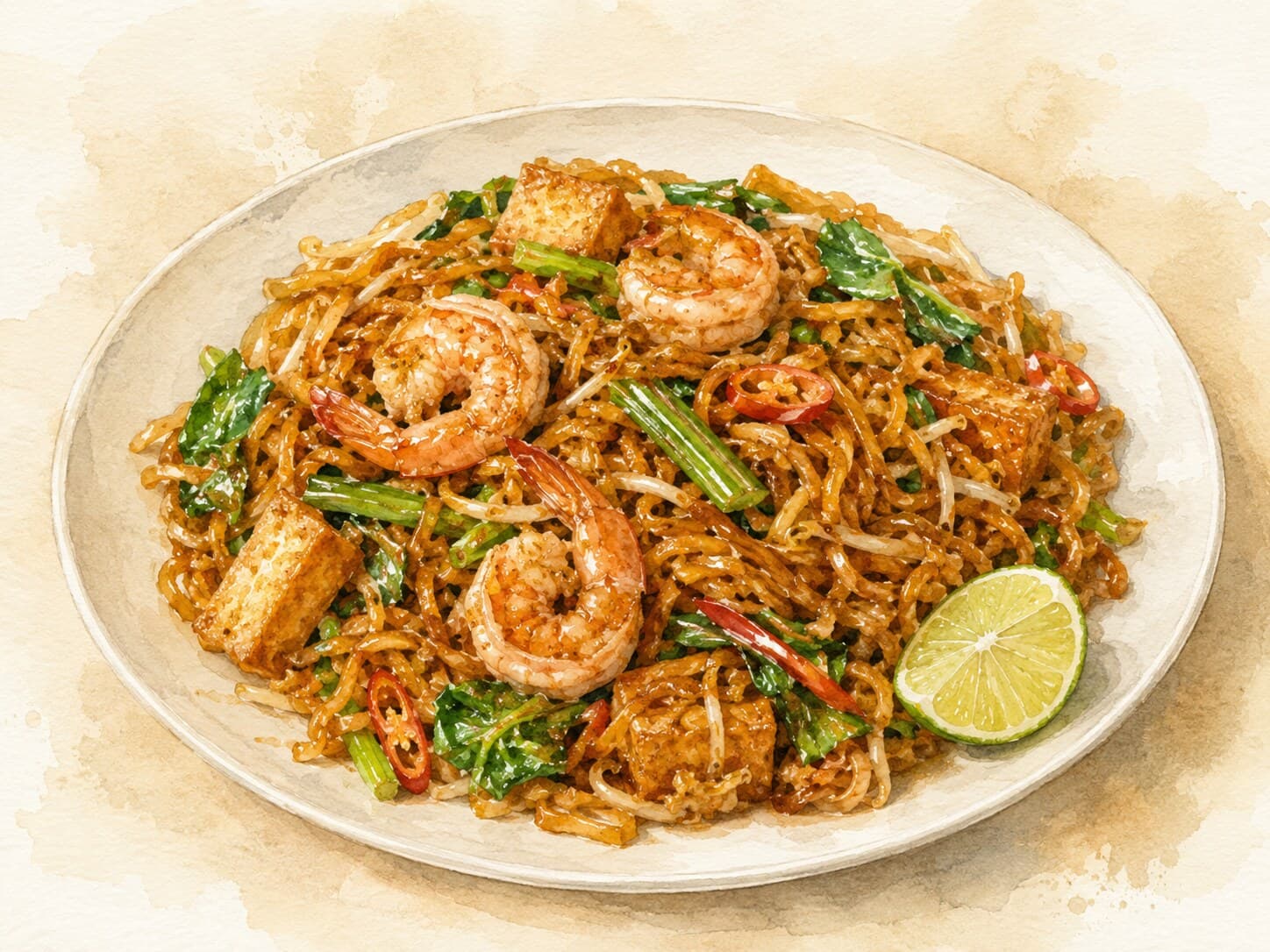
Ingredients
- 200 g yellow wheat noodles
- 2 tbsp vegetable oil
- 1 clove garlic, minced
- 1 red chili, sliced
- 1 tbsp chili paste
- 2 tbsp tomato ketchup
- 2 tbsp soy sauce
- 1 tsp sugar
- 100 g tofu puffs, halved
- 1 egg, beaten
- 50 g potato, julienned
- 50 g greens (e.g., bok choy or spinach)
- 1 lime, cut into wedges
- Salt and pepper to taste
Steps
Soak the yellow noodles in boiling water for 5 minutes, then drain and set aside. This ensures they are pliable and ready for stir-frying.
Heat a wok over high heat and add 2 tbsp of vegetable oil. When the oil is shimmering, add minced garlic and sliced chili; stir-fry for 30 seconds to release their aroma.
Add the soaked noodles to the wok, followed by chili paste, tomato ketchup, soy sauce, and sugar. Stir-fry for about 3-4 minutes until the noodles are coated and heated through.
Push the noodles to one side of the wok. Add the beaten egg to the empty side and scramble until just set. Mix it into the noodles.
Add the tofu puffs, julienned potato, and greens. Stir-fry for an additional 2-3 minutes, ensuring everything is well combined and heated through.
Taste and season with salt and pepper as needed. Finish with a squeeze of lime juice for acidity and a fresh touch.
Serve hot, garnished with lime wedges for an extra zing.
Why this works
The technique of high-heat stir-frying is crucial for achieving the iconic 'wok hei' (the smoky, slightly charred aroma that develops when food briefly touches a very hot wok surface). By soaking the noodles, you ensure they are pliable, allowing for even cooking and preventing them from clumping. The balance of sweet, spicy, and savory in the sauce comes from the combination of chili paste, tomato ketchup, and soy sauce, creating a complex flavor. If the noodles seem too dry, add a splash of water to help them absorb the sauce without burning. Additionally, using a high smoke point oil allows for that essential caramelization (the browning of sugars under heat that builds deep flavor), further enhancing the flavor. Achieving the desired smoky char takes practice; if the ingredients begin to stick, reduce the heat momentarily to stir without losing that vital texture. This dish showcases the importance of timing and technique, making it a fantastic introduction to stir-frying.
Common mistakes
Starting with a wok that isn't hot enough. Target: the wok should be smoking lightly before any oil goes in — almost too hot to hold your hand above. Why it matters: wok hei (鑊氣, "wok breath" — the toasted, smoky note characteristic of Cantonese and Mamak stir-fries) is built from oil vapors flashing on contact with very hot steel. A lukewarm wok poaches the noodles in their own moisture and you get gummy, pale strands instead of glossy, lightly-charred ones. What to do: preheat the empty wok over high heat for a full 2–3 minutes until you see thin wisps of smoke. Add the oil, swirl, and continue immediately.
Overloading the wok in one batch. Target: cook for one person at a time if your wok is small; never more than two portions at once. Why it matters: crowded noodles drop the pan temperature instantly. The Maillard reaction (the browning that creates the caramel-soy aroma) needs sustained heat above 140°C — once the temperature falls, you get steam instead of char. What to do: mise-en-place everything beside the wok, work in small batches, and reheat the wok between batches.
Undercooking the egg into the noodles, or undercooking the protein. Target: egg fully set, no runny streaks; any chicken or prawn cooked through (no translucent center). Why it matters: egg and poultry in a fast stir-fry need direct contact with the hot wok surface to set safely. Stirred too soon into the wet noodle pile, they stay raw at the center, which is a real food-safety risk. What to do: push the noodles aside, pour the beaten egg onto the clear pan surface and let it set for 20–30 seconds before stirring it in. Pre-cook raw chicken or prawn until opaque and firm before noodles join the wok.
Adding ketchup and chili paste before the aromatics have bloomed. Target: garlic and chili first in hot oil for 20–30 seconds, until fragrant; then the sauce. Why it matters: garlic and chili release their flavor compounds (allicin, capsaicin) when hot oil cracks open their cells. Dump the sauce in early and you smother that bloom — the dish tastes flat and one-note. What to do: keep aromatics and sauce in separate small bowls. Aromatics first, sauce only after they smell sharp and fragrant.
What to look for
- Thin wisps of smoke rising from the empty wok before you add oil — the steel is at the right temperature for wok hei to develop.
- Garlic and chili sizzling vigorously the instant they touch the oil, with a sharp fragrance within seconds — if they just sit quietly, the wok is not hot enough.
- Glossy, dark-mahogany noodles with visible darker streaks where they touched the hot surface — those streaks are the caramelization that defines a hawker-stand plate.
- A clean burst of lime juice clearing the heaviness on first bite — acidity should cut through the sweet-soy-chili sauce without dominating it; if the lime feels invisible, the sauce is over-reduced and needs a splash of water at the end.
A note on history
Mee Goreng Mamak comes from Malaysia's Mamak community — Tamil Muslims whose ancestors migrated from South India to the Malay Peninsula over the past few centuries. The dish grew up in Mamak-run hawker stalls and 24-hour eateries, where Indian cooking habits met Chinese wheat noodles and Malay sauces. The "Mamak" label itself comes from the Tamil word for maternal uncle, used as a respectful honorific for the stall owner. Sources: Wikipedia: Mee goreng, Lin's Food: Mee Goreng Mamak.
Get the essays in your inbox — free
Weekly notes on flavor, fermentation, and food history — the writing behind the Atlas of Flavor. No spam; unsubscribe anytime.