
Pabellon Criollo (Venezuelan National Plate)
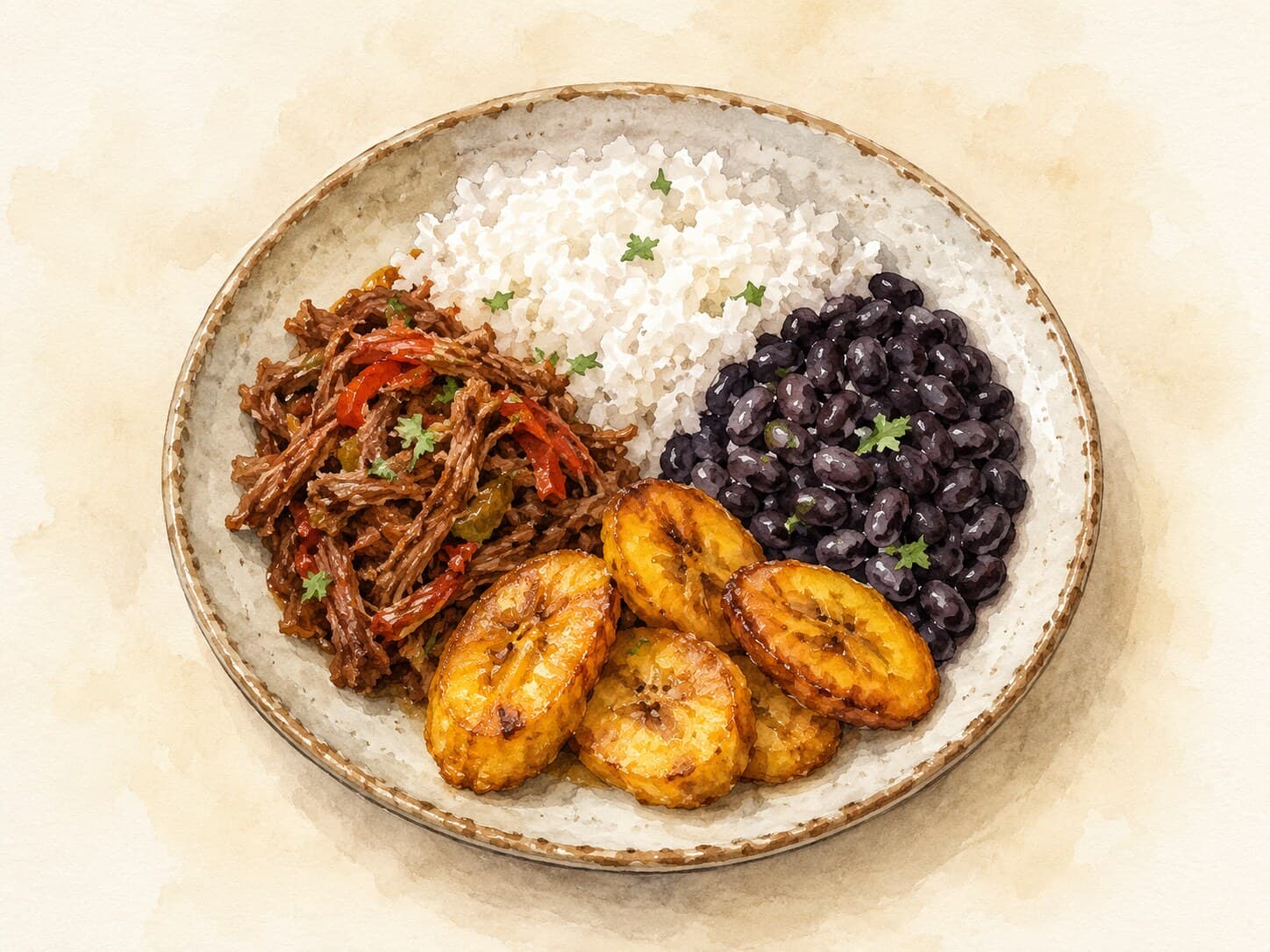
Pabellon Criollo is Venezuela's national dish, combining shredded beef, black beans, rice, and sweet fried plantains for a vibrant, satisfying meal.
Contents (5 sections)▾
Ingredients
- 500 g beef flank or brisket
- 1 onion, chopped
- 2 cloves garlic, minced
- 1 bell pepper, chopped
- 1 tsp cumin
- 1 tsp paprika
- Salt to taste
- Black pepper to taste
- 2 cups beef broth
- 1 cup black beans, soaked overnight
- 1 bay leaf
- 2 cups water
- 2 cups white rice
- 4 ripe plantains
- Vegetable oil for frying
- Fresh cilantro for garnish
Steps
In a large pot, brown the beef with onions, garlic, and bell pepper over medium heat for about 5 minutes. This step builds flavor through browning.
Add cumin, paprika, salt, black pepper, and beef broth. Cover and simmer on low for 1.5 hours until the beef is tender and shreds easily.
In another pot, combine soaked black beans, bay leaf, and water. Cook on medium heat for about 1 hour, or until beans are tender.
Rinse the rice under cold water until it runs clear, then cook in a separate pot with 4 cups of water for about 20 minutes on high heat. Lower to low and let steam for another 10 minutes.
Meanwhile, peel and slice plantains diagonally. Fry in hot vegetable oil (about 180°C) until golden brown, approximately 3-4 minutes per side.
To serve, compose the plate with a portion of shredded beef, a scoop of black beans, a serving of rice, and a few pieces of fried plantains, keeping each component separate for contrast.
Why this works
Pabellon Criollo's appeal lies in the balance of flavors and textures from its four distinct components. The braised beef is tender and flavorful, thanks to the slow cooking method that allows it to absorb the rich broth and spices. Black beans provide a creamy, earthy contrast, while the white rice acts as a neutral base to tie the plate together. The sweet fried plantains add a delightful sweetness that balances the savory elements. If the beef is too tough after cooking, ensure it's simmered longer; the low and slow method breaks down the connective tissues, leading to the desired tenderness. Similarly, if the beans seem undercooked, adding a bit more water and continuing to simmer can help them soften without breaking apart. This dish captures the essence of Venezuelan cuisine with its harmony of flavors.
Common mistakes
- Pulling the beef off the heat before it shreds. Flank and brisket need extended low-and-slow simmering before the connective tissue surrenders.
- Target: beef pulls apart with two forks under almost no pressure; internal liquid still gently bubbling, never at a hard boil.
- Why it matters: under-braised beef stays in slabs, refuses to absorb the broth, and reads as bland and chewy on the plate.
- What to do: keep the lid on, simmer the full 1.5 hours, then test a strand — if it resists, give it another 20-30 minutes.
- Skipping the overnight soak for the black beans. Dry beans dropped straight into the pot cook unevenly and split before the centers turn creamy.
- Target: beans fully submerged in cold water overnight; skins intact, hydrated through.
- Why it matters: the soak shortens the cook, evens out the texture, and keeps the broth from going cloudy-starchy.
- What to do: soak overnight; if you forgot, do a quick-soak (boil 2 minutes, off heat, covered, 1 hour) before starting.
- Frying the plantains while still under-ripe. Yellow-green plantains stay starchy, refuse to caramelize, and miss the sweet contrast that defines the plate.
- Target: skin almost fully black with yellow patches; flesh deep yellow and yielding to gentle pressure.
- Why it matters: the sugar is what browns and counterbalances the savory beef and beans — under-ripe fruit fries pale and bland.
- What to do: buy plantains 3-5 days ahead and let them ripen on the counter until the skin is mostly black.
- Mixing the four components together on the plate. Pabellón is composed, not stirred — each part is meant to be tasted on its own and in chosen combinations.
- Target: four clearly separated quadrants of beef, beans, rice, and plantains touching but not blended.
- Why it matters: the contrast between savory shredded beef, earthy beans, neutral rice, and sweet fried plantain is the whole point of the dish.
- What to do: plate each component with its own spoon, keeping the borders clean.
What to look for
- Beef strands that pull apart like wet rope, glossed with reduced broth (broth simmered uncovered until its volume drops and the flavor concentrates), no dry edges.
- Black beans holding their shape but yielding the moment they touch the tongue — creamy interior, intact skin.
- Rice grains separate and steamy, never gummy or clumped.
- Plantain slices deep amber at the edges with a soft, almost custardy center.
A note on history
Pabellón Criollo (a composed Venezuelan plate of shredded braised beef, black beans, white rice, and sweet fried plantain) is widely regarded as Venezuela's national dish, with its consolidation as a national emblem traced to the 19th and 20th centuries, drawing on Indigenous, Spanish, and African culinary contributions of the colonial era. A popular interpretation reads its components as an allegory of the Venezuelan flag — white rice, black beans, yellow plantain, and shredded beef — though this symbolic reading is cultural folklore rather than documented origin. In 2019 the Venezuelan government recognized the dish as intangible cultural heritage.
Get the essays in your inbox — free
Weekly notes on flavor, fermentation, and food history — the writing behind the Atlas of Flavor. No spam; unsubscribe anytime.