
Pabellón Criollo
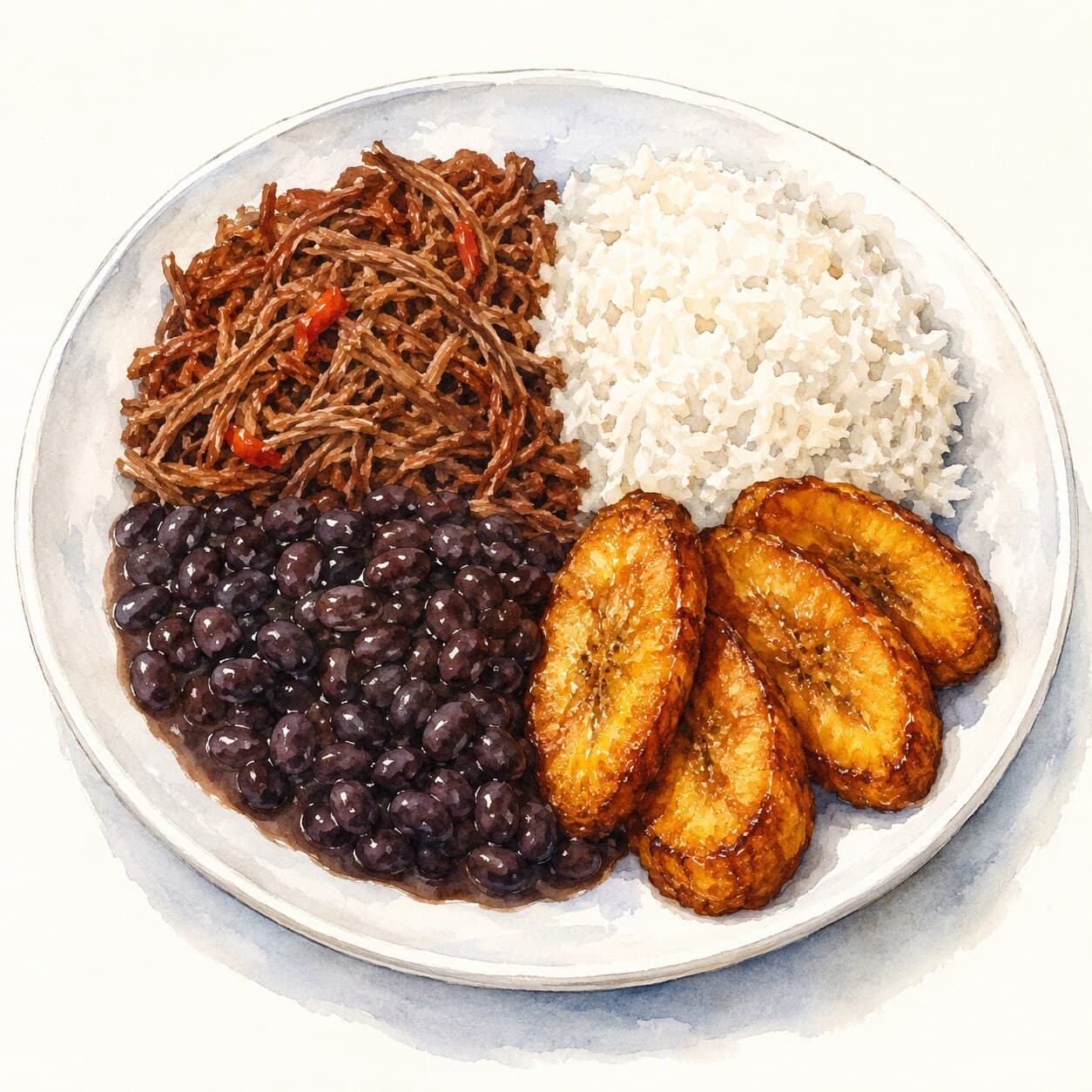
Pabellón Criollo is a traditional Venezuelan dish featuring shredded beef, black beans, white rice, and fried plantains.
Contents (5 sections)▾
Ingredients
- 500 g flank steak
- 1 tsp salt
- 1 tsp black pepper
- 1 medium onion, chopped
- 2 cloves garlic, minced
- 1 bell pepper, chopped
- 2 cups beef broth
- 2 cups black beans, cooked
- 2 cups white rice
- 2 ripe plantains, sliced
- oil for frying
- fresh cilantro, for garnish
- lime wedges, for serving
Steps
In a large pot, season the flank steak with salt and pepper. Sear in a little oil over medium-high heat for about 5 minutes on each side until browned. This builds deep, savory flavor.
Add chopped onion, garlic, and bell pepper to the pot, cooking for about 3-5 minutes until softened. This enhances the dish's aromatic profile.
Pour in the beef broth and let it simmer on low heat for approximately 1 hour until the meat is tender and easily shreddable.
Once cooked, remove the flank steak and shred it using two forks. Return the meat to the pot, mixing it with the cooking juices.
While the meat cooks, prepare the white rice according to package instructions, usually about 20 minutes cooking time.
In a separate pan, heat oil over medium heat and fry the sliced plantains for about 2-3 minutes on each side until golden brown. This adds a sweet contrast to the savory elements.
Warm the cooked black beans (caraotas negras) in a small pot over low heat with a pinch of salt while the other elements finish, so they are hot at serving time.
To serve, arrange the shredded beef, black beans, white rice, and fried plantains side by side on each plate — the four elements of pabellón criollo — and finish with fresh cilantro and lime wedges.
Why this works
Pabellón Criollo is a classic Venezuelan dish that combines four essential components into a single, harmonious plate. The flank steak, when braised (cooked slowly in liquid until tender) and shredded, absorbs the flavors from the aromatics (the onion, garlic, and pepper that build the base flavor) and broth, resulting in tender, juicy meat that serves as the star of the dish. Cooking the black beans separately allows for a rich texture and flavor that complements the beef. The white rice acts as a neutral base, balancing the strong flavors while providing a filling element. Fried plantains add a sweet and soft contrast, enhancing the overall experience. If the plantains seem too firm to slice, allow them to ripen further until they are soft. This dish exemplifies the balance of flavors and textures that is central to Venezuelan cuisine.
Common mistakes
Skipping the sear (browning the surface in a hot pan) on the flank steak.
Target: Sear the salted, peppered flank steak (a lean, long-grained cut from the cow's abdomen) for the full 5 minutes per side until well browned, before adding the aromatics.
Why it matters: Browning here builds a savory backbone for the broth the meat will later simmer (cook gently, with the liquid just barely bubbling) and shred in; steak that goes straight into liquid without searing gives a paler, less complex-tasting broth and shredded meat.
What to do: Pat the steak dry, get the pot properly hot, and resist moving it until a deep crust forms on each side.
Shredding the meat before it's actually fork-tender.
Target: Simmer the steak the full hour, until it shreds apart easily with two forks, and confirm no raw or pink color remains, before pulling it from the pot.
Why it matters: Flank steak is a lean, fibrous cut that stays tough unless it simmers long enough for the connective tissue (the tough, silvery webbing between muscle fibers) to break down; shredding it early leaves stringy, chewy pieces that resist the fork instead of pulling apart cleanly.
What to do: Test with two forks at the hour mark — if the meat resists and doesn't pull apart cleanly, give it another 10-15 minutes of simmering and test again.
Frying the plantains before they're ripe enough.
Target: Use plantains (a starchy, banana-like fruit) that are ripe — the skin darkened well past yellow, and the fruit soft to a gentle squeeze — rather than firm, green-yellow ones.
Why it matters: Under-ripe plantains are starchy and bland, and their firmness makes them hard to slice evenly; they also fry up dense rather than developing the soft interior and caramelized (browned and sweetened by the heat) edges that balance the savory beans and beef.
What to do: Let plantains ripen at room temperature until they yield to gentle pressure and the skin has darkened well past yellow; slice them evenly for consistent frying.
Not tasting and adjusting the broth before shredding the meat back into it.
Target: Taste the simmering liquid once the steak is tender, adjust salt and pepper, and only then shred the meat back into the pot.
Why it matters: The shredded beef's final flavor comes largely from reabsorbing the liquid it's mixed with; if that liquid is under-seasoned, even a well-seared steak tastes flat once pulled apart into thin strands.
What to do: Season the cooking liquid to taste before returning the shredded meat to it, then let the strands sit in the seasoned juices for a few minutes so they soak it up.
What to look for
- A deep brown crust on the seared steak before the broth goes in. That color builds the base flavor the shredded meat will carry throughout.
- Meat that pulls apart into clean strands with two forks, with no raw or pink color at the center. That's the sign the flank steak has simmered long enough to be both tender and fully cooked.
- Plantains with a soft, custardy interior and caramelized, golden-brown edges, not a dense, starchy bite. That texture only comes from frying plantains that are ripe enough to have converted their starch to sugar.
- Four distinct components on the plate — rice, beans, beef, plantain — each identifiable by taste, not blended into one flavor. That contrast is the dish's structure, not an accident.
A note on history
Pabellón Criollo is widely regarded as Venezuela's national dish. Most accounts describe it emerging during the colonial period, from the convergence of Indigenous, Spanish, and West African culinary traditions that shaped Venezuelan cooking more broadly — commonly read as shredded beef reflecting Spanish meat preparation, black beans an African-influenced element, and rice and plantains built on Indigenous and Caribbean agriculture. Some tellings add a popular, folkloric layer: that the plate's four colors — white rice, black beans, red-brown beef, and yellow-gold plantain — echo the colors of the Venezuelan flag. This is a widely repeated interpretation rather than a documented historical fact, and it's best treated as folklore that has grown up around the dish rather than as its origin story. In 2019, Venezuela's government formally declared Pabellón Criollo part of the country's intangible cultural heritage (Wikipedia: Pabellón criollo).
Get the essays in your inbox — free
Weekly notes on flavor, fermentation, and food history — the writing behind the Atlas of Flavor. No spam; unsubscribe anytime.