
Suya (Nigerian Peanut-Spiced Skewers)
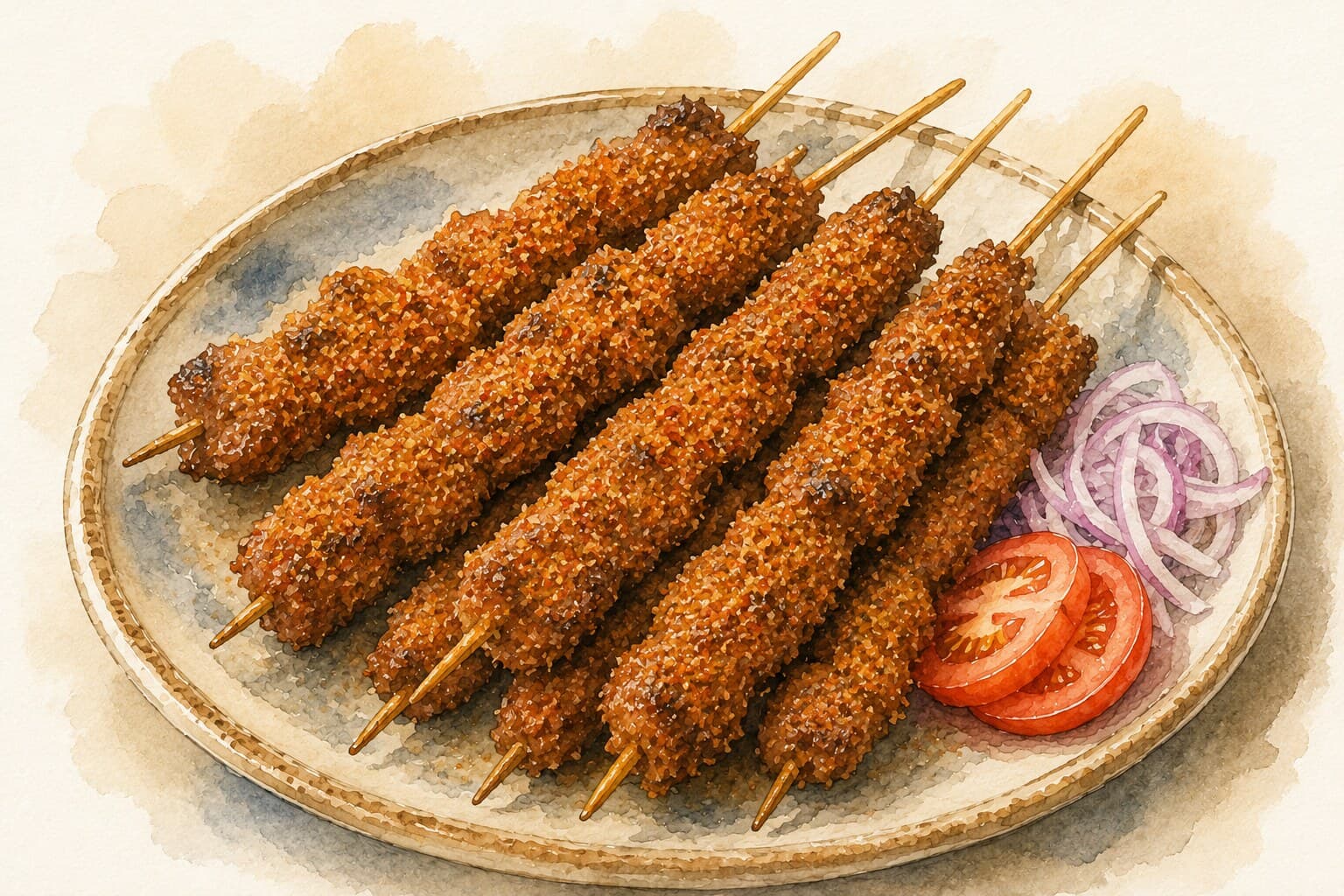
Enjoy the bold flavors of Suya, Nigeria's signature street food, with these easy-to-make peanut-spiced beef skewers.
Contents (5 sections)▾
Ingredients
- 500 g thinly sliced beef
- 100 g roasted peanuts, ground
- 2 tbsp paprika
- 1 tsp cayenne pepper
- 1 tsp garlic powder
- 1 tsp onion powder
- 1 tsp salt
- 1 tsp ground ginger
- 1 large onion, sliced (for garnish)
- skewers (soaked if wooden)
Steps
In a bowl, combine the ground peanuts, paprika, cayenne pepper, garlic powder, onion powder, salt, and ground ginger to create the yaji spice rub.
Coat each slice of beef thoroughly in the yaji rub, ensuring each piece is well covered. This enhances flavor and creates a crust when grilled.
Preheat your grill or prepare open coals until they are glowing red and emit a light flame. This high heat is essential for charring the beef.
Thread the coated beef slices onto skewers, ensuring they are not packed too tightly, which allows for even cooking.
Grill the skewers over high heat for about 10-12 minutes, turning occasionally until the beef is charred and cooked through. The intense heat caramelizes the sugars in the peanuts, creating a savory crust.
Once cooked, remove the skewers from the grill and dust with additional yaji spice and garnish with sliced raw onion for added crunch and flavor.
Why this works
This recipe highlights the technique of dry-rubbing thin slices of beef with a fragrant blend of ground peanuts and spices, known as yaji. The peanut rub infuses the meat with rich flavors and forms a delicious crust when grilled over high heat. The high-temperature grilling is crucial; it allows for the Maillard reaction, which develops complex flavors and a satisfying char. If the skewers seem too dry during grilling, brush them lightly with oil to maintain moisture without losing the spice coating. Proper preparation of the grill ensures that the skewers achieve a perfect balance of char and tenderness. Dusting with extra yaji and adding raw onion at the end enhances the dish's complexity and provides a fresh contrast to the savory skewers.
Common mistakes
-
Cutting the beef too thick.
- Target: beef sliced 3-5 mm thick across the grain, so each piece cooks through in 8-12 minutes over hot coals.
- Why it matters: suya is built on a thin slice that takes the spice rub fast and crisps at the edges. Thick chunks need so much time on the grill that the yaji (the roasted-peanut-and-chili spice rub at the heart of suya) burns black before the centre is cooked.
- What to do: chill the beef in the freezer for 20-30 minutes to firm it up, then slice thin against the grain. Pound lightly between plastic if the slices are uneven.
-
Using whole peanuts instead of degreased, fine-ground peanuts.
- Target: yaji that feels powdery, not paste-like — the peanuts should be ground and partially defatted (the Hausa tradition uses kuli kuli, the leftover cake from peanut-oil extraction).
- Why it matters: oily ground peanuts go sticky on the meat and burn before they crisp. Defatted peanut powder takes spice cleanly and dries into the crackling crust suya is famous for.
- What to do: dry-roast the peanuts, grind, then either blot the powder between paper towels or look for kuli kuli / "suya spice" at an African market.
-
Grilling over a flame instead of glowing coals.
- Target: coals with a steady orange glow and grey ash, no leaping flames; meat about 8-10 cm above the bed.
- Why it matters: open flames flash-burn the peanut-spice crust before the meat is anywhere near cooked. The Maillard reaction (the browning chemistry that builds savory crust on hot meat) needs intense radiant heat, not actual fire on the rub.
- What to do: wait for the flames to die down, then grill. If you're using a gas grill, preheat hard with the lid down for 10 minutes and grill over indirect-then-direct heat. Internal temperature 70-74°C confirms it is fully cooked.
-
Dusting with yaji only before grilling.
- Target: rub once before, then dust again the moment the skewers come off the grill while they're still hot.
- Why it matters: street-stall suya gets its punch from a second hit of raw yaji after the cook — the heat from the meat re-blooms the spices and gives you that distinctive nutty, hot, aromatic finish.
- What to do: reserve about a third of the yaji. Dust the hot skewers, pile the raw onion alongside, and serve immediately.
What to look for
- A dark, almost crackly red-brown crust that sits dry on the meat, not glossy or oily.
- A bite that has give, not chew — thin slices that snap cleanly under a tooth and pull apart in single layers.
- A deep, roasted-peanut perfume on top of the chili heat, with no raw spice harshness at the back of the throat.
- Sliced raw onion served right against the hot skewers, the cold sharpness immediately cutting the smoky fat.
A note on history
Suya is a Hausa dish (Hausa = the largest ethnic group of the West African Sahel, centred in northern Nigeria and southern Niger) — born on the long-distance livestock routes of northern Nigeria, southern Niger, and the wider West African Sahel. The Hausa, with deep traditions of cattle-keeping and trade, developed the technique of slicing meat thin, coating it in yaji (a roasted-peanut and chili spice blend, often based on kuli kuli — the cake left over from pressing peanut oil), and grilling it over coals at roadside stalls. From the north, suya spread south across Nigeria in the twentieth century and is now one of the country's most recognisable street foods, found at evening markets and bus stops nationwide.
Get the essays in your inbox — free
Weekly notes on flavor, fermentation, and food history — the writing behind the Atlas of Flavor. No spam; unsubscribe anytime.