
Jollof Rice
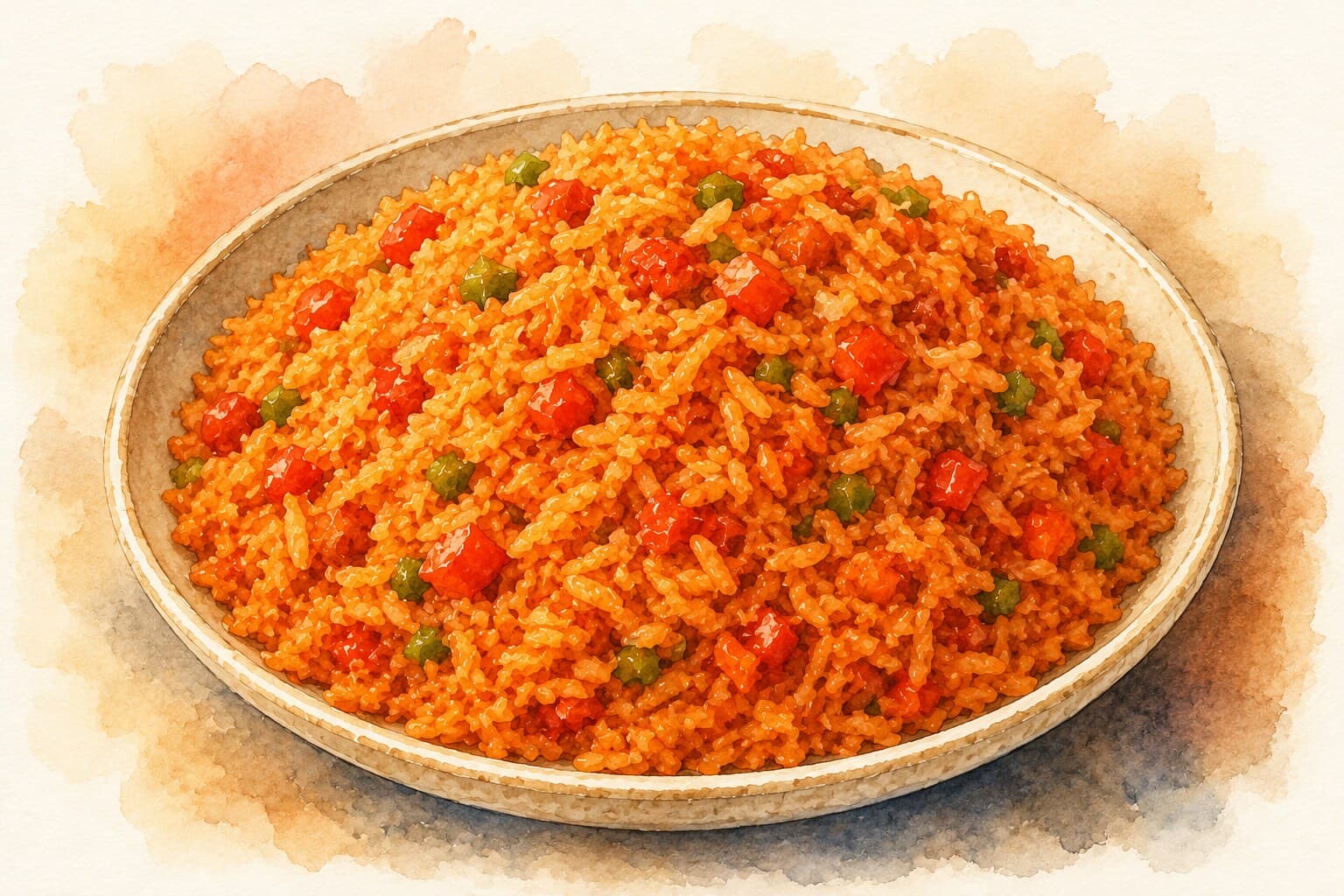
Delve into the bold flavors of Jollof Rice, a beloved West African dish known for its rich tomato-pepper base and smoky essence.
Contents (5 sections)▾
Ingredients
- 2 cups long-grain parboiled rice
- 1 cup tomato puree
- 1 cup bell peppers, blended
- 1 medium onion, chopped
- 3 cloves garlic, minced
- 1 teaspoon thyme
- 2 bay leaves
- 2 tablespoons vegetable oil
- 2 cups chicken stock or water
- Salt to taste
- Pepper to taste
Steps
In a large pot, heat vegetable oil over medium-high heat. Add chopped onions and sauté until translucent, about 3-5 minutes.
Stir in minced garlic, thyme, and bay leaves, cooking for an additional 1-2 minutes until fragrant.
Pour in the tomato puree and blended bell peppers. Cook this mixture for about 10 minutes, stirring occasionally, until it reduces and thickens.
Add the rinsed rice to the pot, stirring to coat the grains with the tomato-pepper base.
Pour in the chicken stock or water, and season with salt and pepper. Bring to a boil, then reduce heat to low, cover, and simmer for 20 minutes.
After 20 minutes, uncover the pot and check the rice. If it appears too wet, continue cooking uncovered over low heat for an additional 5 minutes to allow for evaporation and a smoky bottom.
Remove from heat and let the rice sit covered for 5 minutes. Fluff with a fork before serving.
Why this works
The technique of cooking rice in a reduced tomato-pepper base is crucial to achieving the authentic flavors and texture of Jollof Rice. The oil used for sautéing not only infuses the rice with flavor, but the high heat creates a unique toasted bottom layer, known as 'party rice,' which is a prized aspect of this dish. The key is to maintain the right heat — too high can burn the sauce before the rice cooks, while too low will leave the rice undercooked. If the rice seems too wet at the end of cooking, uncover the pot and let it cook for a few more minutes on low heat to evaporate excess moisture. This step is vital for achieving that desirable smoky flavor and texture at the bottom of the pot. The balance of seasoning, particularly salt and the right blend of spices, ensures every grain is flavorful and aromatic.
Common mistakes
Skipping the tomato-pepper reduction.
Target: Cook the blended tomato puree and bell peppers down for a full 10 minutes, stirring, until the mixture darkens, loses its bright raw-red color, and the oil starts to separate at the edges.
Why it matters: Raw tomato carries a sharp, watery acidity that never integrates with the rice — you taste it as a thin sourness on the back of the tongue. Reducing concentrates the sugars and breaks down the pectin, building the deep umami-and-aroma base the dish is named for. This step is the single biggest difference between flat jollof and the version cooks fight over.
What to do: Don't rush. When the mixture starts to look like a paste rather than a sauce and you see oil pooling around the edges, the base is ready.
Using the wrong rice or skipping the rinse.
Target: Long-grain parboiled rice (also sold as "easy-cook" rice — partially boiled in the husk before milling), rinsed until the water runs nearly clear.
Why it matters: Parboiled rice is gelatinized inside the grain during processing, so it holds its shape through long simmering in flavored liquid without going mushy. Short-grain or basmati cooks faster and turns to porridge in this much sauce. Skipping the rinse leaves surface starch behind, which makes the finished pot gummy and clumpy instead of grain-by-grain.
What to do: Look for "parboiled" on the bag (some brands call it converted rice). Rinse in cold water 3–4 times.
Lifting the lid mid-simmer.
Target: Lid on, low heat, 20 minutes undisturbed; check only once at the end.
Why it matters: Jollof rice cooks by trapped steam, not by direct boiling — the rice absorbs the seasoned vapor as much as the liquid. Each lift drops the temperature and lets steam escape, so the rice on top stays under-hydrated and the bottom over-cooks trying to compensate.
What to do: Trust the timer. If you must check, do it once, quickly, and replace the lid immediately.
Chicken or beef that's still pink in the center.
Target: Any meat added to the pot fully cooked through — no pink, juices run clear, chicken reaches 74°C / 165°F internal, beef 70°C / 160°F if ground or diced.
Why it matters: Jollof is built on the meat's juices flavoring the sauce — but that means the meat sits in liquid, where simmering temperature alone won't always guarantee safe internal temperature for thick pieces. A safe pot of jollof is a non-negotiable.
What to do: If using whole chicken pieces or stew meat, brown them first and then either pre-poach to 74°C or cut them small enough to cook through during the 20-minute simmer. Check the thickest piece before serving.
What to look for
- Reduced tomato-pepper base before rice goes in: darkened to a brick-red or deeper, the texture of a thick paste rather than sauce, with a glossy line of oil pooling at the edges.
- Rice after the stock is added: grains just submerged, not swimming, with the liquid coming about a centimeter above the rice line.
- End of the 20-minute simmer: no standing liquid when you tilt the pot; the rice on top looks dry on the surface but a grain pinched between your fingers is tender all the way through.
- Finished party-rice bottom: a thin layer of toasted, golden-brown rice clinging to the pot — smoky aroma, no black scorch. Black scorching means the heat was too high or the lid came off too early.
A note on history
Jollof rice traces its roots to the Senegambia region of West Africa — the historical area between the Senegal and Gambia rivers, home to the Wolof people. Many food historians link it to thieboudienne (also written ceebu jën, from the Wolof words ceeb "rice" and jën "fish"), the Senegalese one-pot fish-and-rice dish that UNESCO inscribed on its Representative List of the Intangible Cultural Heritage of Humanity in 2021 (UNESCO via Wikipedia: Thieboudienne). From Senegal the technique of cooking rice in a reduced tomato-and-aromatics base spread across West Africa, evolving into the regional styles seen today — most famously the friendly rivalry between Nigerian and Ghanaian jollof (Wikipedia: Jollof rice).
Get the essays in your inbox — free
Weekly notes on flavor, fermentation, and food history — the writing behind the Atlas of Flavor. No spam; unsubscribe anytime.