
Egusi Soup (West African Melon Seed Stew)
A rich and hearty Egusi Soup, featuring ground melon seeds simmered with meat and greens in a palm oil base.
Contents (5 sections)▾
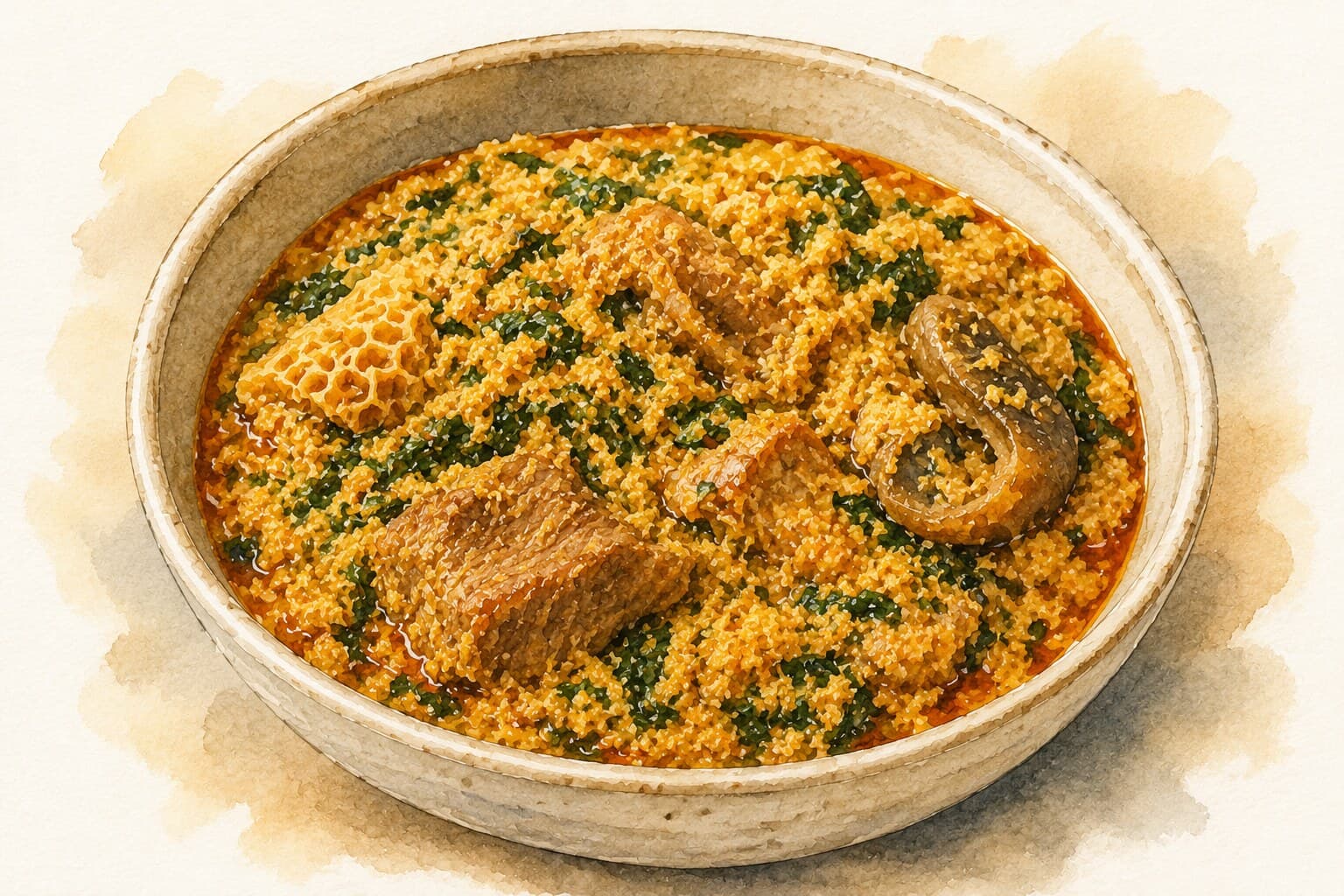
Ingredients
- 200 g ground melon seeds
- 400 ml palm oil
- 200 g assorted meat (beef, goat, or chicken), cut into pieces
- 1 medium onion, chopped
- 4 cloves garlic, minced
- 1-2 fresh peppers, blended (adjust for heat preference)
- 500 ml water or stock
- 200 g leafy greens (spinach or pumpkin leaves), chopped
- Salt to taste
- Seasoning cubes to taste
Steps
In a large pot, heat the palm oil over medium heat until it starts to shimmer, about 3-5 minutes, to release its flavor.
Add the chopped onion and minced garlic to the pot, sauté for 2-3 minutes until translucent.
Stir in the blended peppers and cook for another 5 minutes to allow the flavors to meld.
Incorporate the assorted meat pieces, season with salt and seasoning cubes, and stir well. Cook for 5-10 minutes until the meat is browned.
Gradually add the ground melon seeds while stirring continuously to prevent clumping. This will help thicken the soup.
Pour in the water or stock and bring to a gentle simmer for 10-15 minutes, stirring occasionally to achieve a rich, textured consistency.
Finally, add the chopped leafy greens and let simmer for an additional 5 minutes until they are tender.
Why this works
This Egusi Soup achieves its unique, creamy texture through the use of ground melon seeds, which are rich in fats and proteins, unlike traditional thickeners like flour or cream. Toasting the seeds before adding them to the soup helps to enhance their nutty flavor, creating a rich base that complements the palm oil and pepper mixture. The key to perfecting this stew lies in the simmering process; if the soup seems too thick, simply add more water or stock to reach your desired consistency. Conversely, if it becomes too watery, allow it to simmer uncovered to evaporate excess liquid, thus concentrating the flavors. The careful layering of flavors from the sautéed onions and garlic, combined with the spices and green leaves, results in a dish that is hearty and satisfying, making it a staple in many West African households.
Common mistakes
Adding the ground egusi (the ground melon seeds the soup is named after) to a thin, watery pot.
Target: A reduced, oil-rich base before the seeds go in — the palm oil should sit visibly at the surface, not be diluted into broth.
Why it matters: Ground melon seeds are mostly fat and protein. They set into soft, distinct curds only when they hit a hot fatty base; dropped into thin liquid they disperse instead and the soup turns into a flat, grainy slurry with no body.
What to do: Cook the pepper-and-aromatic base in the palm oil until it tightens and the oil pools, then stir the egusi in and let it fry briefly before any stock joins it.
Stirring constantly while it simmers.
Target: Stir to combine, then leave it largely undisturbed in gentle simmering (small bubbles, not a rolling boil) so lumps can form and firm up.
Why it matters: The texture West African cooks want is small, set seed-curds suspended in the sauce. Continuous stirring shears those curds apart before the protein has coagulated (set firm with heat, the way an egg goes from runny to solid), giving a uniform paste instead.
What to do: After incorporating the seeds and stock, stir only occasionally — every few minutes — and let the soup cook quietly.
Undercooking the meat or fish.
Target: Any beef, goat, or chicken cooked through to 74°C / 165°F in the thickest piece — no pink at the bone, juices running clear.
Why it matters: The soup base is thick and opaque, so it hides whether the protein inside is actually done. Tough cuts like goat also need real time to become tender, which is longer than they need to become safe.
What to do: Simmer the meat until fully cooked before relying on the soup's own heat; with a mix of cuts, give the toughest the longest head start.
Bitter, scorched palm oil.
Target: Palm oil warmed until just shimmering and fragrant — deep orange-red, never smoking or darkening to brown.
Why it matters: Some recipes "bleach" palm oil, but for egusi you only want it hot enough to bloom its flavor. Pushed past its smoke point it turns acrid and grey, and that burnt note runs through the whole pot.
What to do: Heat over medium, watch for the first shimmer and aroma (about 3–5 minutes), and add aromatics promptly to bring the temperature down.
What to look for
- The base before the seeds go in: the palm oil pools in bright orange-red beads at the edges of the pepper paste. That separated, glossy look means the base is reduced and hot enough to set the egusi.
- Just after the egusi is added: the mixture stiffens and starts to smell nutty rather than raw. This is the ground seed toasting (warming in the hot oil until its aroma turns from green to roasted) — the signal it is cooking, not just warming.
- A finished, well-textured pot: soft seed-curds suspended in a thick sauce, with a thin film of orange oil rising to the top. That floating oil is the traditional sign the soup is rich enough and properly cooked.
- The greens at the end: just wilted and still deep green, stirred in for the last few minutes. Long-cooked greens go drab and sulphurous; brief cooking keeps their colour and a little bite.
A note on history
Egusi is a Yoruba word for the seed of a melon (often the bara or related gourds) that has been cultivated and ground for food across West Africa, valued for its protein and oil (Wikipedia: Egusi sauce). The soup is especially associated with the Yoruba and Igbo communities of southern Nigeria but is eaten widely across the region, including in Ghana, Cameroon, Togo, Benin, and Sierra Leone (Wikipedia: Egusi sauce). Its enduring role at weddings, naming ceremonies, and festivals reflects how a humble seed became a way to build a rich, hearty pot from greens and whatever protein was at hand.
Get the essays in your inbox — free
Weekly notes on flavor, fermentation, and food history — the writing behind the Atlas of Flavor. No spam; unsubscribe anytime.