
Shuizhu Beef (Sichuan Boiled Beef)
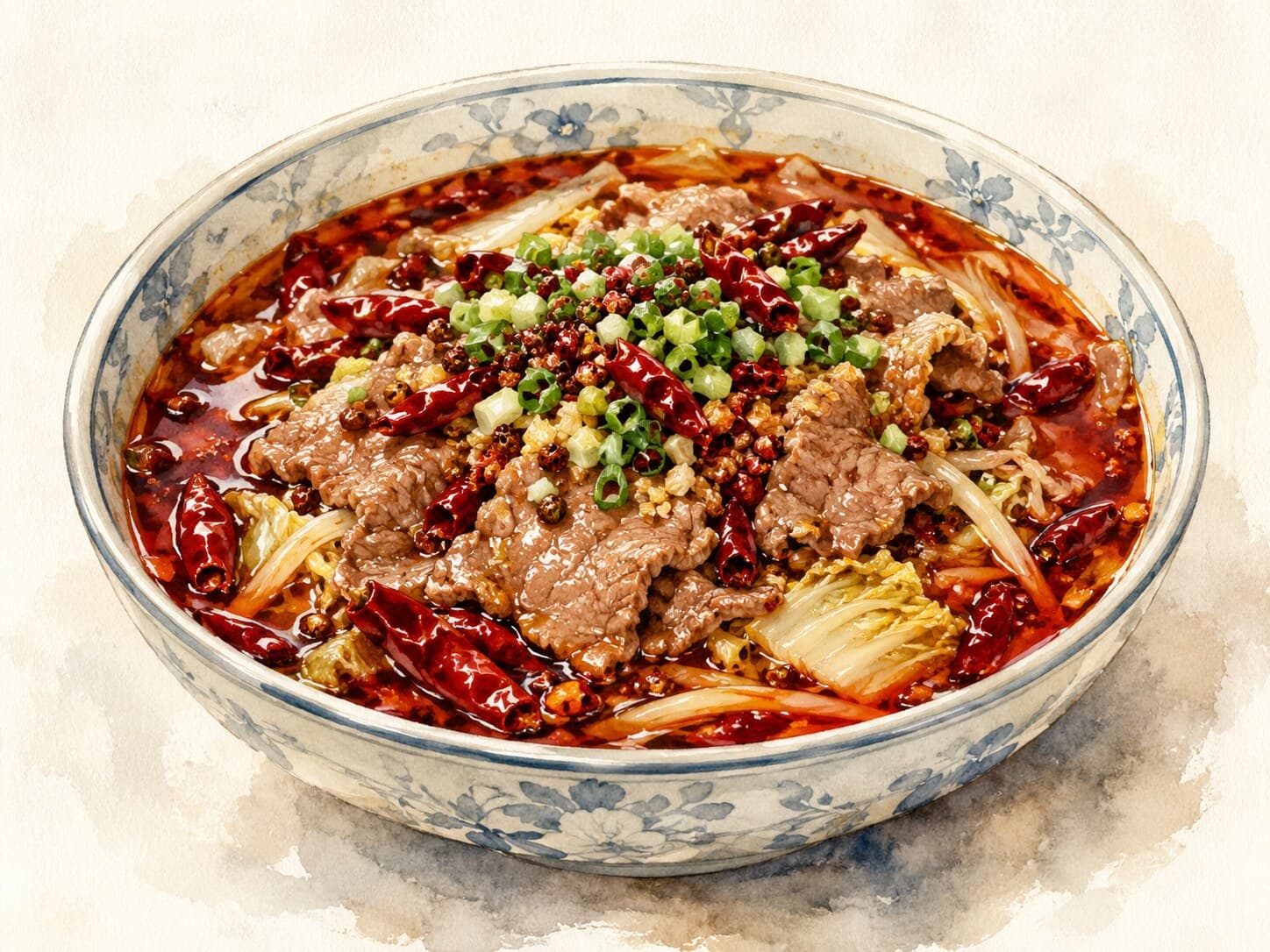
Sichuan’s Shuizhu Beef features tender, velveted beef slices in a spicy chili-bean broth, topped with aromatic chilies and Sichuan pepper.
Contents (5 sections)▾
Ingredients
- 500 g beef (sirloin or flank, thinly sliced)
- 2 tbsp cornstarch
- 1 tbsp soy sauce
- 1 tbsp rice wine
- 4 cups beef broth
- 3 tbsp doubanjiang (chili bean paste)
- 2 tbsp soy sauce
- 2 tbsp chili oil
- 1 tsp Sichuan peppercorns
- 10-15 dried red chilies
- 3-4 scallions, chopped
- to taste salt
Steps
In a bowl, combine the beef slices with cornstarch, soy sauce, and rice wine. Let it marinate for 10 minutes to achieve a velvety texture.
In a pot, bring the beef broth to a simmer over medium heat. Stir in doubanjiang and soy sauce, and cook for 5 minutes to infuse flavors.
Add the marinated beef slices to the broth, poaching them for 2-3 minutes until just cooked through. Avoid overcooking to maintain tenderness.
In a separate pan, heat chili oil over medium-high heat until it shimmers. Add Sichuan peppercorns and dried red chilies to bloom the flavors, then remove from heat.
Serve the poached beef in a bowl, ladling the broth over it. Top with scallions and carefully pour the hot oil mixture over the dish.
Why this works
The technique of velvetting the beef with cornstarch and marinating it allows for a tender, moist result that absorbs the flavorful broth without becoming tough. Poaching in a well-seasoned broth ensures that the beef is infused with depth while maintaining its texture. The key flavor component, doubanjiang, adds a fermented spiciness that’s quintessential to Sichuan cuisine. The final flourish of hot oil over the dried chilies and Sichuan peppercorns enhances the dish's flavor and creates an enticing aroma. If the beef seems tough after poaching, it might be due to prolonged cooking. Simply adjust the cooking time in the broth to 1-2 minutes less next time to keep it tender.
Common mistakes
Beef sliced too thick to cook through in the quick poach
- Target: slices about 2-3 mm thick, almost translucent at the edge.
- Why it matters: the poach (gentle simmer in liquid, not a hard boil) is short by design — at 2-3 minutes it can only cook through if the slices are thin. Thick slices leave a raw pink core when the outside is already firming.
- What to do: chill the beef in the freezer for 20-30 minutes before slicing; firm meat slices cleanly thin against the grain.
Adding all the slices at once and dropping the broth temperature
- Target: broth held at a steady simmer, with beef added in small handfuls.
- Why it matters: dumping the whole batch crashes the temperature, slices clump together, and the surfaces in the middle of the pile never reach safe doneness.
- What to do: separate the slices by hand, drop them in one or two at a time, and stir gently so each piece sees hot broth.
Pulling the beef off while still pink at the centre
- Target: every slice opaque all the way through, no pink line.
- Why it matters: quick-poach is fast on purpose, but the goal is fully cooked — not rare. The doubanjiang (fermented chilli-broad-bean paste, the heart of Sichuan flavour) broth is for flavour, not for safety.
- What to do: lift one slice with a spoon at the 2-minute mark and break it open; if any pink remains, give the batch another 30-60 seconds.
Pouring oil that is not hot enough to bloom the chillies
- Target: oil shimmering and beginning to smoke — roughly 180-200°C — before it hits the chilli and peppercorn mound.
- Why it matters: lukewarm oil weeps into the broth without releasing the aromatics; the dish ends up oily and dull instead of fragrant.
- What to do: heat the oil in a small pan watching for the first wisp of smoke, then pour decisively and listen for a sharp sizzle on contact.
What to look for
- each beef slice turns opaque and pale through the rust-red broth, no translucent edges — the safety standard for intact beef is a measured 63 °C / 145 °F followed by a rest of at least 3 minutes, confirmed with a thermometer; opacity is a practical doneness cue, not a colour test to rely on for safety
- the broth reads deep mahogany, not muddy brown — doubanjiang's red oil rises and pools at the surface
- when the hot oil hits the chilli pile, a loud crackle and a sharp aromatic plume rise within a second
- Sichuan peppercorns left whole on the surface look glossy and slightly swollen — they have bloomed, not burned to black
A note on history
Shuizhu beef (a Sichuan dish of thin-sliced beef poached briefly and finished with smoking-hot chilli oil) — literally "water-boiled beef" — was born in the salt-well kitchens of Zigong, Sichuan, where draft oxen too old to power the brine drills were slaughtered for meat. Workers sliced the tough beef thin and poached it briefly in salt-flavoured water with chillies and Sichuan peppercorns; the searing chilli pour disguised the tough older meat and the salt at hand was plentiful. The dish became one of the defining recipes of yan bang cai — the salt-gang cuisine — a distinctive sub-tradition within Sichuan cooking.
Get the essays in your inbox — free
Weekly notes on flavor, fermentation, and food history — the writing behind the Atlas of Flavor. No spam; unsubscribe anytime.