
Gan Bian Si Ji Dou
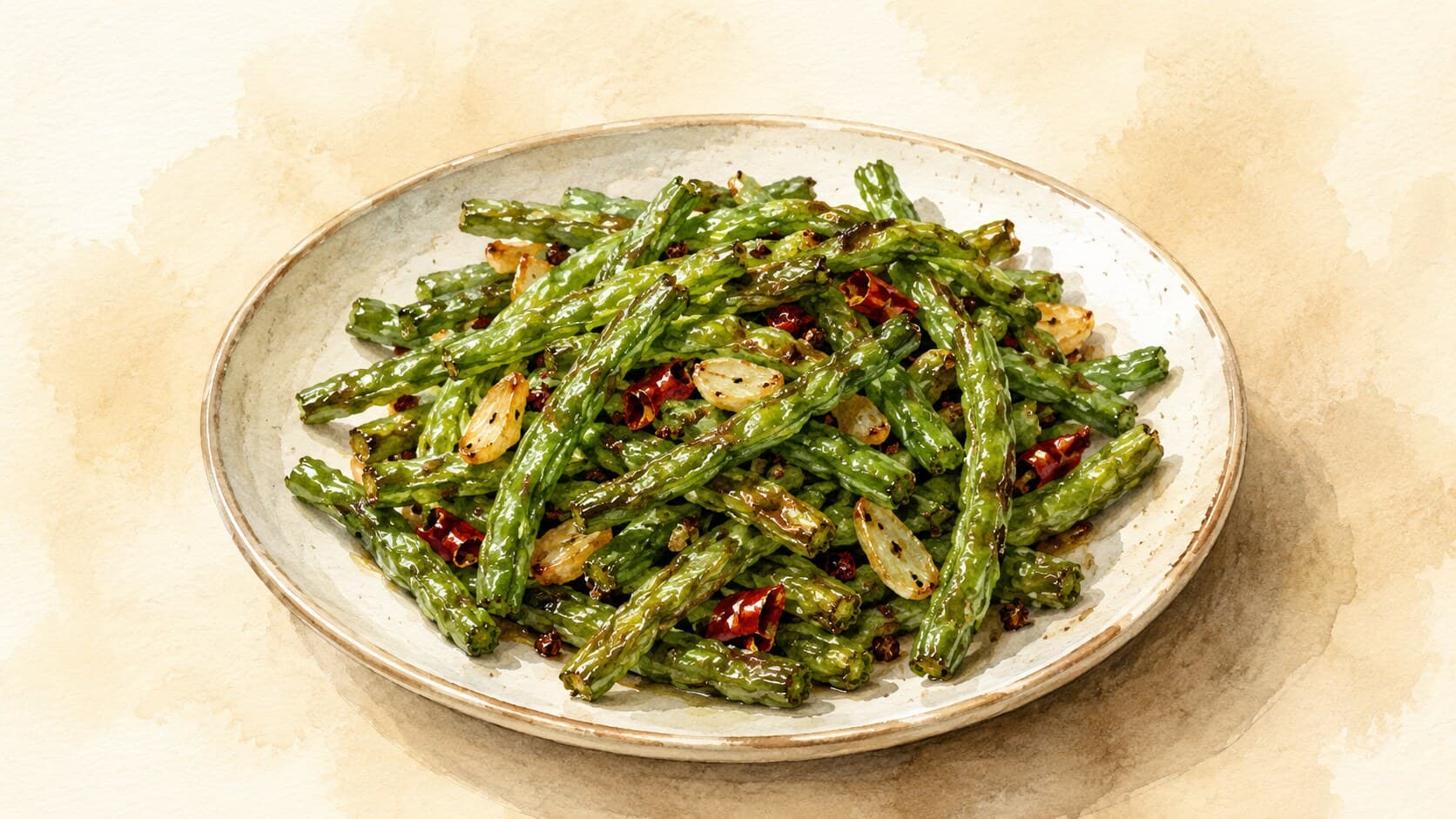
Sichuan dry-fried green beans with minced pork and spices create a richly flavorful side dish.
Contents (5 sections)▾
Ingredients
- 200 g whole green beans
- 100 g minced pork
- 30 g ya cai (preserved mustard greens), chopped
- 1 tbsp Sichuan peppercorns
- 1-2 dried red chilies, sliced
- 2 tbsp vegetable oil
- 1 tsp salt
- 1 tsp soy sauce
Steps
Heat 2 tablespoons of vegetable oil in a wok over high heat until shimmering. This high temperature is crucial for blistering the green beans quickly.
Add 200 g of whole green beans to the hot oil and stir-fry for about 4-5 minutes until blistered and tender. This technique enhances texture and flavor.
Remove the green beans and set aside. In the same wok, add 100 g of minced pork, breaking it up and cooking for 3-4 minutes until browned with no pink remaining — ground pork should reach 71 °C / 160 °F.
Stir in 30 g of chopped ya cai, 1-2 sliced dried red chilies, and 1 tsp of salt. Cook for another 2 minutes to combine flavors.
Return the blistered green beans to the wok, add 1 tsp of soy sauce, and toss everything together for 1-2 minutes to heat through.
Finally, add 1 tbsp of Sichuan peppercorns and stir-fry for an additional minute to release their fragrant oils.
Why this works
The flash-frying technique used here is integral to achieving the signature blistered texture of the green beans in the Sichuan style. By cooking the beans at a high temperature, they quickly develop a charred exterior while remaining tender inside. This contrast in texture is essential for a satisfying bite. The addition of minced pork adds umami richness, while ya cai (Sichuan pickled mustard greens, salty and sour) contributes a tangy depth. Sichuan peppercorns add a unique numbing spiciness. If the green beans seem too tough, ensure your oil is hot enough before adding them; undercooked beans will lack the desired blistering. Additionally, if the pork starts to burn, lower the heat slightly and add a splash of water to deglaze the wok, preventing burnt bits from affecting the overall flavor.
Common mistakes
Wet beans going into the oil.
Target: Beans bone-dry before they hit the wok — washed and then thoroughly patted or air-dried.
Why it matters: This is a dry-fry (cooking in a hot, dry or barely-oiled pan to drive off moisture and blister the surface). Water on the beans turns hot oil into a spitting, dangerous mess and, worse, drops the temperature so the beans steam soft instead of blistering. The whole identity of the dish — shriveled, leathery-tender skin packed with concentrated flavor — depends on driving moisture out, not trapping it in.
What to do: Dry the beans completely. Stand back and add them to the hot oil in batches so the temperature stays high.
Not letting the beans actually blister.
Target: Fry undisturbed in stretches until the skins wrinkle, pucker, and pick up brown-black freckles — roughly 4–5 minutes.
Why it matters: Constant stirring keeps the surface too cool to char. Blistering is partial dehydration plus browning; it collapses the bean's raw squeak into a deep, savory chew. Stir every second and you get pale, steamed beans with none of that.
What to do: Let them sit, listen for steady sizzling, toss only occasionally, and wait for the wrinkled, freckled skin before moving on.
Leaving the minced pork pink.
Target: Break the pork up and stir-fry until no pink remains and it is starting to crisp and brown — about 3–4 minutes over the heat.
Why it matters: Many versions of this dish carry minced pork, and ground meat must be cooked through — there is no safe rare for mince. Fully rendering it also browns the meat and drives off its water, building the dry, savory base the beans get tossed back into.
What to do: Cook the pork hard until it looks dry and a little crisp, not steamed and grey. If the wok floods with liquid, keep going until it cooks away.
Burning the Sichuan peppercorns and aromatics.
Target: Add peppercorns, dried chili, garlic, and ginger late and briefly — a minute or less, just until fragrant.
Why it matters: Sichuan peppercorns (the husks that give the dish its tingling, citrusy má numbness) and dried chilies scorch fast in a hot wok, turning acrid and bitter. Their oils are volatile — you want to release them, not cook them to ash.
What to do: Build them in near the end, off the fiercest heat, and pull the wok the moment they smell fragrant rather than burnt.
What to look for
- Beans before they go in: matte and dry to the touch, no glisten of water. Any visible moisture will steam, not sear.
- Properly blistered skin: wrinkled and shrunken, freckled brown-to-black, the bean gone limp and leathery. A smooth, bright-green bean has only been steamed.
- Pork that is fully done: no pink at all, broken into dry crumbles that are beginning to crisp. Wet, pale, clumping pork is undercooked — keep going.
- Aromatics at the finish: fragrant and just-toasted, the chilies darkened a shade but not black. Acrid smoke means the peppercorns or chili have burned — lower the heat next time.
A note on history
Gānbiān sìjìdòu (干煸四季豆) means, literally, "dry-fried green beans," naming the technique rather than any sauce: gānbiān is the Sichuan method of frying an ingredient to drive out its water and concentrate flavor, leaving a dish that looks dry with no pooled liquid (Red House Spice). Traditionally the beans were fried very slowly until thoroughly shriveled — Mrs. Chiang's Szechwan Cookbook describes dry-frying them the old way for well over an hour, until "quite shriveled, limp and dry" (The Mala Market).
Get the essays in your inbox — free
Weekly notes on flavor, fermentation, and food history — the writing behind the Atlas of Flavor. No spam; unsubscribe anytime.