
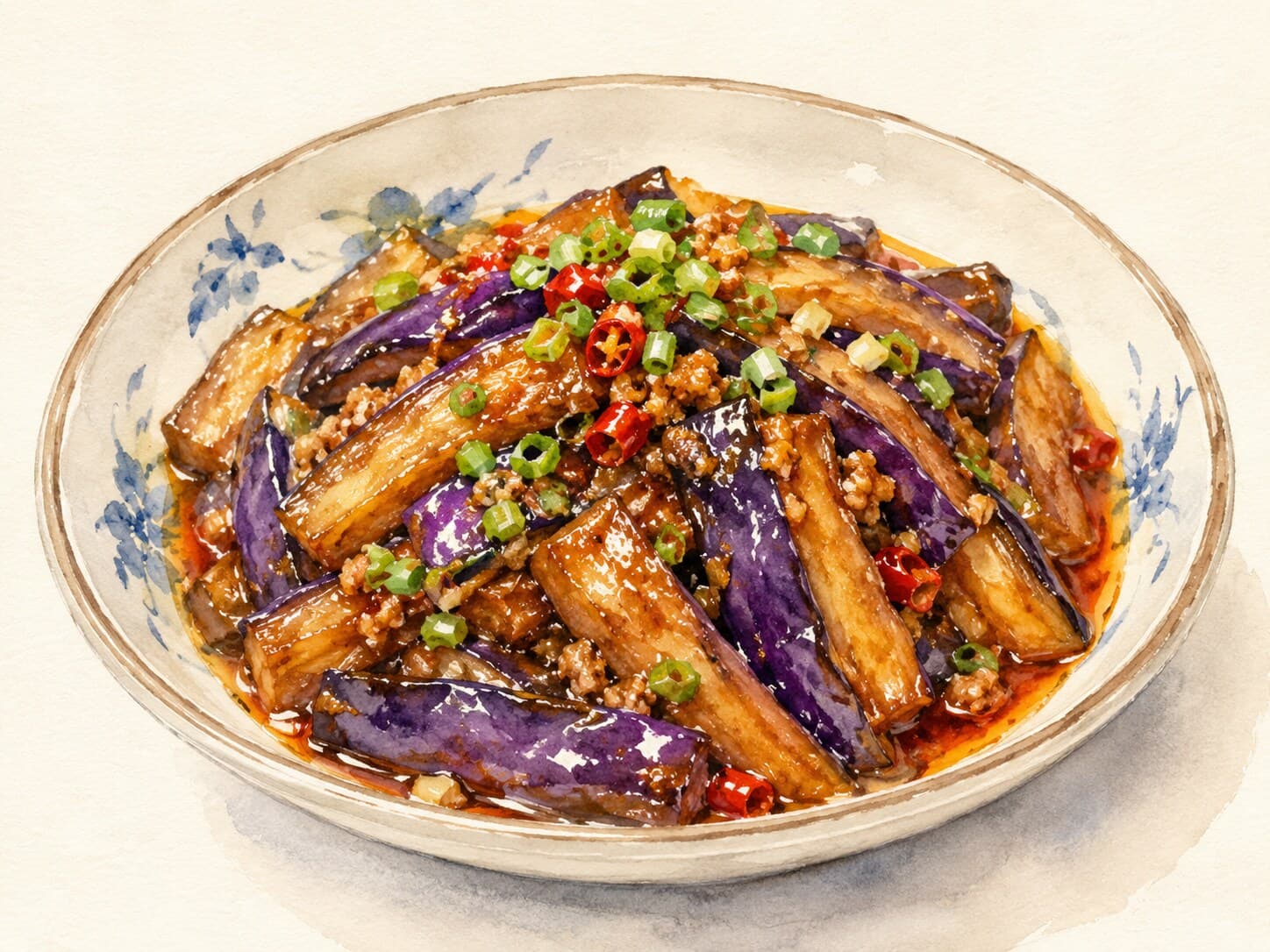
Yu Xiang Qie Zi (Fish-Fragrant Eggplant)
Savor the rich flavors of Sichuan with this delightful Fish-Fragrant Eggplant recipe, featuring silky eggplant in a zesty sauce.
Contents (5 sections)▾
Ingredients
- 500 g eggplant
- 3 tbsp vegetable oil
- 2 tbsp pickled chili, chopped
- 4 cloves garlic, minced
- 1 inch ginger, minced
- 2 tbsp soy sauce
- 1 tbsp rice vinegar
- 2 tbsp sugar
- 1 tbsp water
- 1 tsp cornstarch
- 2 green onions, sliced
- salt to taste
Steps
Cut the eggplant into 1-inch pieces and soak in salted water for 15 minutes to reduce bitterness.
Heat the vegetable oil in a large pan over medium-high heat. Once hot, add the drained eggplant and fry for 8-10 minutes until they are golden and silky, stirring occasionally.
In a separate bowl, mix the pickled chili, garlic, ginger, soy sauce, rice vinegar, sugar, water, and cornstarch to create the sauce.
Once the eggplant is cooked, push it to one side of the pan and pour the sauce on the empty side. Allow it to simmer for 2-3 minutes until slightly thickened.
Toss the eggplant in the sauce until fully coated. Add the sliced green onions and cook for an additional minute. Adjust seasoning with salt to taste.
Serve hot, garnished with extra green onions if desired.
Why this works
The technique of frying the eggplant until silky is crucial as it allows the eggplant to absorb flavors without becoming overly mushy. The high heat creates a beautiful caramelization, enhancing the dish's flavor. The combination of pickled chili, garlic, and ginger in the sauce replicates the umami-rich seasoning typically used for fish, giving this vegetarian dish its unique 'fish-fragrant' name. If the eggplant seems too oily, place it on a paper towel briefly to absorb excess oil. Conversely, if the sauce seems too thick, add a splash of water to loosen it. The balance of sweet, sour, and spicy elements is vital to achieving the signature taste of Sichuan cuisine, ensuring a dish that delights the palate.
Common mistakes
Undercooking the eggplant so it stays spongy.
Target: Eggplant fried until fully soft and silky to the center, golden and collapsing, 8–10 minutes.
Why it matters: Raw eggplant flesh is full of air pockets that taste squeaky and bitter; cooking collapses that spongy structure into something silky that drinks up the sauce. Half-cooked eggplant stays pale, chewy, and oily because it hasn't softened enough to release and re-absorb properly.
What to do: Give it the full time over medium-high heat and don't crowd the pan. The pieces should yield completely when pressed, with no firm raw core.
Drowning the dish in oil.
Target: Enough oil to coat and shallow-fry; blot excess before saucing if needed.
Why it matters: Eggplant is a sponge — it absorbs oil fast, and too much makes the finished dish heavy and slick. The goal is silky, not greasy. (Hot oil also spits when wet eggplant hits it, so add the pieces with care.)
What to do: Use a moderate amount of oil, salt and rest the eggplant first to firm it up so it absorbs less, and rest the fried pieces on paper towel before tossing with the sauce.
Letting the garlic and ginger burn.
Target: Aromatics (the garlic, ginger, and chili that perfume the oil) fried just until fragrant — seconds, not minutes — over controlled heat.
Why it matters: Garlic, ginger, and chili scorch quickly, and burnt aromatics turn the whole sauce acrid and bitter, masking the sweet-sour balance that defines yu xiang.
What to do: Have everything measured and ready, lower the heat before the aromatics go in, and stir constantly. The moment they smell fragrant, add the liquids to stop the cooking.
Not balancing the sweet-sour-salty sauce.
Target: A sauce that tastes sweet, sour, salty, and a little spicy all at once — adjusted by tasting.
Why it matters: Yu xiang ("fish fragrance") is a balanced flavor, not a single note. If one element dominates — too sweet, too sharp, too salty — the signature harmony collapses, and the dish reads as ordinary stir-fried eggplant.
What to do: Pre-mix the sauce and taste it before it hits the pan. Nudge sugar, vinegar, or soy until the four tastes sit in balance, then adjust once more after it coats the eggplant.
What to look for
- The eggplant as it fries: the pieces darken from white to deep gold and slump, glossy and yielding. Pale, firm pieces are still raw inside and need more time.
- The aromatics: fragrant and softened, never browned or smoking. The smell should bloom sweet and pungent the instant they hit the oil.
- The sauce as it thickens: it turns glossy and clings to the back of a spoon, the cornstarch (a starch that thickens a sauce as it heats) just set. Thin, watery sauce slides off the eggplant.
- The finished dish: every piece lacquered and shining, the sauce coating rather than pooling. A puddle of sauce at the bottom means it never thickened or the eggplant was too wet.
A note on history
Yu xiang ("fish fragrant") is one of the classic flavor profiles of Sichuan cooking, and the dish contains no fish at all (Wikipedia; Omnivore's Cookbook). One common account holds that the seasoning — garlic, ginger, chili, and pickled chili with sweet, sour, and salty notes — was originally developed to cook river fish, then carried over to other ingredients while keeping the name (The Woks of Life). The flavor is built on the interplay of savory, sweet, sour, and spicy, which is what makes "fish fragrance" a profile rather than an ingredient (China Sichuan Food).
Get the essays in your inbox — free
Weekly notes on flavor, fermentation, and food history — the writing behind the Atlas of Flavor. No spam; unsubscribe anytime.