
Hong Shao Rou (Red-Braised Pork)
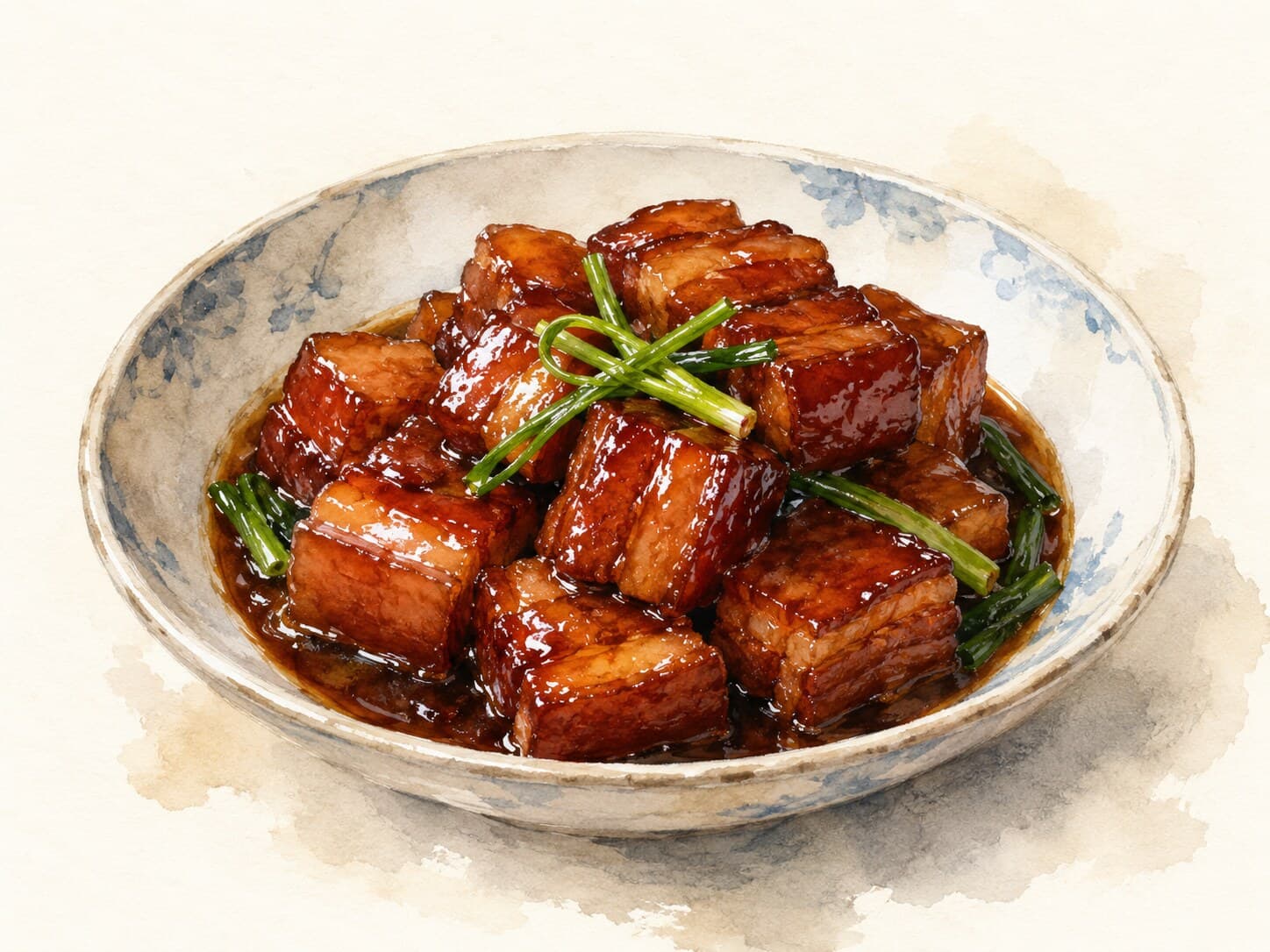
Enjoy a glossy, sweet, and lacquered Hong Shao Rou, featuring caramelized pork belly cooked to perfection.
Contents (5 sections)▾
Ingredients
- 500 g pork belly, cut into 3 cm cubes
- 50 g sugar
- 100 ml soy sauce
- 50 ml Shaoxing wine
- 200 ml water
- 2 pieces star anise
- 1 piece cinnamon stick
- 1 tablespoon ginger, sliced
- 1 tablespoon garlic, minced
- 2 green onions, cut into 5 cm lengths
- Salt to taste
Steps
In a heavy-bottomed pot, heat sugar over medium heat, stirring constantly until it melts and turns a dark amber color, about 5-7 minutes. Caramelizing sugar properly is essential for achieving the dish's characteristic glossiness.
Add the pork belly cubes to the pot and stir to coat them in the caramel. Sear the pork for about 3-5 minutes until lightly browned. This step enhances the depth of flavor.
Pour in the soy sauce, Shaoxing wine, and water, followed by star anise, cinnamon stick, ginger, garlic, and green onions. Stir well to combine.
Bring the mixture to a boil, then reduce the heat to low, cover, and simmer for 30 minutes. This slow-cooking allows the pork to absorb the flavors and become tender.
Uncover and cook for an additional 10-15 minutes, allowing the sauce to reduce and thicken. The dish should achieve a glossy, lacquered appearance. If the sauce thickens too much, add a bit of water to adjust the consistency.
Season with salt to taste before serving. Serve hot with steamed rice to balance the rich flavors.
Why this works
The key to achieving the stunning mahogany color of Hong Shao Rou lies in the caramelization of sugar, which adds depth and complexity to the flavor. By cooking the sugar slowly to a dark amber, you create a rich base that contrasts beautifully with the savory elements of soy sauce and wine. The braising process is essential as it allows the pork belly to become tender while absorbing the sweet and savory flavors. If the caramel breaks or crystallizes during the process, simply add a splash of water and continue stirring over low heat until it melts back into a smooth syrup. This technique ensures that the final dish is both glossy and flavorful, showcasing the beauty of Shanghainese cuisine.
Common mistakes
Sugar pulled too early — pale caramel.
- Target: a dark amber, almost reddish-brown caramel (sugar cooked until it melts and turns brown, deepening into a complex sweet-bitter flavor) just before the smoke point (the temperature at which fat or sugar starts to burn and smoke).
- Why it matters: the colour and the bittersweet backbone of hong shao rou (Shanghainese red-braised pork belly) come from sugar pushed to the edge. Pale caramel reads as sticky-sweet and one-dimensional; the pork will never reach that mahogany shine.
- What to do: keep cooking past pale gold into a deep amber; pull when it just starts to smell faintly toasty. Have the pork standing by — caramel keeps darkening even off heat.
Pork belly not seared into the caramel.
- Target: every cube coated and lightly browned in the caramel before the liquid goes in.
- Why it matters: searing in caramel sets the colour into the pork and starts rendering surface fat — skip it and the cubes stay pale and the sauce never lacquers.
- What to do: add the cubes to the caramel and stir for 3-5 minutes, until every face is glossed and faintly browned.
Lid kept on the whole simmer.
- Target: lid on for the long braise (slow cooking in a small amount of seasoned liquid until tender), lid off for the final 10-15 minutes to reduce and lacquer (cook the sauce down until it coats the meat in a glossy glaze).
- Why it matters: without that uncovered reduction the sauce stays thin and watery — there is no glaze to coat each cube, just a bowl of soupy pork.
- What to do: simmer covered until tender (about 30 minutes minimum, longer is better), then uncover and reduce until the sauce coats the back of a spoon and the cubes shine.
Sauce reduced so far that it scorches.
- Target: glossy, syrupy sauce that clings to the pork, not a dry pan.
- Why it matters: once the liquid drops too low, the sugar burns onto the pan and the dish turns bitter quickly.
- What to do: watch the last few minutes closely; if the sauce thickens too far, add a splash of hot water and stir to bring it back to a glaze.
What to look for
- the caramel goes from clear → pale gold → amber → reddish-brown — pull just into reddish-brown, not black
- the pork cubes turn from pink-grey to glossy mahogany as they coat in the caramel
- the simmer is gentle: small lazy bubbles, not a hard boil that toughens the fat
- the finished sauce coats the back of a spoon and leaves a clean trail when you draw a finger through it
A note on history
Red-braised pork belly is regarded as a signature of both Shanghainese (本帮菜) and Hunanese cooking, with the Hunanese version often sold today as "Chairman Mao's red-braised pork" (毛氏红烧肉). Mao Zedong, who was born in Hunan, was a famous lover of the dish — the story is well documented enough to be part of the recipe's identity, though the precise level of Mao's devotion has acquired the usual layers of legend over the years.
Get the essays in your inbox — free
Weekly notes on flavor, fermentation, and food history — the writing behind the Atlas of Flavor. No spam; unsubscribe anytime.