
Samsa
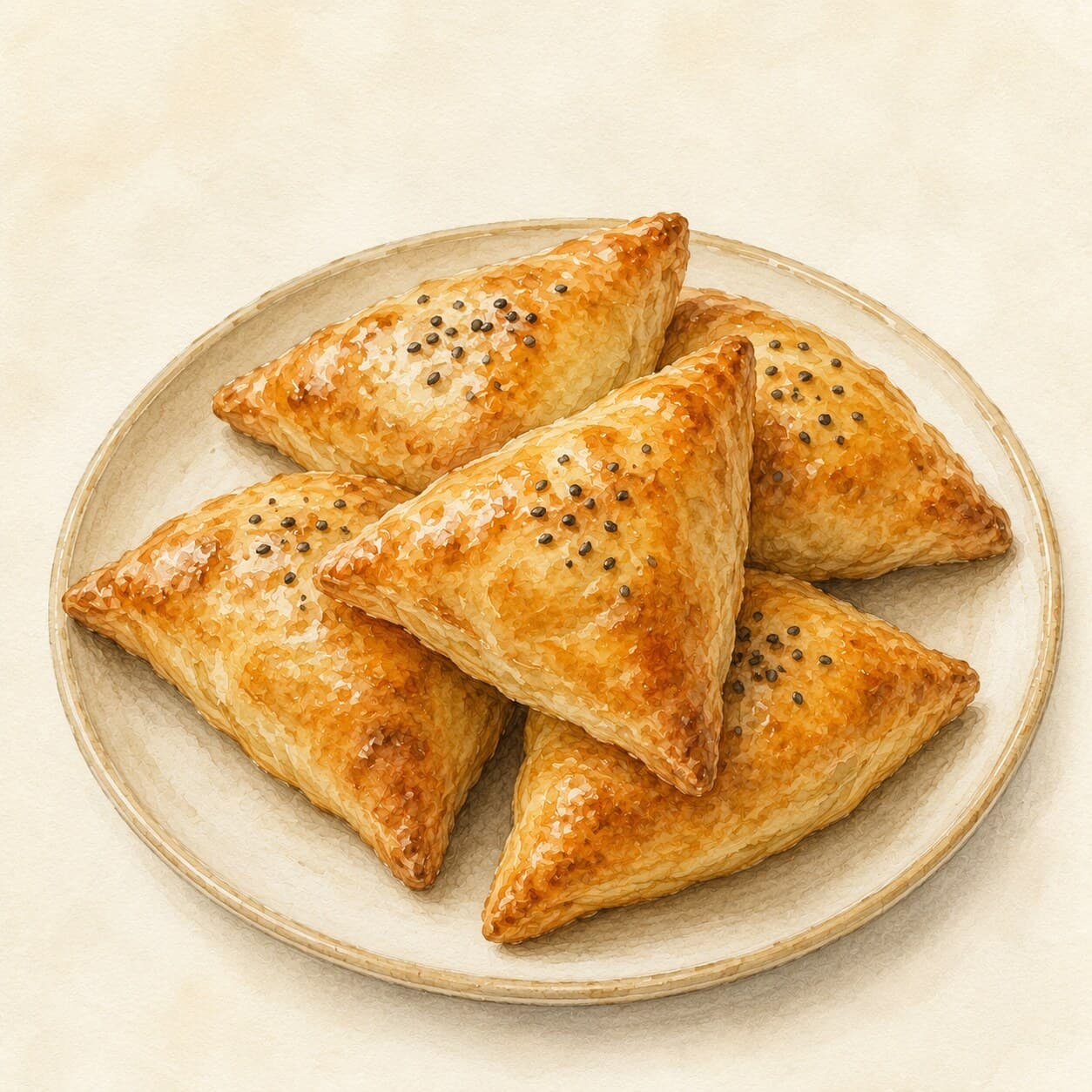
Samsa is a traditional Uzbek pastry featuring a flaky triangular shape with a savory lamb or pumpkin filling, perfect for any main course.
Contents (5 sections)▾
Ingredients
- 500 g lamb, minced
- 200 g onion, finely chopped
- 300 g puff or yeasted dough
- 50 g nigella seeds
- 1 tsp salt
- 1 tsp black pepper
- 1 egg, beaten (for egg wash)
- 2 tbsp vegetable oil
Steps
Preheat your oven to 200°C (390°F). This temperature helps achieve a crispy outer crust while cooking the filling evenly.
In a skillet, heat vegetable oil over medium heat. Add the chopped onion and sauté until translucent, about 5 minutes.
In a bowl, combine the minced lamb, sautéed onion, salt, and black pepper. Mix well to ensure even distribution of flavors.
Roll out the puff or yeasted dough on a floured surface to about 0.5 cm thickness. Cut into squares, about 10 cm on each side.
Place a tablespoon of the filling mixture in the center of each square. Fold the dough into a triangle and seal the edges tightly, ensuring no filling escapes.
Brush the tops with beaten egg and sprinkle nigella seeds generously. This adds both flavor and an attractive finish.
Arrange the samsas on a baking tray lined with parchment paper. Bake in the preheated oven for 15 minutes or until golden brown.
Tools you'll want
Why this works
The technique of creating a triangular shape for samsa allows for even cooking and a pleasing presentation. Using either puff or yeasted dough provides versatility; puff dough gives a flaky texture, while yeasted dough results in a more bread-like consistency. The high baking temperature of 200°C (390°F) is crucial as it ensures that the outer crust crisps up while the filling cooks thoroughly. If the dough breaks during sealing, you can simply patch it with extra dough or a bit of water to re-seal the edges. The inclusion of nigella seeds on top enhances flavor and adds a beautiful visual element. Properly sealing the edges is essential—if they are not sealed well, the filling may leak out during baking, resulting in a less appealing dish. A good balance of seasoning in the filling is also vital; if it seems too bland, adjust by adding more salt or spices to enhance the overall flavor of the samsa.
Common mistakes
Overfilling the pastry.
Target: About one tablespoon of filling per square, kept in a neat mound in the center.
Why it matters: The lamb releases fat and juice as it bakes. Too much filling and there's no room for the steam to go, so the seams burst and the juices run out onto the tray and burn — and the samsa dries out.
What to do: Keep the mound modest and centered, leaving a clear border of dough all around so you have clean edges to seal.
Weak or greasy seals.
Target: Edges pressed firmly into a sealed triangle, with the seam on top or tucked under.
Why it matters: If filling or fat gets onto the edges, the dough can't stick to itself and the parcel springs open in the oven. Open samsa leak and lose their juicy centers.
What to do: Wipe any filling off the border before folding. Press the edges together firmly — for extra security, fold them over on themselves or crimp with a fork. A dab of water helps yeasted dough grip.
Rolling the dough too thick.
Target: About 0.5 cm thick, as the recipe says — even, not thick in the middle.
Why it matters: Thick dough insulates the filling, so by the time the crust colors, the center is still doughy or the meat undercooked. Too thin, though, and it tears and leaks.
What to do: Roll evenly to a coin's thickness and aim for consistent squares. If a patch tears while shaping, patch it with a scrap of dough and a little water.
Putting samsa into an oven that isn't fully heated.
Target: A fully preheated 200°C (390°F) oven before the tray goes in.
Why it matters: High, immediate heat is what crisps the outside quickly and cooks the filling through. A cool or still-warming oven bakes the pastry slowly, so it turns pale, heavy, and greasy instead of flaky.
What to do: Give the oven a full 10–15 minutes to come up to temperature. Bake on the upper-middle rack so the tops brown.
Skipping or unevenly applying the egg wash.
Target: A thin, even coat of beaten egg brushed over every top before the nigella seeds go on.
Why it matters: The egg wash (beaten egg brushed on for color and shine) is what gives samsa their golden gloss and, just as important, glues the nigella seeds in place so they don't roll off.
What to do: Brush lightly and evenly — a thick pool of egg pools in the creases and bakes to a patchy brown. Sprinkle the seeds while the wash is still wet.
What to look for
- The filling before shaping: moist and glossy but not soupy — no liquid pooling in the bowl. Wet filling makes soggy bottoms and weak seals.
- A sealed samsa: a firm, closed triangle that holds its shape, seams pressed flat with no gaps, sitting steady on the tray.
- After the egg wash: an even, wet sheen over the whole top with the nigella seeds sticking, not sliding off.
- In the oven: the tops turn deep golden-brown and the pastry looks set and firm, with the base coloring too — lift one gently to check it's not pale and soft underneath.
- Doneness before serving: a crisp, deep-golden crust, and the filling cooked through. Because the lamb is minced, the safe endpoint is 71 °C / 160 °F on a thermometer pushed into the centre of the filling — colour ("no pink") and clear juices are cues, not the safety test. If the crust is browning too fast while the filling is still undercooked, lower the heat to 180 °C and give it a few more minutes.
A note on history
Samsa belongs to an old family of stuffed pastries traced to the Persian sanbosag, savory triangular parcels recorded in the medieval Middle East and carried along the Silk Road. In Uzbekistan the dish became distinctly local: traditionally baked by sticking the parcels to the hot clay wall of a tandoor (clay oven), which gives them a smoky aroma and a crisp, flaky crust. The same ancestor gave rise to the Indian samosa and many related pastries across Asia. (Samsa (food) — Wikipedia)
Get the essays in your inbox — free
Weekly notes on flavor, fermentation, and food history — the writing behind the Atlas of Flavor. No spam; unsubscribe anytime.