
Naryn
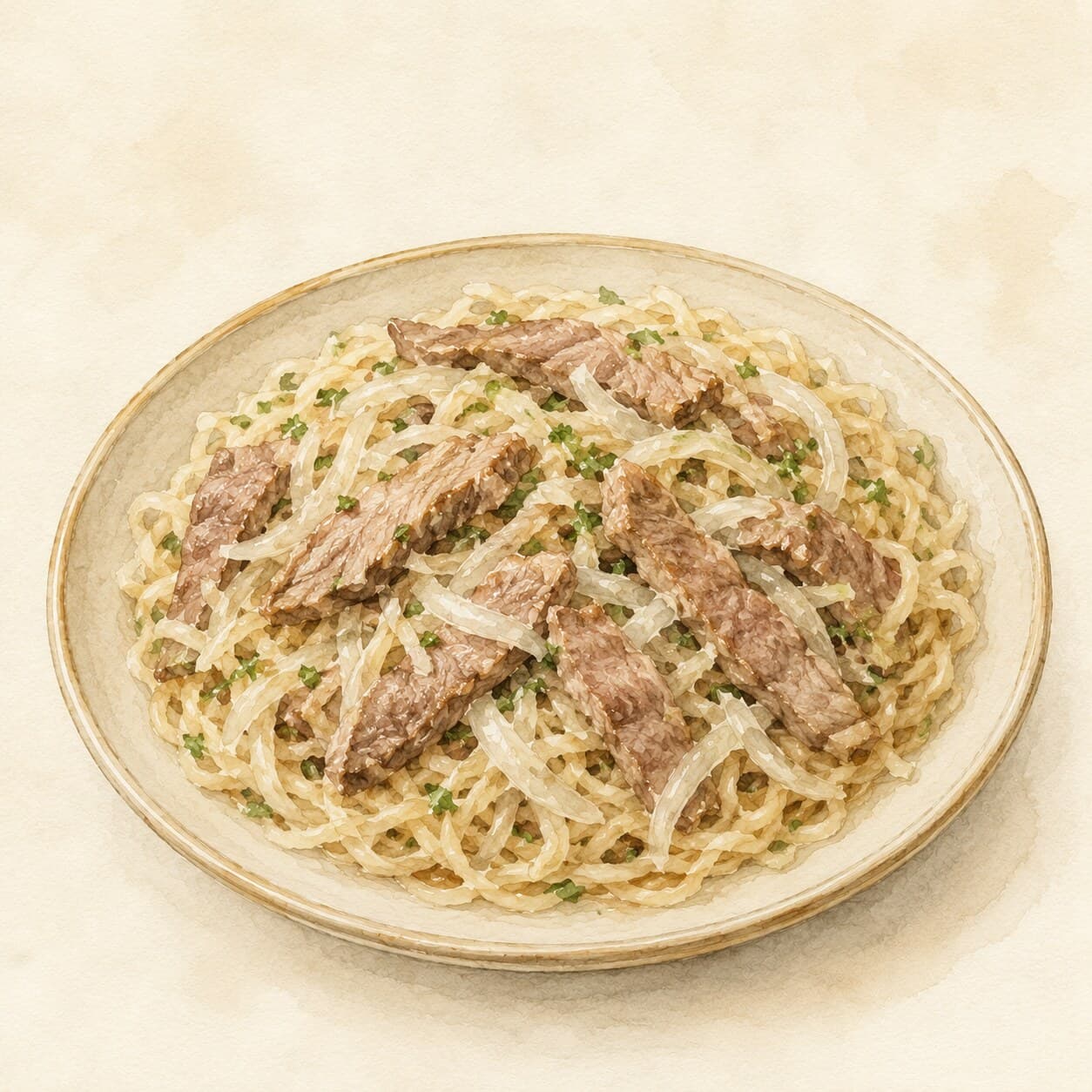
Naryn is a delightful Uzbek noodle dish featuring hand-cut noodles, tender meat, and raw onions, served hot or at room temperature.
Contents (5 sections)▾
Ingredients
- 500 g hand-cut thin noodles
- 300 g boiled beef or horsemeat, sliced
- 1 large raw onion, thinly sliced
- 1 liter beef broth
- Salt to taste
- Black pepper to taste
Steps
Bring a large pot of salted water to boil (100°C). Add the hand-cut noodles and cook for 5-7 minutes until al dente.
While the noodles are cooking, prepare the broth in a saucepan over medium heat (about 80-90°C) and keep it warm.
Drain the noodles and toss them with the sliced boiled meat and raw onions in a large mixing bowl.
Season the mixture with salt and black pepper to taste, ensuring even distribution.
Serve the noodle mixture either hot or at room temperature, drizzling with warm broth or serving it on the side.
Why this works
The success of Naryn lies in the balance of flavors and textures. The hand-cut noodles provide a chewy base that absorbs the rich, savory notes of the broth while contrasting with the tender bites of meat. The raw onions add a refreshing crunch that enhances the overall experience. Cooking the noodles just until al dente (cooked through but still firm to the bite) allows them to maintain structure, preventing them from becoming mushy. If the noodles seem too sticky after cooking, rinse them briefly under cold water to separate and refresh them. The optional broth can be drizzled over the top for added moisture or served on the side for those who prefer to control the soupiness of their dish. This flexibility allows Naryn to be enjoyed either as a comforting main course or a light meal, adaptable to the diner's preference.
Common mistakes
Noodles clumping into a solid mass after draining.
Target: Loose, separate strands you can toss freely with the meat and onion.
Why it matters: As noodles cool, the starch on their surface turns sticky and glues the strands together. In a dish this simple — where the noodles are the main event — a clumped, gummy tangle is the difference between pleasant and stodgy.
What to do: As the recipe notes, rinse the drained noodles briefly under cold water to wash off surface starch and stop the cooking, then shake them dry. A light toss with a spoonful of the warm broth or a few drops of oil keeps them slippery and separate.
Onions sliced too thick, so the raw bite overpowers everything.
Target: Paper-thin, translucent half-moons of onion.
Why it matters: Raw onion is the signature fresh, sharp counterpoint in Naryn, but a thick slice delivers a harsh, hot mouthful that drowns the gentle meat and noodles. Thin slices spread that bite evenly and stay crisp without dominating.
What to do: Slice as thinly as you can with a sharp knife. If raw onion feels too strong for you, toss the slices with a pinch of salt, let them sit 10 minutes, then squeeze out the liquid — this tames the harshness while keeping the crunch.
Overcooking the noodles into mush.
Target: Just-tender noodles with a slight resistance to the bite (al dente — cooked through but still firm).
Why it matters: Thin hand-cut noodles cook quickly, and past the al dente point their structure collapses. Because Naryn is tossed and sometimes served at room temperature, soft noodles keep softening and turn pasty on the plate.
What to do: Start tasting at the 5-minute mark. Pull them the moment they are cooked through but still springy, then rinse to halt the heat.
Pouring fiercely boiling broth over the assembled dish.
Target: Hot, steaming broth kept below a rolling boil (around 80–90°C, as the recipe directs).
Why it matters: Broth at a full boil overcooks the delicate noodles on contact and instantly wilts the raw onion into a soft, cooked state, erasing the fresh crunch that defines the dish.
What to do: Keep the broth warm and steaming, not boiling, and either drizzle a little over each bowl or serve it on the side so each diner controls how soupy it becomes.
Under-seasoning because the dish looks plain.
Target: Noodles, meat, and onion seasoned so each bite tastes complete on its own, plus a well-salted broth.
Why it matters: With so few ingredients, there is nowhere for flavor to hide — flat seasoning reads immediately as bland. The broth and the tossed noodles each need their own salt.
What to do: Season the tossed noodle-and-meat mixture and taste it before serving; season the warm broth separately. Adjust both with salt and black pepper until each tastes right on its own.
What to look for
- Noodles just done: tender through but still with a gentle spring when you bite. A soft, pasty center means they have gone too far.
- Noodles after rinsing: cool, loose, and slippery — the strands fall apart easily instead of clinging in a clump.
- Onion sliced right: thin enough to be translucent, holding its shape without falling to shreds.
- Broth at serving temperature: steaming and hot to the lip but with no rolling bubbles. A churning boil is too hot for this dish.
- The finished bowl: distinct strands of noodle, ribbons of tender meat, and crisp onion all visible and loosely tossed — not a sodden, uniform mass.
A note on history
Naryn (known as norin in Uzbekistan) is a Central Asian dish of thin hand-cut noodles tossed with sliced meat, rooted in the nomadic herding cultures of the steppe where portable, sustaining food mattered. It is traditionally made with horse meat — often including kazy, a horse-meat sausage — though beef or mutton are common substitutes, and the dish carries strong festive and hospitality associations, especially in Kyrgyzstan. (Source: Naryn (dish) — Wikipedia.)
Get the essays in your inbox — free
Weekly notes on flavor, fermentation, and food history — the writing behind the Atlas of Flavor. No spam; unsubscribe anytime.