
Plov
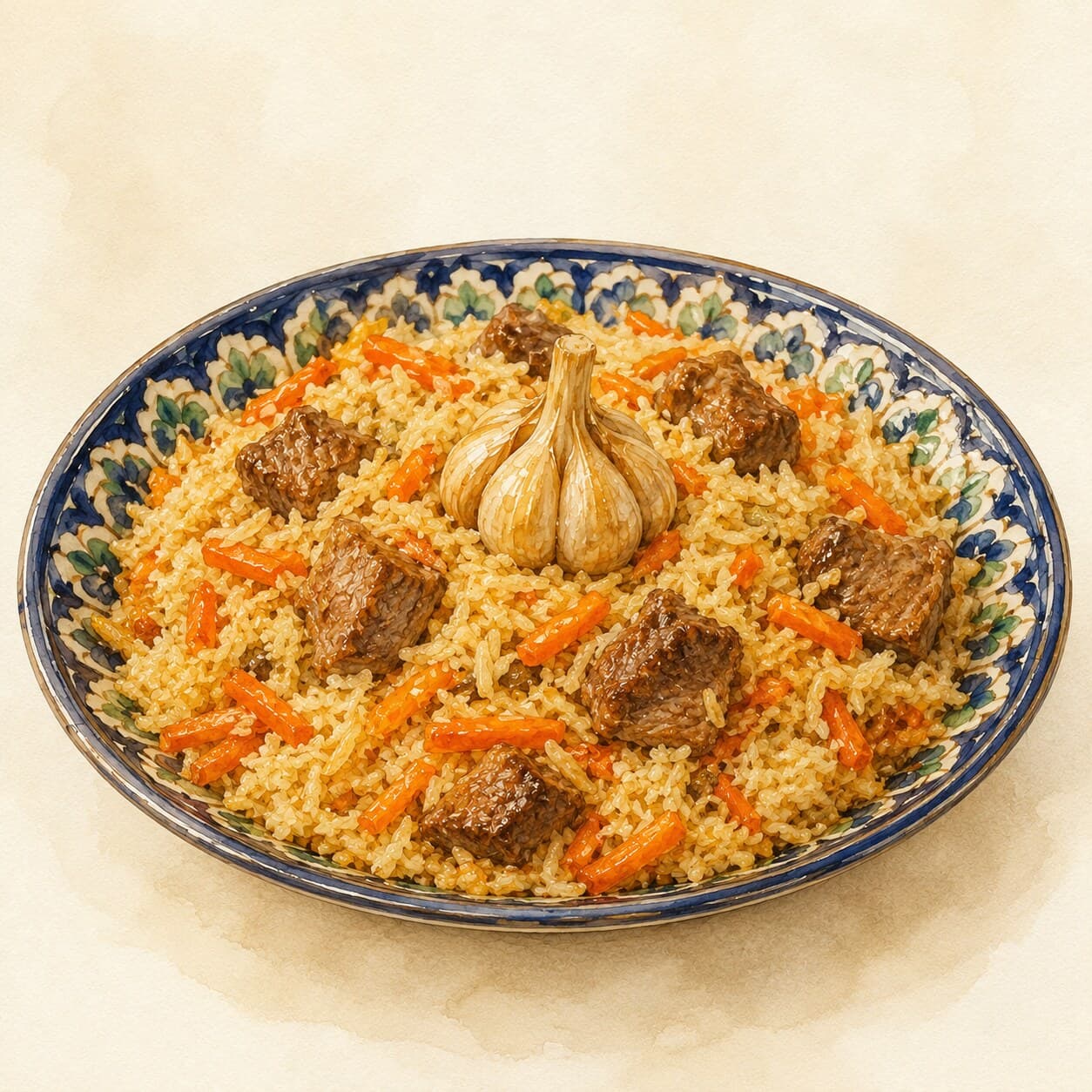
Discover the rich flavors of Uzbek plov, a layered rice and meat dish featuring fragrant garlic and vibrant carrots.
Contents (5 sections)▾
Ingredients
- 500 g long-grain rice
- 500 g lamb or beef, cubed
- 3 medium carrots, julienned
- 2 medium onions, finely chopped
- 1 whole garlic head
- 2 tbsp cumin
- 100 ml vegetable oil
- Salt to taste
- Water, as needed
Steps
Rinse the rice in cold water until the water runs clear, then soak it in warm water for 30 minutes to ensure even cooking.
In a large pot, heat the vegetable oil over medium heat and add the chopped onions. Cook for about 5 minutes until they are translucent.
Add the cubed meat to the pot and brown on all sides, about 10 minutes. This step builds flavor for the zirvak.
Stir in the julienned carrots and cumin, cooking for another 10 minutes until the carrots soften.
Drain the soaked rice and layer it over the meat and vegetables in the pot. Gently press down.
Carefully place the whole garlic head in the center of the rice, then add enough water to just cover the rice. Season with salt.
Bring to a gentle boil, then reduce heat to low, cover tightly, and simmer for about 30 minutes until the rice is fully cooked.
Once done, remove the pot from heat and let it sit, covered, for another 10 minutes. This allows the flavors to meld.
Fluff the rice with a fork, removing the garlic head. Serve hot, ensuring each portion has a balance of rice, meat, and carrots.
Why this works
The layered cooking technique in plov ensures that each component retains its unique flavor while contributing to the dish’s overall richness. The initial step of browning the meat and onions creates a flavorful base known as zirvak, which is crucial for depth. Adding carrots at this stage allows them to infuse their sweetness into the dish. Rinsing and soaking the rice is key; it removes excess starch and ensures even cooking. If the rice seems too hard after simmering, add a splash of hot water and continue to steam it, covered, for a few more minutes. This helps avoid undercooked rice, a common issue. The garlic flavors the rice and serves as a visual anchor, making the dish feel authentic and rustic. The final resting period allows the flavors to meld beautifully, creating a balanced and hearty meal.
Common mistakes
Not rinsing the rice until the water runs clear.
Target: Rinse and swirl the rice in several changes of cold water until the water is almost clear, then soak for the 30 minutes the recipe calls for.
Why it matters: Dry rice is coated in loose surface starch. Left on, that starch turns gluey as it cooks and glues the grains into a sticky clump — the opposite of the separate, fluffy grains plov is prized for.
What to do: Cover the rice with cold water, swirl with your hand, pour off the milky water, and repeat until it runs nearly clear.
Stirring the rice once it is layered on top.
Target: After the rice goes on, do not stir it — only steam it, covered, until done.
Why it matters: Stirring breaks the grains and releases starch into the liquid, turning the top layer into porridge. In plov the rice steams undisturbed above the meat so each grain stays whole.
What to do: Layer the rice, level it gently, add the water down the side of the pot, cover, and leave it alone until the steaming time is up.
Too much water, so the rice goes soggy.
Target: Add just enough water to barely cover the rice — about 1–2 cm above the surface.
Why it matters: Rice absorbs a fixed amount of water; any excess leaves the grains waterlogged and mushy instead of tender and distinct.
What to do: Pour water in slowly until it sits about one fingertip-joint above the rice, then stop — you can add a splash more later if needed, but you cannot take it back out.
Heat too high while the rice steams, so the bottom scorches.
Target: Bring to a gentle boil, then drop to genuinely low heat, tightly covered, for the steaming time.
Why it matters: On high heat the water boils away before the rice is cooked and the bottom burns, while the top stays hard. Low, steady steam cooks the grains evenly from the trapped moisture.
What to do: Once it reaches a boil, turn the heat right down and keep the lid on. If your pot runs hot, sit it on a heat-diffuser or a second dry pan to soften the base heat.
What to look for
- Rinsed rice: the rinse water goes from milky-cloudy to nearly clear over several changes.
- Zirvak (the meat-and-vegetable base — the flavour foundation of plov): meat deeply browned, onions golden, carrots softened, the base smelling sweet and savoury with a layer of oil floating on top — that oil carries the flavour up into the rice.
- Water level: the liquid sits about 1–2 cm, one fingertip-joint, above the rice before you cover the pot.
- Rice near done: the liquid has been absorbed and small steam holes ("craters") appear on the surface; a grain is tender all the way through with no hard core.
- After the 10-minute rest: the grains separate and look glossy and fluff apart easily with a fork.
A note on history
Plov is the national dish of Uzbekistan, and plov (also palov or osh) is the Uzbek name for this style of rice pilaf; its "palov culture and tradition" was inscribed on UNESCO's list of Intangible Cultural Heritage in 2016. Pilaf-style cooking is thought to have spread across Central Asia along the Silk Road, and Uzbek cooks developed the dish's signature zirvak base and layered method, cooked in a wide, heavy pot called a kazan. Source: UNESCO, "Palov culture and tradition".
Get the essays in your inbox — free
Weekly notes on flavor, fermentation, and food history — the writing behind the Atlas of Flavor. No spam; unsubscribe anytime.