
Or Lam
Experience the rich flavors of Or Lam, a traditional Laotian stew featuring buffalo meat and aromatic herbs.
Contents (5 sections)▾
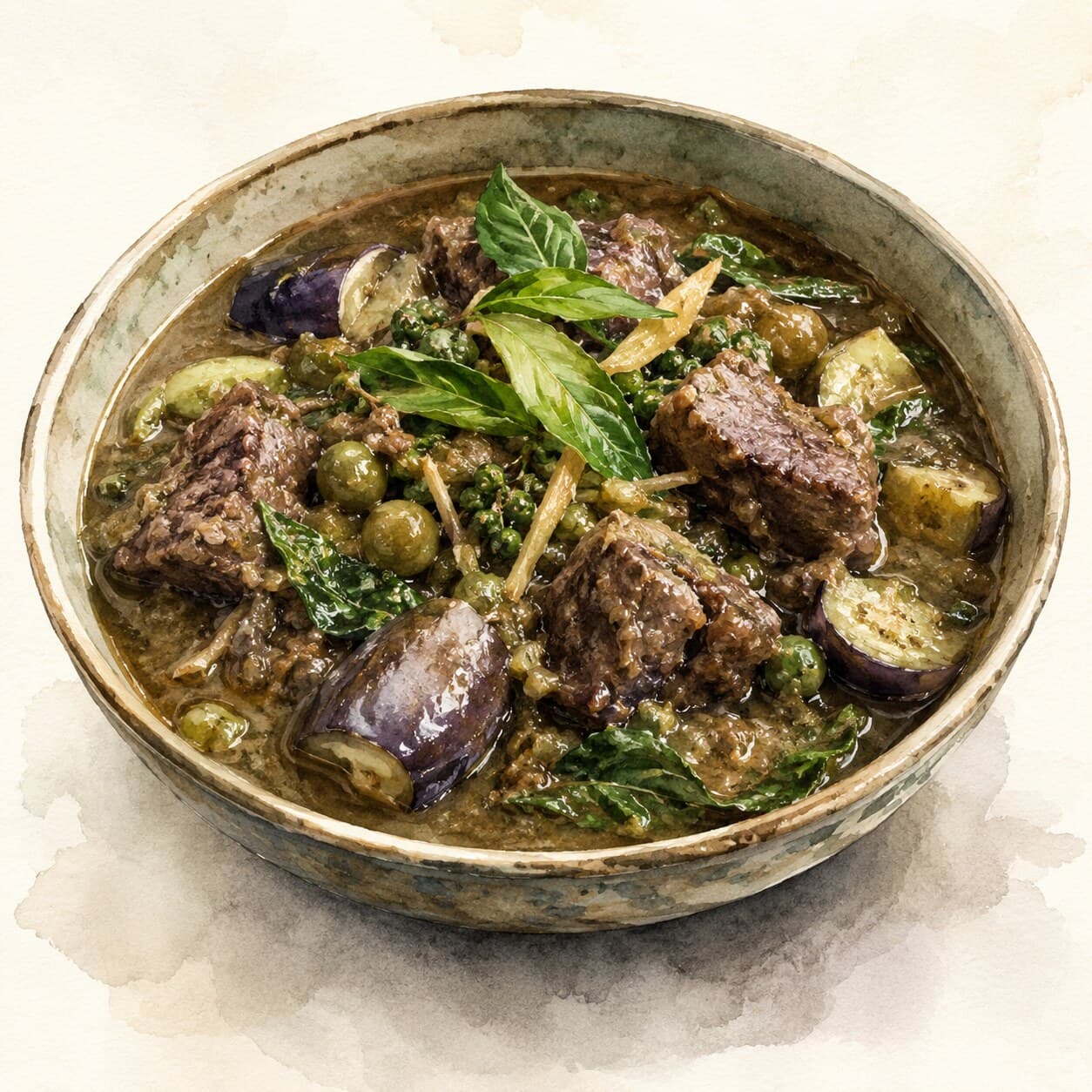
Ingredients
- 500 g buffalo meat, cut into cubes
- 200 g eggplant, diced
- 2 tbsp mak khaen (Lao pepper), ground
- 2 sprigs sakhan (pepperwood), leaves stripped
- 2 stalks lemongrass, finely chopped
- 3-4 red chilies, sliced
- 1 liter water
- 2 tbsp vegetable oil
- Salt to taste
- Sticky rice, for serving
Steps
In a large pot, heat vegetable oil over medium heat. Add buffalo meat and sear for about 5-7 minutes until browned, which enhances flavor.
Add chopped lemongrass, eggplant, and ground mak khaen to the pot, sautéing for another 5 minutes to release their aromas.
Pour in water and bring to a boil, then lower the heat to a simmer. Cook for 30-40 minutes until the meat is tender.
In the last 10 minutes, add sakhan leaves and sliced chilies for a final infusion of flavor.
Taste and adjust seasoning with salt as needed. Serve hot with sticky rice on the side.
Why this works
The method of searing (browning the surface quickly in a hot pan) the buffalo meat first is crucial as it develops a deep, rich flavor that will permeate the stew. Cooking the eggplant and adding the herbs at different stages ensures that each ingredient contributes its unique flavor without overwhelming the dish. It's important to simmer (cook just below a boil, with slow lazy bubbles) the stew gently; if it boils too vigorously, the meat can become tough. If the stew seems too thick, add a little more water to reach the desired consistency. The sakhan (the aromatic stem of a wild pepper vine), which is unique to Lao cuisine, adds a distinct numbing quality that enhances the herbal notes, making the dish aromatic and complex. Ensuring that the flavors meld together during the simmering process is key for achieving the depth characteristic of Or Lam.
Common mistakes
Skipping or rushing the sear on the meat.
Target: Sear the buffalo (or beef) cubes in hot oil for the full 5-7 minutes, until well browned on multiple sides, before adding anything else.
Why it matters: Browning here builds a savory base flavor for the whole stew through the Maillard reaction (the browning that happens when a meat's surface proteins and sugars are heated); meat that's only lightly colored, or added to the pot with the vegetables from the start, leaves the broth thinner and less complex.
What to do: Give the meat space in the pot, avoid stirring constantly, and let it sit undisturbed for a minute or two at a time so a real crust can form.
Boiling hard instead of simmering.
Target: Once the water goes in and comes up to a boil, drop the heat to a gentle simmer for the full 30-40 minutes.
Why it matters: A hard, rolling boil toughens muscle fibers faster than they can tenderize, so a tough cut like buffalo can turn dry and chewy even after 40 minutes; a gentle simmer gives the connective tissue (the chewy webbing between muscle fibers) time to soften instead.
What to do: Watch for lazy, occasional bubbles rather than a churning surface, and turn the heat down as soon as it looks too vigorous.
Adding the sakhan and chilies too early.
Target: Hold the sakhan (a numbing, aromatic stem also called Lao pepperwood) and sliced chilies back until the last 10 minutes of cooking, as the recipe directs.
Why it matters: Sakhan's numbing quality and aromatic sharpness fade with long cooking, and the same is true of the chilies' fresh heat; adding them at the start means much of their character is cooked away by the time the stew is done.
What to do: Set both aside while the meat and eggplant simmer, then stir them in only once the meat is tender, for a brief final infusion.
Serving the meat before it's actually tender.
Target: Confirm the buffalo or beef is fork-tender and fully cooked through, with no raw or pink color remaining, before taking the pot off the heat.
Why it matters: Tough, long-cooking cuts need the full simmer time to break down; pulling the stew early leaves an undercooked center as well as a chewy, underdeveloped texture.
What to do: Test a piece by pressing or cutting into the thickest cube — it should yield easily and show no raw color at the center; if it resists, keep simmering and check again in a few minutes.
What to look for
- A deeply browned crust on the seared meat before any liquid goes in. That color is the flavor base for the whole pot; pale meat means the sear was rushed or the pan too crowded.
- A surface that trembles with occasional lazy bubbles, not a rolling boil. Gentle heat is what turns a tough cut tender instead of dry.
- Meat that yields easily when pressed or cut, with no raw or pink color at the center. That's the sign the stew has simmered long enough to be both tender and safe to eat.
- A final aroma where the numbing sakhan and fresh chili are still noticeable, not cooked flat. If they went in during the last 10 minutes as directed, their sharpness should still come through at the table.
A note on history
Or Lam is closely associated with Luang Prabang, the former royal capital of northern Laos, and several accounts trace it to the kitchens of the Luang Prabang court, historically made with game meat such as deer alongside buffalo or beef. Its most distinctive ingredient is sakhan (also spelled sakhaan), the stem of a wild pepper vine (Piper ribesioides) that produces a tongue-numbing heat; some food writers suggest sakhan supplied the dish's signature heat before chilies, introduced to Southeast Asia through later trade networks, became widely available. As with much home and court cooking passed down orally rather than in writing, exact dates for Or Lam's origins aren't well documented, and the details of the royal-kitchen story are hard to verify independently (Wikipedia: Or lam).
Get the essays in your inbox — free
Weekly notes on flavor, fermentation, and food history — the writing behind the Atlas of Flavor. No spam; unsubscribe anytime.