
Khao Piak Sen
Khao Piak Sen is a comforting Laotian chicken noodle soup featuring chewy, hand-pulled rice-tapioca noodles in a gentle broth.
Contents (5 sections)▾
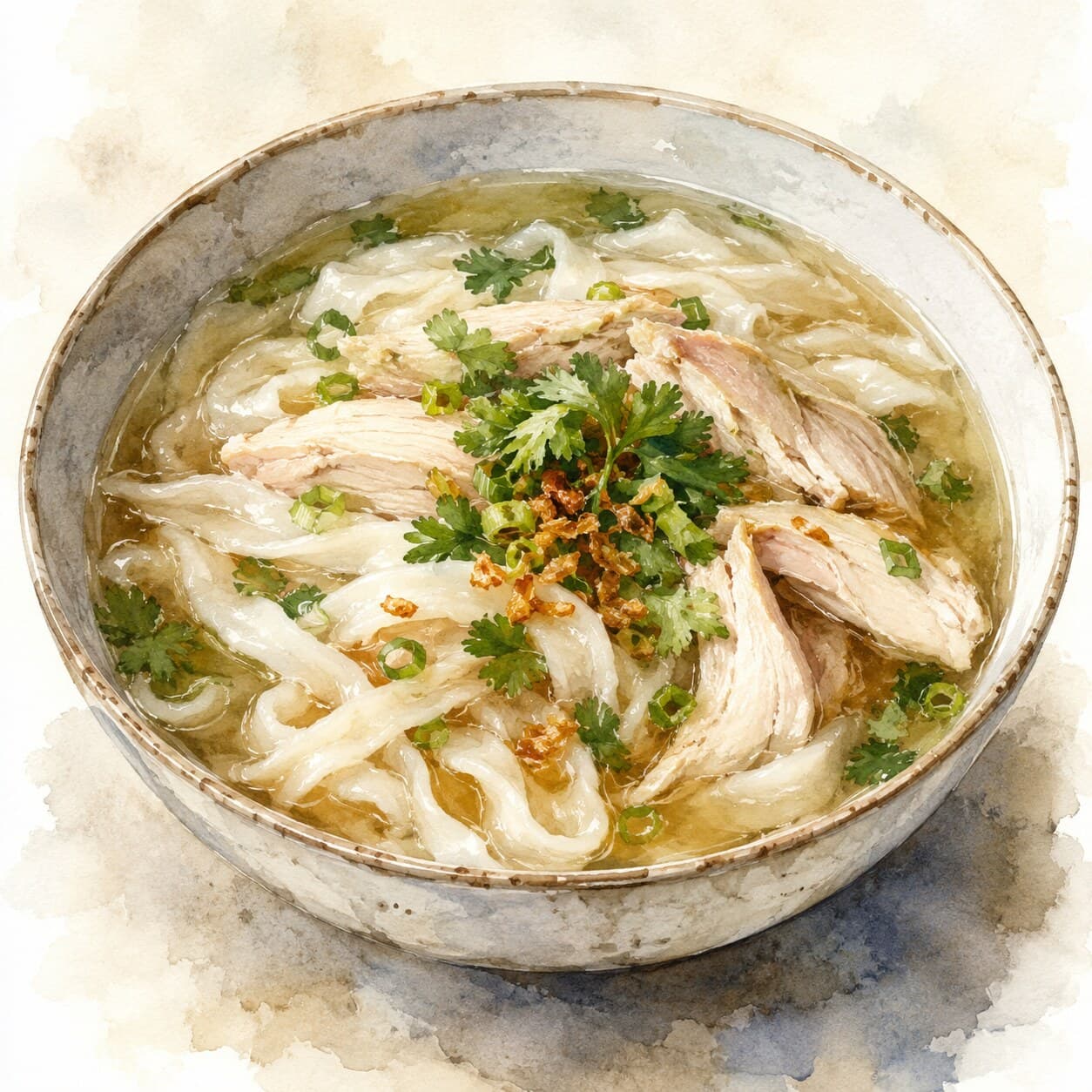
Ingredients
- 300 g rice flour
- 100 g tapioca starch
- 1 tsp salt
- 500 ml chicken broth
- 200 g cooked chicken, shredded
- 2 cm ginger, sliced
- 2 scallions, chopped
- 2 cloves garlic, minced
- 2 tbsp chili oil
- water, as needed
Steps
In a bowl, mix rice flour, tapioca starch, and salt. Gradually add water until a soft dough forms. Let it rest for 30 minutes.
While the dough rests, heat chicken broth in a pot over medium heat. Add sliced ginger and simmer for 15 minutes to infuse the flavors.
Roll out the rested dough into thin sheets and cut into strips to create the fresh noodles. Ensure they are uniform for even cooking.
Bring a large pot of water to a boil. Cook the fresh noodles for about 3-5 minutes until they float and are tender. Drain and rinse with cold water.
In serving bowls, place the cooked noodles, shredded chicken, and ladle hot ginger-infused broth over them. Top with scallions and fried garlic.
Drizzle with chili oil to taste and serve immediately, allowing the heat to enhance the flavors.
Why this works
The technique behind Khao Piak Sen revolves around the fresh hand-pulled noodles, which offer a unique chewy texture due to the combination of rice flour and tapioca starch. This blend gives the noodles a delightful mouthfeel and helps them hold together without breaking. The gentle chicken broth, enhanced by simmering with ginger, provides a subtle flavor that complements the richness of the shredded chicken. If the noodles seem too thick or refuse to cook properly, try rolling them thinner or letting them rest longer to enhance elasticity. Fresh noodles absorb the broth's flavor better than dried ones, ensuring a harmonious dish. Properly cooked noodles should float to the top, indicating they are ready; if they sink or feel gummy, adjust cooking time accordingly. This soup is simple yet satisfying, embodying the essence of Laotian comfort food.
Common mistakes
Adding raw or under-poached chicken straight to the gentle broth and expecting the soup to finish cooking it.
Target: Use chicken that's already fully cooked — leftover cooked meat, or chicken poached separately until it reaches 74°C (165°F) with no pink and clear juices — then shred it and add it to the hot broth just to warm through.
Why it matters: This broth is only gently simmered to infuse ginger flavor, not held at a hard, extended boil; raw chicken pieces dropped in may sit in liquid that never gets hot enough for long enough to cook them through, especially once the pot comes off the heat.
What to do: Cook the chicken to a safe temperature separately first — poaching, roasting, or well-cooked leftovers all work — then shred it and add it to the hot broth only to reheat.
Rolling the noodle dough too thick, or skipping the rest.
Target: Rest the dough the full 30 minutes, then roll it out thin, a few millimeters, before cutting.
Why it matters: Resting lets the gluten (the stretchy protein network that forms when flour and water are worked together) relax, so the dough rolls out easily instead of springing back; skipping the rest or rolling it thick leaves noodles that stay gummy or doughy at the center even after they float to the top.
What to do: Cover the dough while it rests, and roll in stages, letting the sheet relax for a minute if it resists, until it's thin and even.
Overcooking or undercooking the noodles, or letting them sit unrinsed.
Target: Boil the fresh noodles until they float and taste tender, about 3-5 minutes, then drain and rinse in cold water right away.
Why it matters: Fresh noodles keep cooking in their own residual heat and shed starch as they sit; without a cold rinse they turn gluey and stick together in a solid clump instead of staying loose strands.
What to do: Test one noodle for tenderness before draining the batch, then rinse immediately under cold running water, separating the strands with your fingers.
Letting the broth boil hard or simmer the ginger too long, so it turns cloudy, bitter, or flat.
Target: Keep the broth at a gentle simmer while the ginger infuses, not a rolling boil.
Why it matters: A hard boil can emulsify fat into the broth, clouding it, and can pull bitter compounds from the ginger if it's left in too long; a bare simmer draws out warmth and aroma without the harshness.
What to do: Adjust the heat so only occasional bubbles break the surface, taste partway through, and pull the ginger out once its flavor is present but not sharp.
What to look for
- (If cooking your own chicken) Clear juices, no pink, and an evenly opaque center. That's your safety checkpoint before shredding it into the soup.
- Noodles that float to the surface and turn slightly tender and translucent. Noodles that sink or still feel gummy at the center need more time.
- Rinsed noodles that separate into loose, springy strands. A fused, sticky clump means they needed a better cold rinse.
- Broth that's clear and gently steaming, with only the occasional bubble and a present but not sharp ginger aroma. Cloudy or harshly bitter broth means it was boiled too hard or simmered too long.
A note on history
Khao piak sen means "wet rice strands" in Lao, describing the thick, chewy noodles at its center — made from a dough of rice flour and tapioca starch rather than pure rice or wheat, which is what gives them their springy bite. It's part of everyday Lao home cooking, often made in large batches for a family or a crowd and eaten as a warming breakfast; a similar rice-and-tapioca noodle in broth also appears in southern Vietnam as bánh canh, though the two are generally treated as separate national traditions rather than one copying the other (Wikipedia: Khao piak sen).
Get the essays in your inbox — free
Weekly notes on flavor, fermentation, and food history — the writing behind the Atlas of Flavor. No spam; unsubscribe anytime.