
Laap (Lao Minced Meat Salad)
Laap is a vibrant Lao minced meat salad, combining fresh herbs and toasted rice for a nutty crunch.
Contents (5 sections)▾
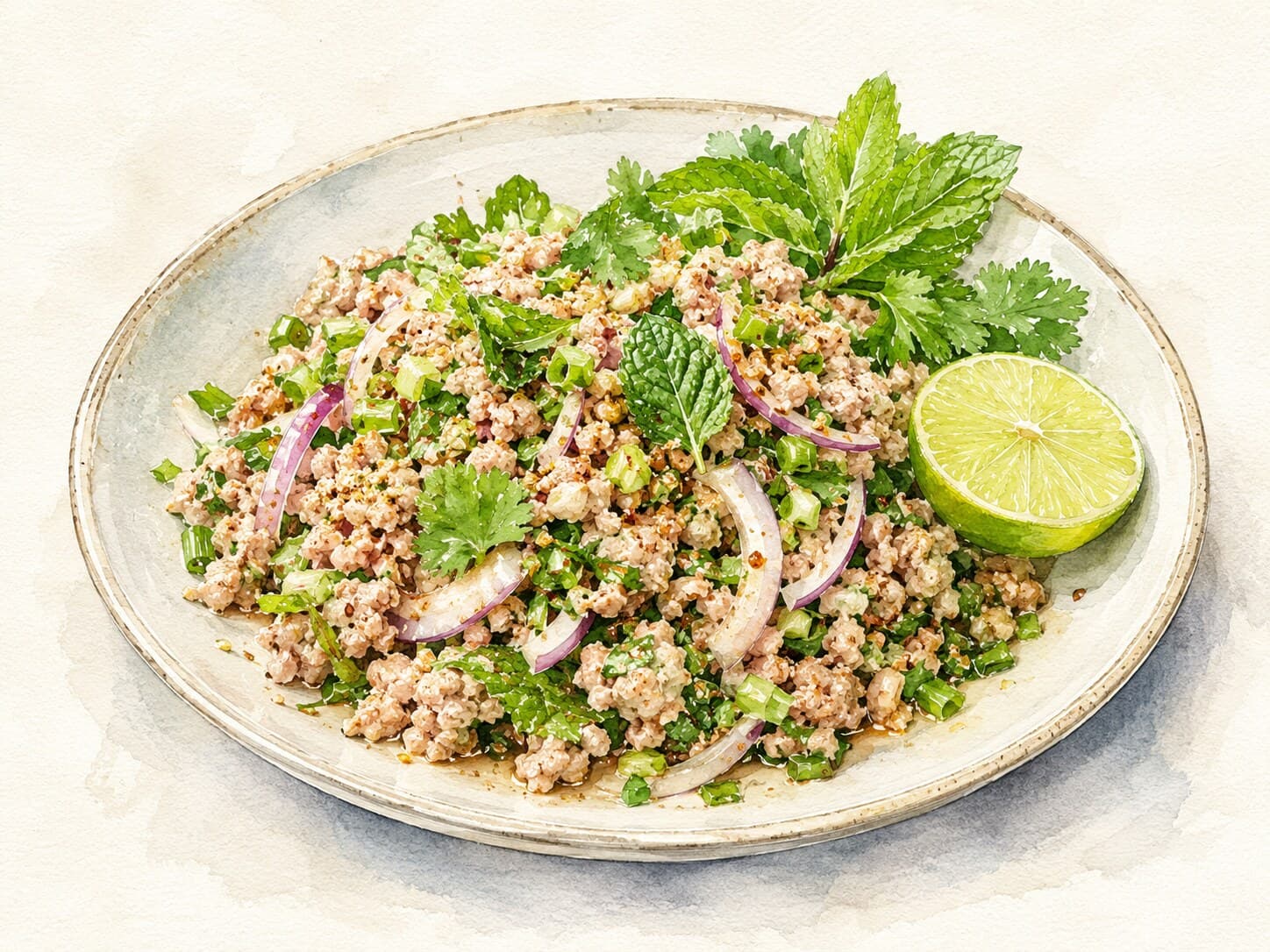
Ingredients
- 250 g minced meat (beef, pork, or chicken)
- 2 tbsp lime juice
- 2 tbsp fish sauce
- 1 cup fresh herbs (mint, cilantro, and green onions), chopped
- 3 tbsp toasted rice powder
- 1-2 Thai bird chilies, finely chopped (to taste)
- Salt (to taste)
Steps
In a pan over medium heat, cook the minced meat for about 10 minutes, stirring frequently to break up clumps, until browned and no longer pink. Because the meat is minced, its surface bacteria are worked all the way through, so cook it fully: check the thickest clump with an instant-read thermometer — 74 °C / 165 °F for chicken, 71 °C / 160 °F for pork or beef. Colour and time are texture cues; the measured temperature is the safety check (this larb is served cooked, not raw).
Remove from heat and allow the meat to cool slightly. This step is essential to prevent wilting the herbs when mixed.
In a large bowl, combine the cooked minced meat, lime juice, fish sauce, chopped herbs, toasted rice powder, and chilies. Toss well to ensure the rice powder absorbs the juices.
Season with salt to taste, adjusting based on your preference. The balance of flavors is crucial for this dish.
Serve at room temperature or slightly chilled, garnished with additional herbs if desired.
Why this works
Laap's unique texture comes from the toasted rice powder, which offers a delightful nutty crunch while absorbing the vibrant flavors of lime and fish sauce. This technique enhances the dish's overall taste and provides contrast in texture. The minced meat is cooked just right to remain juicy, and allowing it to cool slightly prevents the fresh herbs from wilting. If the mixture seems too dry, add a little more lime juice or fish sauce to achieve the desired moistness. The balance of flavors between the savory meat, zesty lime, and aromatic herbs creates a dish that is visually appealing and satisfying. If the salad breaks apart or looks unappetizing, ensure to mix gently to maintain the integrity of the ingredients. Proper tossing helps the toasted rice powder integrate without clumping, leading to a harmonious dish.
Safety note — raw meat. Cook the minced meat through until no pink remains. Traditional raw versions of laap are not recommended; lime juice flavours the meat but does not make raw meat safe to eat. Use fresh meat, keep it cold, and cook it fully — and do not serve undercooked meat to anyone advised against it.
Common mistakes
Serving raw or under-cooked mince (BLOCK-level safety). Target: Mince fully cooked through, no pink remaining; instant-read thermometer at 74 °C (165 °F) or above in the thickest part. Why it matters: Some traditional Lao laap is served raw — laap dip — but mincing distributes any surface bacteria throughout the meat (whole cuts are safer because the inside is sterile; mince is not). Lime juice acidifies, but acid alone does not kill the pathogens that cause foodborne illness. Heat does. What to do: Cook the mince over medium heat for at least 8–10 minutes, breaking it up as it browns. When juices run clear and the colour is uniformly grey-brown (not pink), it is done. Cool slightly before dressing — but never serve raw.
Toasted rice powder added too early. Target: A nutty crunch you can feel between your teeth in the finished salad. Why it matters: Toasted rice powder (khao khua) absorbs moisture rapidly. If you add it while the meat is still hot or wet, it turns to mush — the crunch you worked to build is gone within a minute. What to do: Let the cooked meat cool to barely warm before tossing in the lime, fish sauce, and herbs. Add the rice powder last, just before serving, and stir only once or twice.
Herbs wilted by hot meat. Target: Herbs still bright green, fragrant, with crisp leaves; not olive-coloured or limp. Why it matters: Hot meat (above roughly 50 °C) bruises and steam-wilts delicate herbs. The volatile aromatic compounds — what makes mint smell like mint — flash off in the steam, taking the dish's brightness with them. What to do: Spread the cooked mince on a plate to cool quickly, or rinse the pan and wait a few minutes. Add herbs last with the rice powder; toss gently — laap is dressed, not stirred.
Flat seasoning balance. Target: Each bite tastes salty, sour, hot, and aromatic at once — no single note dominates. Why it matters: Laap is a salad of contrasts; if any one element overpowers, the dish reads as too sour, too salty, or too hot rather than alive. Fish sauce (salt + umami), lime (acid), chilli (heat), and herbs (aroma) need to land together. What to do: Taste before adding the rice powder. If it's flat, add a splash more lime; if too sharp, more fish sauce. Adjust before the rice powder absorbs the liquid — once it does, you can't reseason without making it soggy.
What to look for
- Mince uniformly grey-brown, no rosy or wet patches: cooked through to safe temperature, ready to be dressed.
- A faint hiss when you add lime and fish sauce to barely-warm meat: hot enough to bloom the aromatics, cool enough not to wilt the herbs you're about to add.
- Rice powder still visible as flecks after tossing, not dissolved into the juices: this is the sign you added it at the right moment.
- A clean lime-and-mint top note as you bring it to the table: if you smell only cooked meat, the herbs went in too early or the meat was too hot.
A note on history
Laap (also written larb or laab) is regarded as a national dish of Laos, with a name traceable to a Lao word for "luck" or "good fortune" — which is why it is traditionally eaten at celebrations and family gatherings. The dish's roots lie in the historic kingdom of Lan Xang, which covered modern Laos and parts of northern Thailand, and Tai-speaking communities across the region developed their own variants over centuries using whatever protein was available. Sources: Larb (Wikipedia), Lucky Laab: A Brief History of Lao's Beloved Dish (Lao Food Foundation).
Get the essays in your inbox — free
Weekly notes on flavor, fermentation, and food history — the writing behind the Atlas of Flavor. No spam; unsubscribe anytime.