
Mtsvadi
Mtsvadi is a traditional Georgian dish of marinated meat grilled over open flames on skewers, delivering bold flavors and a smoky aroma.
Contents (5 sections)▾
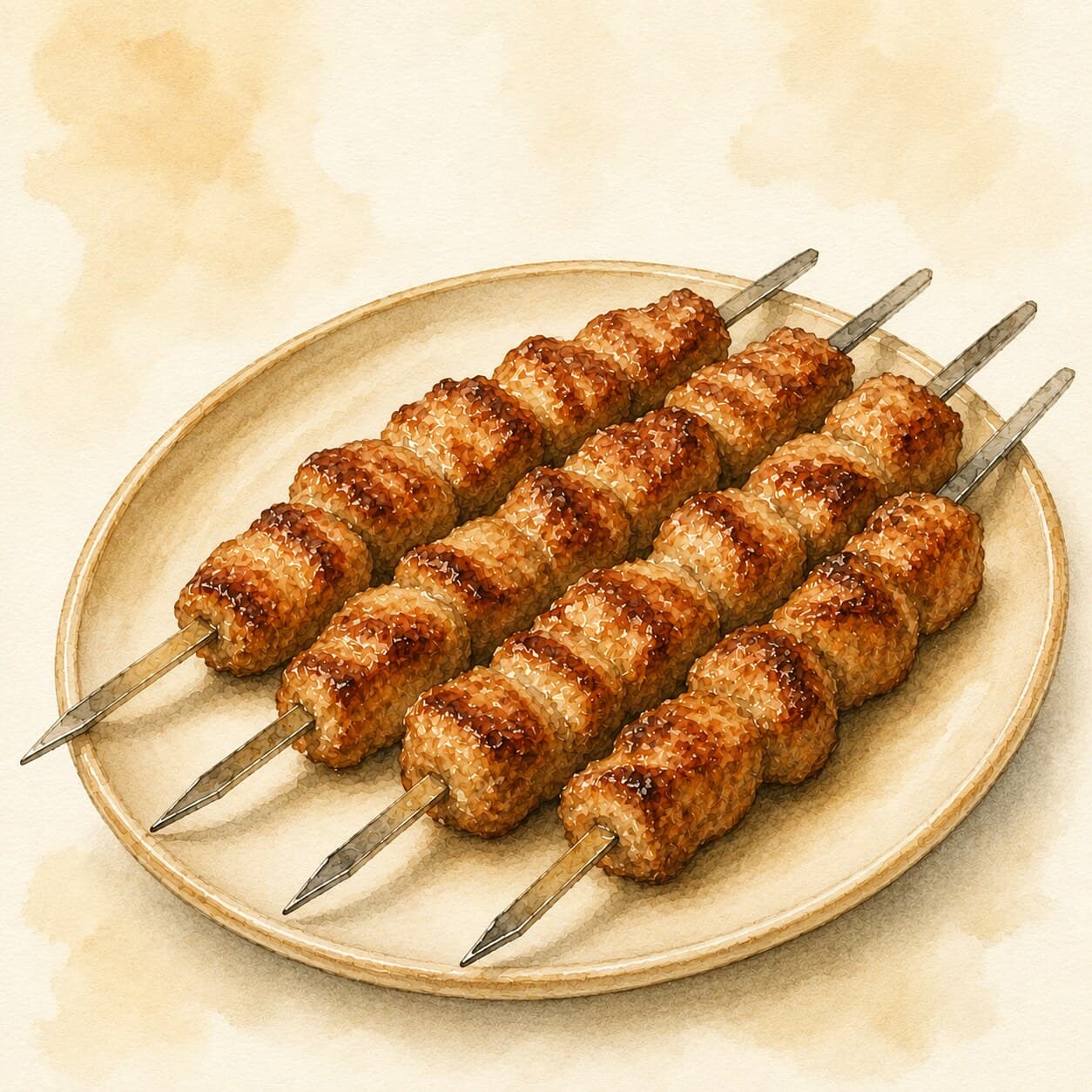
Ingredients
- 800 g pork or beef shoulder, cut into 4 cm cubes
- 2 tsp salt
- 250 ml dry red wine
Steps
In a bowl, combine the meat cubes with salt and dry red wine. Mix well and let marinate for at least 2 hours, preferably overnight, to enhance flavor and tenderness.
Prepare your open-fire grill, ensuring the flames have died down to create a hot bed of coals. This allows for even cooking without burning the meat.
Thread the marinated meat onto skewers, leaving a little space between each piece for even heat distribution. This helps the meat cook thoroughly and achieve a nice char.
Grill the skewers over the hot coals for about 15 minutes, turning occasionally. Aim for an internal temperature of 75°C to ensure the meat is fully cooked.
Once cooked, remove from the grill and let rest for a few minutes before serving, so the cubes come off their peak heat before you bite in.
Why this works
The technique of open-fire grilling allows the meat to develop a smoky flavor while achieving a crispy exterior and tender interior. Marinating the meat in dry red wine infuses it with flavor and aids in tenderization due to the acidity in the wine. The absence of oil or sugar keeps the focus on the natural flavors of the meat and the marinade. If the meat seems too dry while cooking, consider briefly wrapping it in aluminum foil to retain moisture, ensuring it remains juicy. A consistent cooking temperature is crucial; too high and the outside will char before the inside cooks, while too low will result in tough meat. Properly managing these elements results in perfectly grilled Mtsvadi, a dish that highlights the simplicity yet depth of Georgian cuisine.
Common mistakes
Grilling over live flames instead of coals.
Target: A bed of hot, glowing coals with no leaping flames — the recipe waits for the fire to die down for a reason.
Why it matters: Open flames lick and scorch the outside of the cubes long before the middle is cooked, giving you a bitter, blackened crust over raw meat. Steady radiant heat from coals cooks the surface and the center closer to the same pace, and it's that gentle browning of the surface (the Maillard reaction — the flavor-building browning that happens when meat meets dry heat) that gives mtsvadi its savory, smoky depth.
What to do: Let the fire burn down until the coals glow and are lightly filmed with grey ash. If flare-ups start (usually from dripping fat), move the skewers to a clear spot and let the flames settle before returning them.
Cubes cut unevenly or too large.
Target: Even 4 cm cubes, all roughly the same size.
Why it matters: A big cube and a small cube on the same skewer will never finish together — by the time the large one reaches a safe internal temperature, the small one is dry and tough. Even sizing means even doneness.
What to do: Take a minute to cut deliberately, squaring off the meat so pieces match. Trim off thin, ragged tails that would burn.
Crowding the pieces tight against each other.
Target: A small gap of daylight between each cube on the skewer.
Why it matters: Where two pieces touch, hot air and heat can't reach — those faces steam instead of browning, so you lose the char and the flavor it brings. The recipe calls for spacing precisely to avoid this.
What to do: Thread the cubes with a finger's-width of space between them so every side is exposed to the heat.
Guessing at doneness instead of checking.
Target: 75°C in the thickest cube, measured — not judged by eye.
Why it matters: Pork and beef shoulder cut into cubes must reach a safe internal temperature all the way through; a dark crust tells you nothing about the center. Undercooking pork especially is a real safety risk, and overcooking to "be sure" leaves it dry.
What to do: Push an instant-read thermometer into the middle of the largest cube. Pull the skewers when it reads 75°C. If you don't have a thermometer, cut into the thickest piece — the juices should run clear and the meat should be evenly colored through, with no glossy raw pink at the center.
Skipping the rest.
Target: A few minutes of resting off the heat before serving.
Why it matters: Straight off the grill the cubes are screaming-hot; cutting in immediately lets more juice spill onto the plate. A short rest lets them cool off their peak, so less spills when you cut.
What to do: Slide the skewers onto a plate or board, loosely cover, and wait 3–5 minutes before serving.
What to look for
- Coals ready: glowing orange-red under a thin coat of pale grey ash, giving off strong steady heat with no leaping flames — hold your hand a safe distance above and you should feel an even, intense warmth.
- Meat searing well: you'll hear a quiet, steady sizzle (not a violent hiss or a silent, gray steaming), and the surface turns deep brown with darker edges where it meets the heat.
- Ready to turn: the cube releases cleanly from the grate or holds firm on the skewer and has taken on color on the down side — if it's still stuck and pale, give it another moment.
- Safely done: 75°C in the center on a thermometer; cut open, the juices run clear and the meat is evenly cooked through with no glassy raw pink at the middle.
- Rested and ready: the cubes look juicy and glistening, not weeping liquid onto the plate — that's your sign the rest did its job.
A note on history
The Georgian word mtsvadi simply means "meat cooked on a skewer," and the dish belongs to an ancient grilling tradition shared across the Caucasus — the same family of skewered, fire-grilled meat known as khorovats in Armenia and shashlik in Russian. In Georgia's easternmost Kakheti region it is a ceremonial centerpiece, traditionally grilled over vine-clipping embers and sprinkled with local wine as it cooks, which echoes this recipe's dry-red-wine marinade. (Sources: Georgia.travel — Mtsvadi; TasteAtlas — Mtsvadi)
Get the essays in your inbox — free
Weekly notes on flavor, fermentation, and food history — the writing behind the Atlas of Flavor. No spam; unsubscribe anytime.