
Chakhokhbili
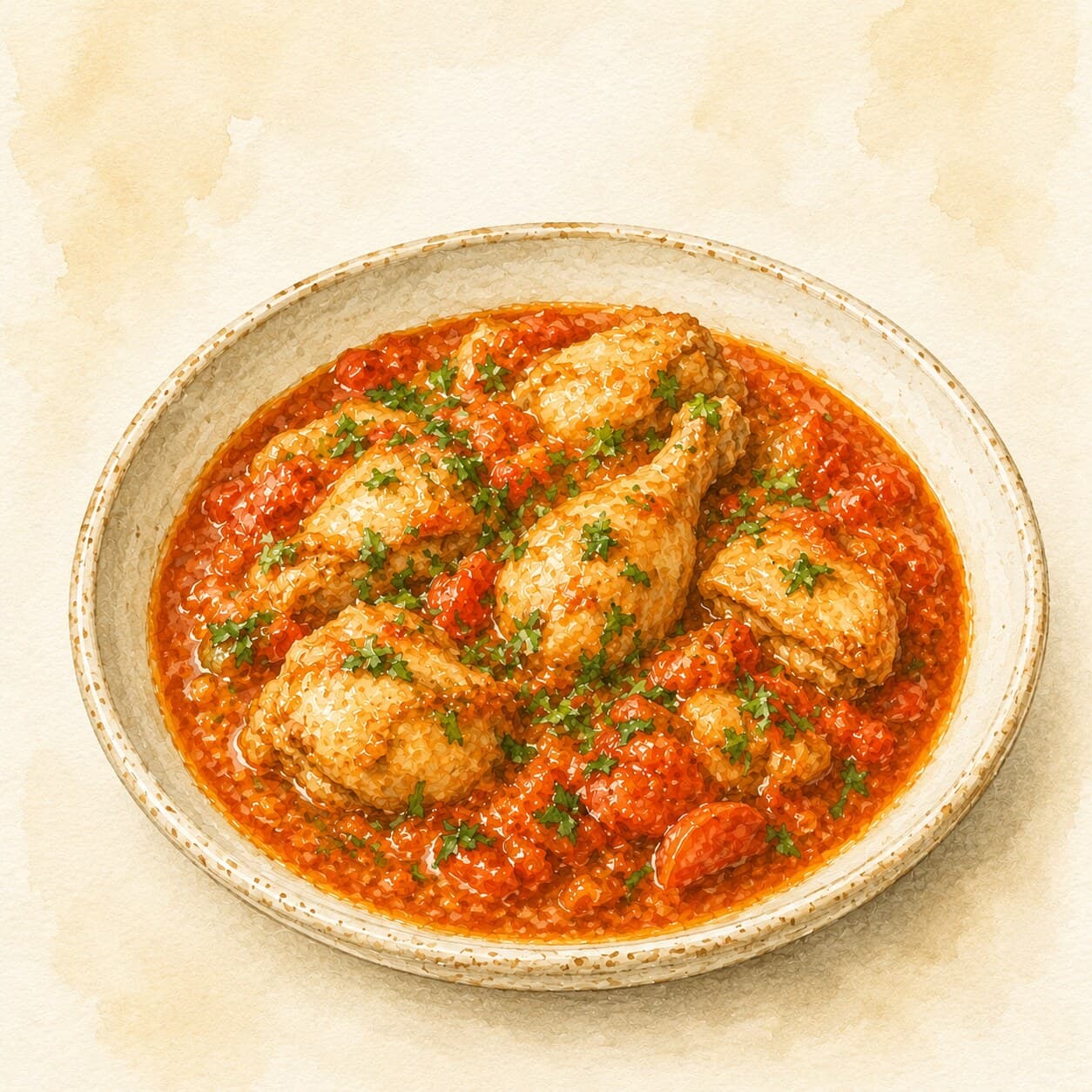
Chakhokhbili is a flavorful Georgian chicken stew braised with tomatoes and onions, capturing the essence of traditional cuisine.
Contents (5 sections)▾
Ingredients
- 1 kg chicken thighs/legs (bone-in)
- 500 g ripe tomatoes, chopped
- 300 g onions, finely sliced
- 1 tbsp coriander, chopped
- 1 tsp blue fenugreek
- Salt, to taste
- Black pepper, to taste
- 2 tbsp vegetable oil
Steps
Heat the vegetable oil in a large pot over medium heat. Add the sliced onions and sauté for 5 minutes until they become translucent. This step builds the base flavor.
Add the chicken thighs/legs to the pot, season with salt and black pepper, and brown them on all sides for about 10 minutes. This technique builds a browned, flavorful base.
Stir in the chopped tomatoes, blue fenugreek, and coriander. Mix well to combine all ingredients and cover the pot with a lid. Cook on low heat for 15 minutes, allowing the chicken to braise in its own juices.
After 15 minutes, check the chicken for doneness. If the sauce appears too thick, add a splash of water, but generally, the tomatoes and onions will provide sufficient moisture.
Why this works
Braising without added liquid is a technique that relies on the natural moisture released by the tomatoes and onions during the cooking process. When the chicken is browned first, it creates a flavorful base. The tomatoes break down and combine with the onions to form a rich sauce, making it unnecessary to add extra liquid. If the mixture seems too dry, a small amount of water can be added to prevent burning. This method enhances the depth of flavor and results in tender chicken that absorbs the aromatic qualities of the herbs and spices. The key is to maintain a low heat, allowing the ingredients to meld beautifully over time. Mastering this technique is essential for achieving a successful Chakhokhbili, ensuring that your stew is both hearty and rich without being watery or bland.
Common mistakes
A pale, boiled-tasting stew.
Target: Chicken with real golden-brown colour on its surface before the tomatoes go in.
Why it matters: Browning the meat first builds the deep, savoury backbone of the dish — this is the Maillard reaction, the flavourful browning that happens when the surface of protein-rich food gets hot and dry. Skip it and the stew tastes flat and washed out, no matter how long it cooks.
What to do: Brown the seasoned chicken over medium heat, in batches if needed, letting each side develop colour before you turn it. Don't crowd the pan — piled-up chicken steams instead of browning.
A thin, watery sauce.
Target: A glossy sauce that lightly coats the chicken, not a soup.
Why it matters: Chakhokhbili makes its own liquid as the tomatoes and onions break down, so adding water — or keeping the lid clamped tight the whole time — leaves it watery and dilute.
What to do: Cook it down until the tomatoes collapse into a unified sauce; toward the end, leave the lid ajar so excess moisture can steam off. Only add a splash of water if it's genuinely catching on the pan.
Undercooked chicken.
Target: Bone-in thigh taken to at least 74°C / 165°F at the thickest part near the bone — read on a food thermometer, since colour and clear juices vary and are not the safety test — then braised gently further until the meat turns tender and pulls easily from the bone.
Why it matters: A large batch of bone-in pieces can need longer than the base time to cook through, and chicken must be fully cooked to be safe — thighs are also at their most tender a little past that point.
What to do: Check the thickest piece near the bone with a food thermometer: 74°C / 165°F is the safety minimum, and colour or juices are not a reliable check. Reaching it makes the chicken safe to eat, not yet fall-off-the-bone tender — keep braising gently past that point, heat low, until the meat pulls easily from the bone.
Sharp, raw-tasting tomatoes.
Target: Tomatoes softened into a mellow, jammy sauce with no raw acidity.
Why it matters: Undercooked tomato tastes thin and sour; it needs time to break down and concentrate its sweetness, which balances the dish.
What to do: Simmer until the tomato pieces slump and lose their shape and the sauce looks unified and slightly reduced.
Fresh herbs boiled to death.
Target: Bright coriander aroma in the finished stew.
Why it matters: Fresh herbs lose their lift when boiled for a long time, going dull and grassy.
What to do: Stir a little of the fresh coriander in right at the end so its fragrance survives. (Dried blue fenugreek is different — it's a spice, and it belongs earlier in the pot.)
What to look for
- Onions: softened and translucent, turning pale gold, smelling sweet rather than sharp.
- Browned chicken: a genuine golden crust on the surfaces and no raw pink outside; the pan smells rich and meaty.
- Sauce developing: the tomatoes slump and lose their shape and the mixture shifts from thin, watery red to a thicker, glossy, unified sauce.
- Chicken doneness: safety is confirmed with a thermometer — 74°C / 165°F at the thickest part near the bone, not by colour or juice clarity, which vary; from there, continued gentle braising brings the meat to where it pulls easily from the bone.
- Finished stew: the sauce clings to a spoon, tastes mellow instead of sharp, and the kitchen smells of fenugreek and fresh coriander.
A note on history
Chakhokhbili takes its name from khokhobi, the Georgian word for pheasant — the bird the dish was originally made with, before chicken became the everyday choice. Tomatoes, now central to the recipe, only entered it in the 19th century, after they reached Georgia. (Source: Wikipedia, "Chakhokhbili.")
Get the essays in your inbox — free
Weekly notes on flavor, fermentation, and food history — the writing behind the Atlas of Flavor. No spam; unsubscribe anytime.