
Chakapuli
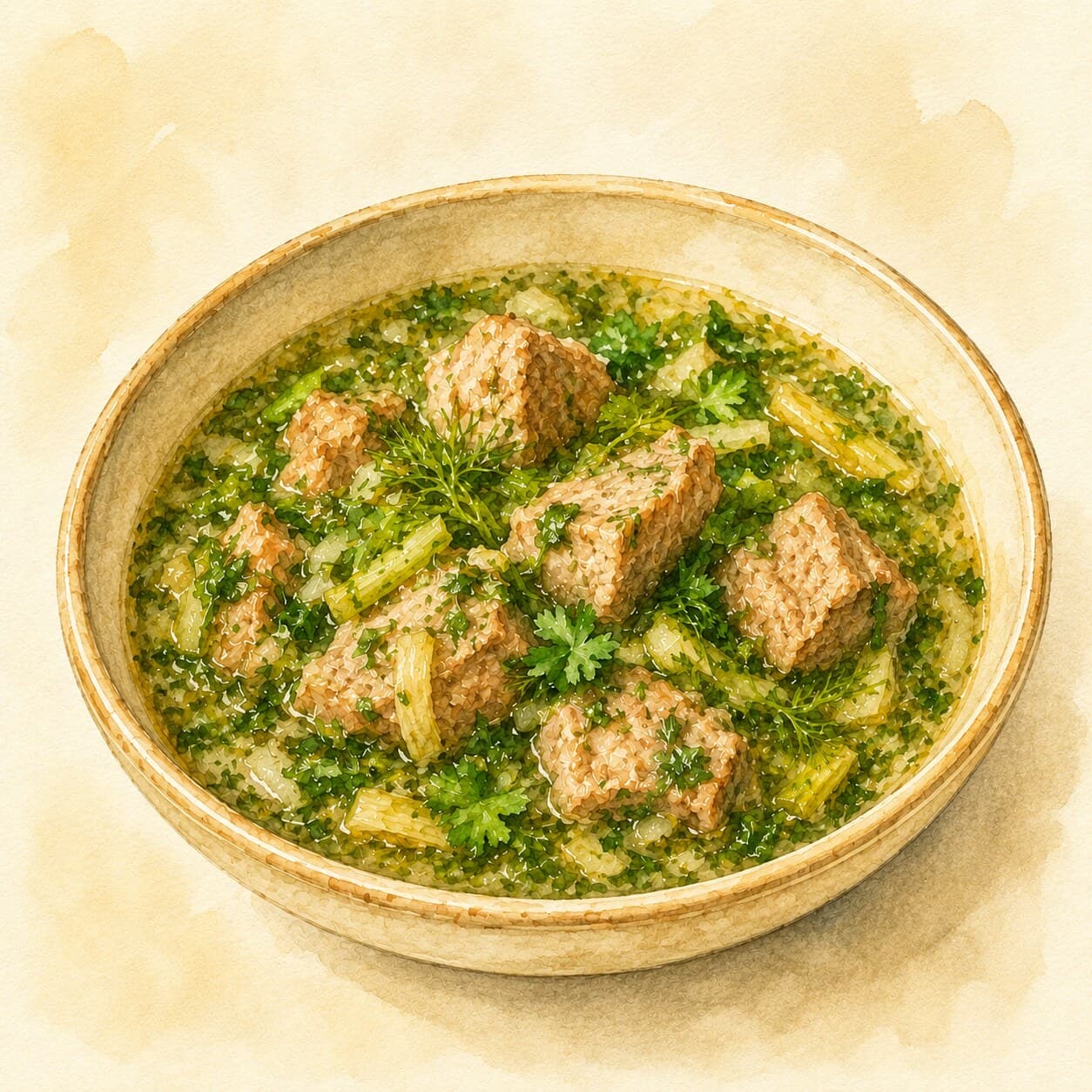
Chakapuli is a fragrant Georgian stew featuring tender spring lamb, aromatic tarragon, and tangy green plums, simmered to perfection.
Contents (5 sections)▾
Ingredients
- 800 g lamb shoulder or leg, cut into chunks
- 100 g tarragon, chopped
- 300 g green plums or tkemali, halved
- 250 ml white wine
- 2 sprigs fresh parsley, chopped
- 1 clove garlic, minced
- 1 medium onion, finely chopped
- 1 tsp salt
- 1 tsp black pepper
- 500 ml water
Steps
In a large pot, add the lamb, onion, and garlic. Cook on low heat for about 10 minutes, stirring occasionally, until the ingredients sweat and become aromatic.
Pour in the white wine and water, followed by the green plums, tarragon, salt, and pepper. Bring the mixture to a gentle simmer over medium-low heat.
Cover the pot and let it simmer for 1.5 to 2 hours, until the lamb is tender and the flavors meld beautifully.
Stir occasionally and adjust seasoning if necessary. If the stew appears too thick, add a little more water.
Serve hot, garnished with chopped parsley for an added touch of freshness.
Why this works
This Chakapuli recipe utilizes a long-simmer technique that allows the lamb to become incredibly tender without the need for browning. The combination of tarragon and green plums introduces a unique layer of acidity and freshness that perfectly balances the rich flavor of the lamb. Cooking on low heat ensures that the meat remains juicy and absorbs the aromatic qualities of the herbs. If the stew seems too thick during cooking, simply add a bit more water to reach your desired consistency. This technique avoids the common pitfall of overcooking the meat, as the gentle simmer prevents it from becoming tough or dry. The result is a rich, flavorful stew that captures the essence of Georgian cuisine, ideal for a comforting meal.
Common mistakes
Boiling the lamb instead of simmering it.
Target: A bare simmer — an occasional lazy bubble, the surface barely moving — for the full 1.5–2 hours.
Why it matters: Lamb shoulder and leg are full of collagen (the tough connective tissue in stewing cuts). Long, gentle heat melts it into silky gelatin; a hard boil instead squeezes the muscle fibers tight, so the meat turns dry and stringy.
What to do: Keep the heat low with the lid on. If it is bubbling hard, turn it down.
Cutting the cooking time short.
Target: Meat that is fork-tender — it yields with almost no resistance.
Why it matters: These are hard-working muscles; they simply need the hours for the collagen to break down. Undercooked, the meat stays chewy no matter how good the seasoning is.
What to do: Judge by tenderness, not just the clock. If it still resists the fork, give it more gentle time.
Being timid with the tarragon.
Target: A generous amount — tarragon is the defining flavor here, not a background note.
Why it matters: Chakapuli's whole identity is its sweet, anise-like tarragon aroma. Too little and you are left with a plain lamb stew.
What to do: Use it boldly. Add most at the start and a fresh handful near the end for a bright lift.
Not enough sour (green plums or tkemali).
Target: A distinct, pleasant tartness that cuts through the rich lamb.
Why it matters: The sour green plums are there to balance the fat — that acid contrast is the point of the dish. Without it the stew is heavy and one-note.
What to do: Taste near the end. If it is flat, add more tkemali or a squeeze of lemon.
Browning the meat first out of habit.
Target: Gently sweat the lamb and onion with no color.
Why it matters: Chakapuli is deliberately a pale, green, fresh-tasting stew. Searing the meat gives a darker, roastier flavor and muddies the color — a good stew, but a different dish.
What to do: Cook on low just until the lamb turns from pink to pale and the onion softens, without letting anything brown.
What to look for
- Sweating stage: the onion is soft and translucent with no browning, the lamb has turned from pink to pale grey-white, and juices are pooling in the pot; it smells fragrant.
- A proper simmer: the liquid is barely moving, with a lazy bubble breaking now and then — never a rolling boil.
- The herbs working: the kitchen fills with a sweet, anise-like herbal aroma from the tarragon.
- Doneness: the lamb is fork-tender and pulls apart under gentle pressure; the broth has thickened slightly and turned glossy from the gelatin.
- Balance check: a clean, tart edge from the plums lifts the richness. If it tastes heavy or flat, it needs more sour.
A note on history
Chakapuli is a springtime specialty of the Kakheti region in eastern Georgia, built around the first young herbs and the sour green plums (tkemali) of the season. It is a quintessential dish of the Georgian Orthodox Easter table, and its name is linked to the frothing, bubbling way it cooks.
Get the essays in your inbox — free
Weekly notes on flavor, fermentation, and food history — the writing behind the Atlas of Flavor. No spam; unsubscribe anytime.