
Korean Fried Chicken
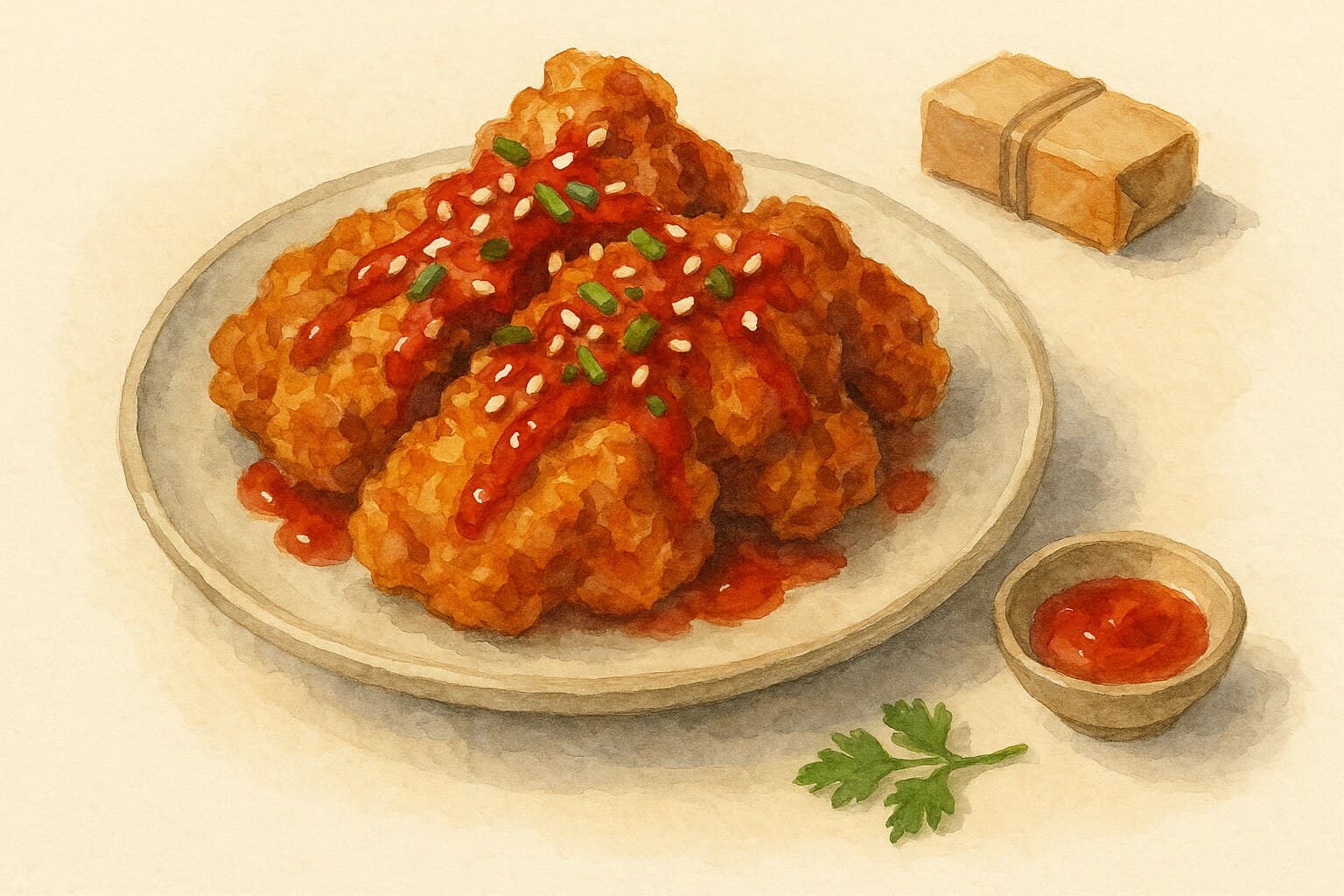
This Korean Fried Chicken recipe features a double-frying technique for a crisp, shatter-crust that stays crunchy under glaze.
Contents (5 sections)▾
Ingredients
- 1 kg chicken wings/drumettes
- 150 g potato starch
- 100 g gochujang or soy sauce
- 50 g honey
- 1 tsp salt
- 1 tsp pepper
- oil for frying
Steps
Coat the seasoned chicken wings in potato starch, shaking off any excess to ensure an even layer. Set aside for 10 minutes to allow the coating to adhere.
Heat oil in a deep fryer or large pot to 160°C (320°F). Fry the chicken wings in batches for 10-12 minutes, or until they reach an internal temperature of 74°C (165°F). Remove the chicken from the oil and let it rest on a cooling rack for 10 minutes.
Increase the oil temperature to 190°C (375°F). Fry the rested chicken wings again for 5-7 minutes until they are golden brown and crispy. Toss the fried chicken in the gochujang or soy-garlic glaze immediately after frying.
Tools you'll want
- · Cast-iron skillet (Lodge, 6.5–10in)
Why this works
The magic of double-frying Korean Fried Chicken lies in the technique of frying at two distinct temperatures (once at a gentler heat to cook the meat through, then again hotter to crisp the outside). The first fry at 160°C ensures that the chicken is cooked through to a safe internal temperature of 74°C, essential for tender meat. The 10-minute rest lets the chicken settle off its peak heat before it is cut or served. The second fry at 190°C creates that signature thin, glassy shatter-crust that Korean fried chicken is renowned for. The use of potato starch (a fine white powder made from potatoes, sold beside cornstarch) is key; it adheres well to the chicken and forms a crunchy barrier that retains its crispness even when doused in sauce. If the crust is not as crunchy as desired, ensure you are using enough potato starch and consider adjusting your frying times slightly. A consistent oil temperature is critical; if the oil is too cool, the chicken will absorb excess oil and become greasy, ruining the intended texture. Conversely, if the oil is too hot, the exterior may cook too quickly, leaving the interior undercooked. Thus, maintaining precise temperatures is essential for achieving the perfect balance of crunch and tenderness.
Common mistakes
Coating wet chicken.
Target: Wings patted properly dry with paper towel before the salt, pepper and potato starch go on.
Why it matters: Surface water turns potato starch into glue. Instead of a thin, even shell you get thick pasty patches that slide off in the oil and leave bare skin behind. Free water is also what makes hot oil erupt and spit, so this is a safety point as much as a texture one.
What to do: Blot every piece, including the folds where wings bend. Season, then toss in the starch and shake each piece firmly so only a fine, even layer stays. The 10-minute rest in the recipe is doing real work — it lets the starch drink the last of the surface moisture and grip.
Crowding the pot.
Target: Enough space that every piece can move, and oil that stays within about 10°C of 160°C during the first fry.
Why it matters: Cold chicken pulls heat out of the oil fast. Too many pieces at once and the temperature crashes; below about 150°C the coating stops sealing quickly and the chicken sits there soaking up oil instead of crisping. That is exactly how fried chicken turns heavy and greasy.
What to do: Fry in batches of a few pieces. Watch the thermometer, let the oil climb back to 160°C between batches, and lower each piece in gently rather than dropping it.
Skipping or shortening the rest between the two fries.
Target: A full 10 minutes on a rack — not a plate — after the first fry.
Why it matters: The first fry cooks the meat and drives moisture out of the interior toward the surface. That moisture needs somewhere to go. Rest on a rack and it evaporates into the air; rest on a plate, or go straight back into the oil, and it stays trapped under the coating, steaming the crust soft from below. The famously thin, glassy shell of Korean fried chicken exists because of this pause.
What to do: Set a wire rack over a tray before you start frying. Space the pieces out so air reaches all sides, and use the time to mix your glaze.
Judging doneness by colour.
Target: 74°C (165°F) in the thickest part of the meat, measured without touching bone.
Why it matters: Colour tells you about the coating, not the meat. Chicken can look convincingly golden while the part next to the bone is still underdone — and undercooked chicken carries a genuine food-poisoning risk. A thermometer is the only reliable answer.
What to do: Probe the meatiest wing of each batch after the first fry, pushing the tip into the thickest muscle and away from the bone. If it reads under 74°C, give it another minute or two before resting.
Glazing too early, or letting the chicken sit in the sauce.
Target: Tossed in the gochujang-honey glaze the moment it leaves the second fry, and eaten within a few minutes.
Why it matters: The crust is a dry, porous shell — it will absorb any liquid it sits in. Tossed hot and fast, the glaze clings as a thin lacquer and the surface stays crisp; left to soak, the same glaze soaks through and the crunch is gone for good.
What to do: Have the glaze mixed and waiting in a wide bowl before the second fry ends. Add the chicken, toss for 15–20 seconds until every piece is coated, and serve straight away. If the glaze is runny, warm it briefly first so it thickens slightly — a thick glaze sits on the surface, a thin one soaks in.
What to look for
- Coated chicken after its 10-minute rest: the starch has gone from dusty-white to slightly damp and matte, with no loose powder falling off and no gluey grey lumps.
- Oil at 160°C: a pinch of potato starch dropped in fizzes steadily and rises, rather than sinking quietly (too cool) or browning instantly (too hot). Use the thermometer — this is a check, not a substitute.
- First fry in progress: loud, vigorous bubbling that gradually calms as water leaves the chicken. Sudden silence means the oil has dropped too far; sudden violent spitting means something wet went in.
- End of the first fry: pale blonde, no real colour yet, the coating firm and dry to a tap with tongs — and 74°C on the thermometer.
- After the 10-minute rest: the surface looks dry and dull, no steam rising, no damp patches on the rack. This is the sign it is ready for the second fry.
- Second fry: the bubbles are finer and faster, and the sound turns higher and sharper. The colour moves to deep gold, and tapping a piece with tongs gives a hard, hollow click.
- After glazing: an even, glossy red coat with no sauce pooling in the bottom of the bowl. Pooled sauce means the glaze is too thin and the crust is about to soften.
A note on frying safely: fill your pot no more than one-third with oil, keep a lid within reach, and never add water — or wet food — to hot oil. If the oil ever smokes, turn off the heat and let it cool before doing anything else.
A note on history
Fried chicken took hold in South Korea in the 1970s — Lim's Chicken, opened in 1977 in Seoul, is generally named as the first fried-chicken chain. The sauced version, yangnyeom chicken, came in 1982 in Daegu, where Yun Jonggye, whose shop later became Mexican Chicken, noticed customers struggling with the hard, brittle crust and coated it in a sweet-spicy sauce instead. The double-fry technique that keeps the crust crisp under that sauce is the direct answer to the problem he created.
Source: Yangnyeom chicken — Wikipedia · Korean fried chicken — Wikipedia
Get the essays in your inbox — free
Weekly notes on flavor, fermentation, and food history — the writing behind the Atlas of Flavor. No spam; unsubscribe anytime.