
Khao Man Gai Tot
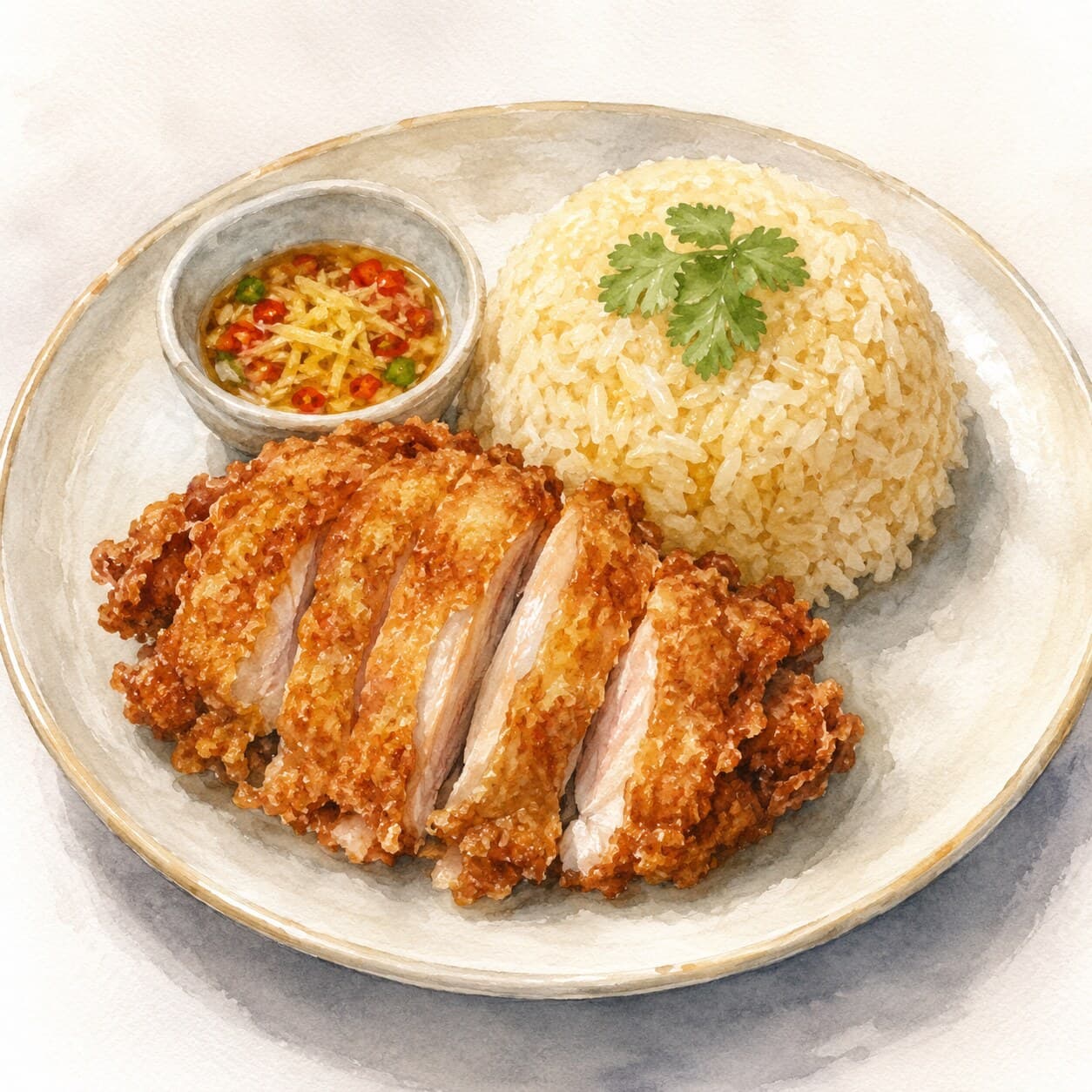
Khao Man Gai Tot features crispy fried chicken served with fragrant chicken-fat rice and a zesty ginger-chili sauce.
Contents (5 sections)▾
Ingredients
- 400 g chicken thighs, boneless and skinless
- 1 cup jasmine rice
- 2 cups chicken broth
- 2 tbsp chicken fat (reserved from poaching)
- 2 cloves garlic, minced
- 1 tbsp ginger, minced
- 1 tbsp soy sauce
- 1 tbsp oyster sauce
- 1 tbsp sugar
- 1 tsp sesame oil
- 1 cucumber, sliced
- vegetable oil for frying
- salt to taste
Steps
In a pot, bring chicken broth to a gentle simmer. Add chicken thighs and poach for about 15 minutes. Before moving on, confirm they are cooked through: 74 °C / 165 °F at the thickest part on an instant-read thermometer, no pink near the bone — the later fry only crisps the skin and cannot be relied on to cook the interior, so the chicken must be safe now. If it is not there yet, poach a little longer.
Remove the chicken from the broth and let it cool slightly. Reserve the broth for cooking the rice.
In a medium saucepan, heat 2 tbsp of chicken fat over medium heat. Add minced garlic and ginger, sauté until fragrant, about 1 minute.
Add jasmine rice to the saucepan, stirring to coat with the aromatics. Pour in 2 cups of the reserved broth, add salt to taste, and bring to a boil. Reduce heat, cover, and simmer for 18 minutes.
While the rice is cooking, heat vegetable oil in a deep pan to 180°C (356°F). Carefully add the poached chicken thighs and fry until the skin is crispy, about 5-7 minutes.
While the chicken is frying, prepare the ginger-chili sauce by mixing soy sauce, oyster sauce, sugar, and sesame oil in a bowl.
Once the chicken is crispy, remove it from the oil and drain on paper towels. Fluff the rice with a fork.
To serve, plate the rice, top with fried chicken, garnish with cucumber slices, and drizzle ginger-chili sauce over the top.
Tools you'll want
Why this works
Khao Man Gai Tot combines poaching (gently cooking food in liquid kept just below a boil) and frying to create a unique textural contrast. The poaching step infuses the chicken with moisture and flavor, ensuring it remains juicy. When the chicken is deep-fried, the skin becomes beautifully crispy, enhancing the overall eating experience. The chicken-fat rice captures the essence of the dish, as it’s cooked in the flavorful broth, ensuring richness in each bite. If the chicken starts to break apart while frying, it might be due to not allowing it to cool properly after poaching; ensure it’s slightly cooled to maintain structure during frying. The ginger-chili sauce adds a spicy, tangy balance to the dish, enhancing the flavors while the cucumber adds freshness, making it a well-rounded meal.
Common mistakes
Trusting the clock instead of checking the chicken before it hits the fryer.
Target: Confirm the poached chicken is cooked through — 74°C (165°F) at the thickest part, no pink near the bone, juices running clear — before it goes anywhere near the hot oil.
Why it matters: A 15-minute simmer is usually enough for boneless thighs, but broth temperature, thigh thickness, and stove quirks vary, so "usually done" is not the same as confirmed done. Frying browns the skin quickly without necessarily finishing an undercooked interior, since the crust can form before the center catches up.
What to do: Check the thickest thigh with a thermometer, or cut in and look for clear juices and no pink, before moving on to frying.
Frying chicken straight out of the poaching liquid.
Target: Let the poached chicken cool slightly and pat the skin dry before it meets the oil.
Why it matters: Wet, warm skin meeting hot oil spatters and the oil's heat is spent boiling off surface moisture instead of crisping the skin, leaving it pale and greasy rather than crisp; handling the chicken while it's still too hot and soft can also break it apart.
What to do: Rest the chicken on a rack until just warm to the touch, blot the skin dry with paper towels, then lower it gently into the 180°C (356°F) oil.
Crowding the pan and letting the oil temperature drop.
Target: Fry in batches with space between pieces, keeping the oil at a steady 180°C (356°F).
Why it matters: Adding too much chicken at once cools the oil sharply; below temperature, the skin absorbs oil instead of sealing and browning quickly, leaving it greasy rather than crisp.
What to do: Fry two or three pieces at a time, let the oil recover between batches, and check the temperature again before adding more.
Scorching the garlic and ginger in the chicken fat.
Target: Sauté the minced garlic and ginger in the reserved chicken fat only until fragrant, about a minute, over medium heat.
Why it matters: Raw garlic tastes harsh and burnt garlic turns bitter; either mistake overwhelms the subtle savoriness the chicken fat and poaching broth are meant to bring to the rice.
What to do: Keep the heat moderate, stir constantly, and pull the pan from the heat the moment the aromatics smell fragrant rather than waiting for visible color.
What to look for
- Poached chicken with clear juices and no pink near the bone. This is your checkpoint before frying — if in doubt, check with a thermometer for 74°C (165°F) at the thickest part.
- Fried skin that turns deep golden-brown and sounds faintly crisp when tapped. Pale, limp, or greasy skin means the oil was too cool or the pan too crowded.
- Rice that looks glossy and separate, each grain lightly coated rather than clumped or mushy. That sheen comes from the chicken fat coating the grains; sticky, wet rice usually means too much liquid or too long a simmer.
- A dipping sauce that tastes balanced between salty, sweet, and savory, with no single note dominating. Taste and adjust with a little more soy sauce or sugar before serving.
A note on history
Khao man gai traces back to Hainanese chicken rice, brought to Thailand by Chinese immigrants from Hainan Island who settled in Bangkok from the late 19th century onward; over time the dish took on a Thai identity and a new name, khao man gai — literally "chicken fat/oily rice," after the broth-and-fat-cooked rice at its center (Wikipedia: Hainanese chicken rice). The fried version, khao man gai tot (tot meaning fried), came later as a variation on the classic poached chicken, and today many stalls simply offer both — boiled or fried — over the same fragrant rice (Saveur).
Get the essays in your inbox — free
Weekly notes on flavor, fermentation, and food history — the writing behind the Atlas of Flavor. No spam; unsubscribe anytime.