
Khai Jeow
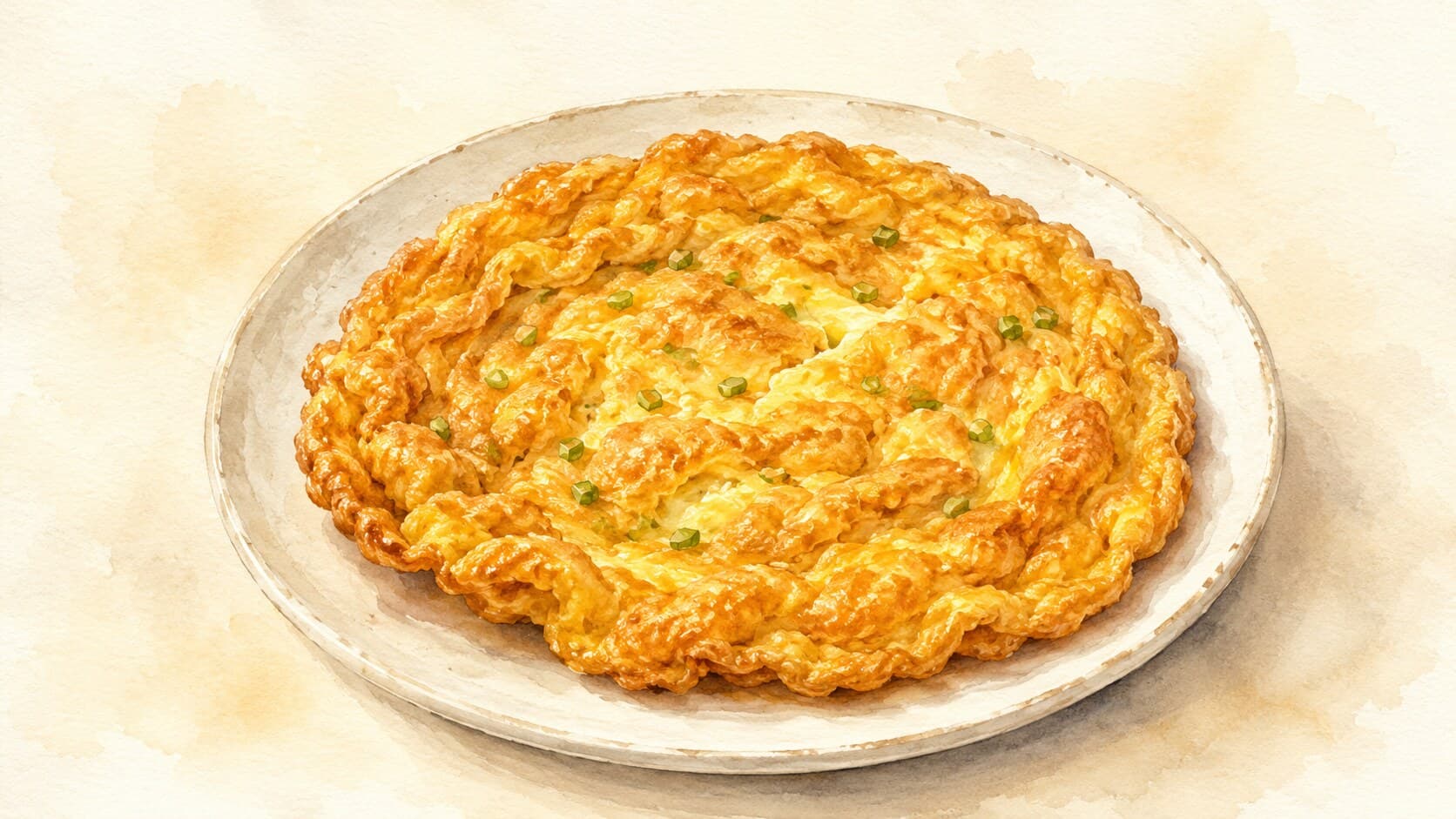
Khai Jeow, a Thai-style omelette, is quick to prepare and features crispy lacy edges that elevate any meal.
Contents (5 sections)▾
Ingredients
- 4 large eggs
- 1 tbsp fish sauce
- 2 tbsp vegetable oil
- Fresh herbs (such as cilantro or green onions), chopped, to taste
- Cooked jasmine rice, for serving
- Sriracha, for serving
Steps
In a bowl, whisk together the eggs and fish sauce until well combined, about 1 minute. This helps the eggs to absorb the umami flavor.
Heat the vegetable oil in a non-stick skillet over medium-high heat until shimmering, about 2 minutes. This high heat is crucial for creating crispy edges.
Pour the egg mixture into the hot oil, tilting the skillet to ensure even coverage. Allow it to fry undisturbed for about 2-3 minutes until the edges are crisp.
Once the edges are set and golden brown, gently lift the omelette with a spatula and fold it in half. Cook for an additional 1-2 minutes until the center is just set.
Transfer the omelette to a plate, serve over jasmine rice, and garnish with fresh herbs. Serve with sriracha on the side.
Tools you'll want
Why this works
The success of Khai Jeow (a Thai omelet whisked with fish sauce and flash-fried in deep, hot oil so the edges puff into a lacy frill) lies in the use of high heat and fish sauce, which creates a distinctive texture and flavor. Beating the eggs with fish sauce allows for the umami to infuse throughout the omelette, enhancing its taste. Pouring the egg mixture into very hot oil is essential; it immediately starts the cooking process, forming crispy, lacy edges that contrast beautifully with the tender center. If the omelette seems too thick or not cooking evenly, gently shake the skillet to redistribute the oil and heat, ensuring even cooking. The perfect balance of heat and timing will yield a fluffy omelette that is both crispy and tender, making it an ideal weeknight dish that can be adapted with various toppings or served alongside rice for a complete meal.
Common mistakes
Cooking on oil that hasn't reached the right temperature (food-safety issue). Target: Oil shimmering and faintly smoking, roughly 180–190 °C / 355–375 °F — a chopstick dipped in should produce a steady, vigorous bubble around it. Why it matters: Khai jeow (Thai-style deep-fried omelet) is defined by what high heat does to whisked eggs: the moment the batter hits hot oil, the proteins coagulate (set) from the outside in, the trapped air expands violently, and the surface puffs into the signature lacy frill. On lukewarm oil the eggs spread and slowly poach into a flat pancake — and a slow, low-heat cook means the inside can stay liquid raw. Eggs must be cooked through: whites fully opaque and set throughout, with no liquid raw egg center. What to do: Heat the oil for the full 2 minutes before pouring. If you're unsure, test with a single drop of egg — it should sizzle and rise immediately, not sink. If the center looks wet when you fold, give it another full minute over the heat rather than calling it done.
Whisking too gently. Target: A high, fast whisk for 30–60 seconds — visible bubbles, the yolk fully broken into the white. Why it matters: The puff comes from air beaten into the eggs. Those bubbles expand explosively when they hit hot oil — that's the mechanism behind the lacy edges. A gentle stir leaves the eggs dense and the omelet flat. What to do: Whisk from the wrist, lifting the whisk or fork above the bowl on each pass to drag in air. The mixture should look slightly frothy on top before it goes in.
Stinting on oil. Target: Enough oil to swirl a generous puddle around the pan — at least a few millimeters deep. This is shallow-frying, not pan-cooking. Why it matters: The frilly lace edges form when egg meets a layer of oil hot enough to flash-fry it. Without enough oil, the edges scorch in spots and stay soft elsewhere; the omelet sticks and the iconic texture never forms. What to do: Use a wider pan if your oil looks like a thin slick. The egg should partly float as it cooks, not press flat to the metal.
Skipping the fish sauce or replacing it with salt. Target: Roughly 1 tablespoon nam pla (Thai fish sauce) for 4 eggs, whisked in before cooking. Why it matters: Fish sauce isn't just salty — it brings glutamates (the umami compounds in fermented anchovy) that round out and deepen the egg's flavor. Plain salt gives you a flat-tasting omelet; fish sauce is what makes khai jeow taste like khai jeow. What to do: Whisk the fish sauce directly into the eggs. If salty tolerance is a concern, dial down slightly rather than swapping it out — the umami axis is what does the heavy lifting.
What to look for
- Oil at the right temperature: faint shimmer rising from the surface, a chopstick produces a steady stream of bubbles. Smoke wisps are fine; thick smoke means too hot — pull off heat for 10 seconds.
- The first 10 seconds in the pan: the edges immediately puff, frill, and brown into lace. If the egg just spreads and sits, the oil isn't hot enough — lift, wait 30 seconds, try again.
- Ready to fold: the underside is deeply golden, the top is mostly set but still slightly soft, and the center is no longer liquid. If you see liquid raw egg pooling on top, give it another minute.
- Finished omelet: whites fully opaque throughout, no glassy or liquid raw center when sliced. Crisp lacy edges, tender (not wet) middle. Drains briefly on paper before plating.
A note on history
Khai jeow is a foundational Thai home and street-food dish — eggs whisked with nam pla (fish sauce) and flash-fried in deep, hot oil — and the recipe has been passed down for generations, with documented references in Thai royal-era archives suggesting it was already established centuries ago (Glutto Digest; Sum About Thailand). On the street it is cooked in a wok over a roaring flame and slid over rice with a spoon of chili sauce on the side; in homes it's the fast comfort dish — quick, cheap, infinitely adaptable to ground pork, minced herbs, or whatever is in the fridge (The Kitchn; Eating Thai Food).
Get the essays in your inbox — free
Weekly notes on flavor, fermentation, and food history — the writing behind the Atlas of Flavor. No spam; unsubscribe anytime.