
Gaeng Phed Gai
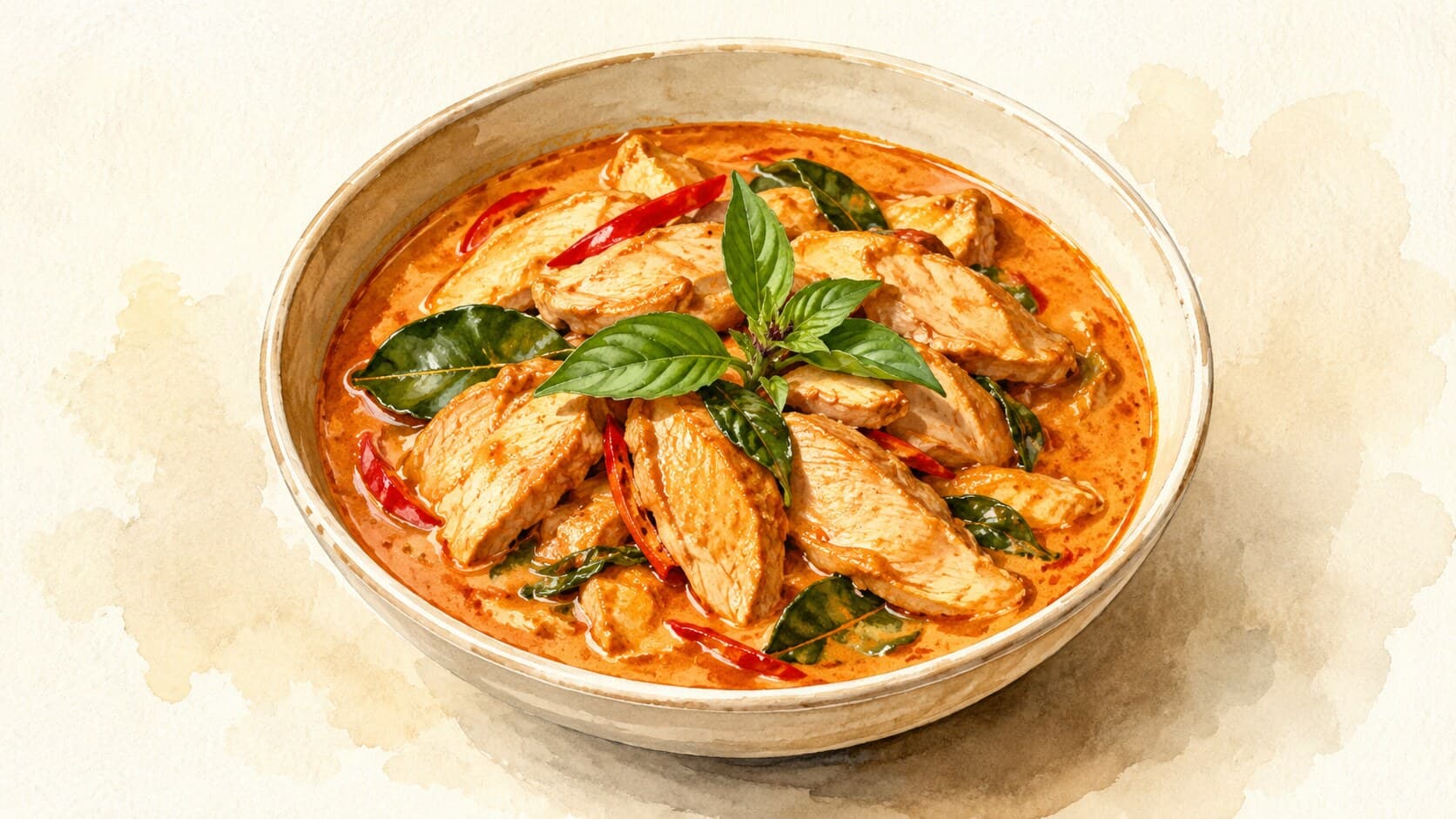
Experience a delightful Thai red curry with tender chicken and eggplant, perfected by the technique of coconut-cream splitting.
Contents (5 sections)▾
Ingredients
- 400 g chicken thigh, boneless and skinless, cut into bite-sized pieces
- 200 g Thai eggplant, halved
- 400 ml thick coconut cream
- 200 ml thin coconut milk
- 1 tbsp red curry paste
- 300 ml chicken stock
- 2 tsp fish sauce
- 4 kaffir lime leaves, torn
- 1 handful Thai basil leaves
- 1-2 red chilies, sliced (to taste)
- 1 tbsp vegetable oil
Steps
Heat the vegetable oil in a large pan over medium heat. Add the thick coconut cream and red curry paste, stirring continuously for about 5-7 minutes until the oil separates and the mixture becomes fragrant.
Add the chicken pieces to the pan and cook for an additional 5 minutes, ensuring they are coated well with the curry mixture.
Pour in the thin coconut milk and chicken stock, followed by the halved Thai eggplants. Bring to a gentle simmer and cook for 10-12 minutes until the eggplants are tender and the chicken is cooked through — 74°C / 165°F on a thermometer in the thickest piece.
Stir in the fish sauce, torn kaffir lime leaves, and Thai basil. Cook for another 2 minutes to allow the flavors to meld together.
Serve hot with jasmine rice, garnished with sliced red chilies for added heat.
Why this works
Coconut-cream splitting is a pivotal technique in Thai cooking that enhances the richness and depth of flavors in curries. When the thick coconut cream is heated with red curry paste (a thick blend of dried chilies, lemongrass, garlic, and shrimp paste pounded into a fragrant base), the fats separate from the solids, creating a beautifully fragrant base that intensifies the dish. This step is crucial, as it allows the aromatics to develop fully before introducing the other ingredients. If the mixture seems too thick or starts to burn, add a splash of thin coconut milk to adjust the consistency and prevent scorching. The balance of ingredients, such as the fish sauce and kaffir lime leaves, adds layers of umami and freshness, making the dish vibrant and satisfying.
Cuisine note. This is the Thai red curry with chicken (gaeng phed gai, แกงเผ็ดไก่). The red curry paste uses dried red chilies as its color base, which is distinct from the green-curry paste (fresh green chili + sweet basil). For the green-curry version, see Green Curry Chicken. Soft framing — 'a Thai red-curry style,' not 'the only authentic red curry.'
Common mistakes
Adding all the coconut liquid at once and never cracking the cream. Target: Only the thick coconut cream first, fried with the paste until the oil splits out and floats — roughly 5–8 minutes — before any thin coconut milk or stock goes in. Why it matters: Cracking the cream (cooking it until the oil separates out and pools on the surface) is the step that fries the curry paste rather than just warming it. Frying in that released oil blooms the dried-chili, lemongrass, and shrimp-paste aromatics; skip it and you get a thin, raw-tasting, slightly grainy sauce instead of a glossy, deep one. What to do: Reduce the thick cream over medium heat, stir the paste in, and wait for the surface to go shiny with separated oil and smell toasty before adding the rest of the liquid.
Letting the curry boil hard once the chicken is in. Target: A gentle simmer — small bubbles breaking lazily, not a rolling boil. Why it matters: A violent boil seizes the chicken proteins and squeezes them dry, and it can also make the coconut sauce split into oil and curdled solids. Low, steady heat keeps the chicken thigh tender and the sauce smooth. What to do: Bring it just to a simmer, then hold it there; thighs are forgiving but still want gentle heat. Cook the chicken through — the safety endpoint for chicken is 74 °C / 165 °F on a food thermometer in the thickest piece; opacity, no pink, and clear juices are cues, not the safety test.
Boiling the kaffir lime leaves and Thai basil with everything else. Target: Lime leaves torn in near the end; Thai basil stirred in during the last minute, off or nearly off the heat. Why it matters: Their aroma lives in volatile oils that evaporate fast. Long simmering boils that fragrance away and leaves the basil black and bitter, so the bright top notes that define the curry vanish. What to do: Build and season the body of the curry first, then add the torn lime leaves and basil right at the finish so their perfume stays in the bowl.
Seasoning with fish sauce too early and too blindly. Target: Fish sauce added toward the end, in stages, tasting as you go. Why it matters: Fish sauce (a salty, savory liquid made from fermented fish) is the salt of the dish and it concentrates as the sauce reduces. Dumping it in at the start risks an over-salty, flat curry once it cooks down, with no easy way back. What to do: Underseason early, then adjust with fish sauce at the end and balance against a little palm sugar; the target is salty-savory lifted by sweetness and chili heat, not salt alone.
What to look for
- Cracked coconut cream: a slick of clear orange-red oil pooling and shimmering on the surface, and a toasted, fragrant smell. That separated oil is the signal the paste is frying, not stewing.
- Properly cooked chicken: the thickest piece reads 74 °C / 165 °F on a thermometer. Firm, opaque flesh and clear (not pink) juices are helpful cues, but the thermometer is what confirms safety; bite-sized thigh pieces should be tender, never translucent at the center.
- Thai eggplant: just-tender when pierced, still holding its round shape and pale color. Collapsed and brown means it has gone past done and into mush.
- Finished curry: a thin film of red-tinted oil floating on a glossy, deep-colored sauce, with the herbs bright green on top. That sheen of oil riding on the surface is the classic look of a red curry that was built correctly.
A note on history
Gaeng phed (แกงเผ็ด) is among the older Thai curries and is associated with central Thailand, built on a paste of dried red chilies with aromatics such as lemongrass, galangal, garlic, shallots, and shrimp paste, then cooked in coconut milk (Wikipedia: Red curry). Its lineage reflects long cultural exchange: paste-based seasonings in the region predate the chili, and the dried red chilies that give this curry its color and heat arrived with Portuguese contact in the 16th century (Wikipedia: Red curry). The red ("phed," meaning hot/spicy) paste is distinct from the green-curry paste built on fresh green chilies.
Get the essays in your inbox — free
Weekly notes on flavor, fermentation, and food history — the writing behind the Atlas of Flavor. No spam; unsubscribe anytime.