
Jjajangmyeon (Korean Black Bean Noodles)
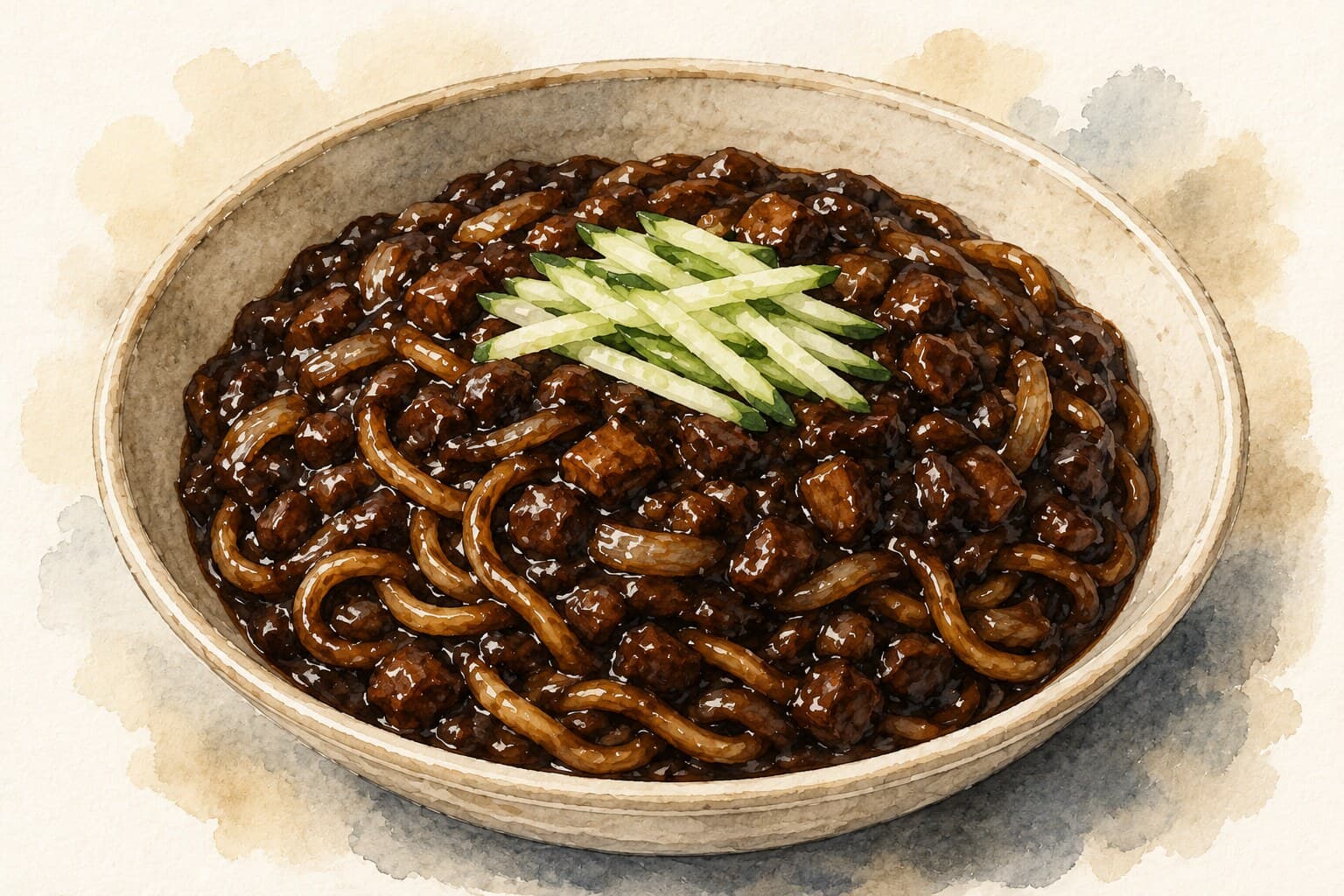
Jjajangmyeon combines chewy wheat noodles with a rich, savory black bean sauce for a comforting Korean dish.
Contents (5 sections)▾
Ingredients
- 200 g wheat noodles
- 100 g pork belly, diced
- 2 tbsp chunjang black bean paste
- 3 tbsp vegetable oil
- 1 medium onion, diced
- 1 medium zucchini, diced
- 1 medium potato, diced
- 1 cup water
- 1 tbsp sugar
- 1 tbsp soy sauce
- 1 tsp minced garlic
- 1 tsp sesame oil
- to taste black pepper
Steps
Cook the wheat noodles according to package instructions; drain and set aside.
In a large pan, heat 3 tbsp of vegetable oil over medium heat. Add the chunjang black bean paste and fry for 2-3 minutes until fragrant; this removes bitterness and enhances flavor.
Add the diced pork and cook until browned, about 5 minutes, stirring frequently.
Stir in the diced onion, zucchini, and potato. Cook until the vegetables are soft, about 5 minutes.
Pour in 1 cup of water, add sugar, soy sauce, minced garlic, and black pepper. Simmer for 5 minutes until the sauce thickens. Adjust with more water if it's too thick.
Add the cooked noodles to the sauce, stirring well to coat. Drizzle with sesame oil before serving.
Why this works
Frying the chunjang black bean paste in oil serves a dual purpose: it enhances the umami flavor while reducing its inherent bitterness, resulting in a richer sauce. Cooking the pork until browned adds depth, while the vegetables introduce sweetness and texture. Simmering with water and seasonings allows the flavors to meld, creating a glossy consistency that clings to the noodles. If the sauce seems too thick, simply add a little more water to maintain the desired consistency. Similarly, if the flavor is too strong, adjust with a pinch of sugar to balance it out. This careful layering of techniques ensures a deliciously cohesive dish.
Common mistakes
Under-frying the chunjang (Korean black bean paste, fermented and salty).
Target: Fry the chunjang in oil for 2–3 minutes over medium heat until it loosens, gives off a deep roasted-soybean aroma, and the oil around it darkens.
Why it matters: Raw chunjang carries a sharp, ashy bitterness from the unbroken fermentation compounds. Frying (the "bloom" step) drives off volatile bitter notes and develops the caramelized, slightly nutty sauce flavor the dish depends on. Skip it and the sauce tastes harsh and one-dimensional no matter how much sugar you add later.
What to do: Use a generous puddle of oil so the paste is partly submerged, not just smeared. Stir constantly so the paste loosens evenly and never sits in one spot long enough to scorch.
Pork that is still pink in the center.
Target: Pork fully cooked through — no pink, juices run clear, internal temperature reaches 70°C / 160°F.
Why it matters: This is a food-safety line, not a texture preference. Ground or diced pork carries surface bacteria mixed throughout the cut as it's processed; the diced pork belly in jjajangmyeon must reach safe temperature all the way through. Sauce coating a half-cooked piece can hide undercooking.
What to do: Brown the diced pork before the vegetables go in, on a hot surface so the pieces sear rather than steam. Cut one piece open before adding the sauce — if you see pink or pearly raw color, keep cooking.
Adding all the water at once and ending up with thin sauce.
Target: Sauce that just coats a spoon and clings to noodles; not soupy.
Why it matters: Jjajangmyeon sauce is a thick gravy, not a broth. Too much water dilutes the chunjang's body and leaves the noodles swimming.
What to do: Start with less water than the recipe suggests, simmer to thicken, then adjust. If the sauce ends up too thick, a splash of water at the end loosens it instantly — going the other direction is slower.
Cold, dry noodles meeting hot sauce.
Target: Noodles freshly drained, still hot, tossed with sauce immediately before serving.
Why it matters: Wheat noodles tighten and clump as they cool — once they've cooled and dried, the sauce slides off instead of coating each strand. The dish is built around the contrast of glossy black sauce against pale chewy noodles, and that only reads if the noodles are hot enough to receive it.
What to do: Time the noodles so they finish at the same moment as the sauce. If the noodles must wait, rinse them briefly in hot (not cold) water just before plating to revive them.
What to look for
- Chunjang after frying: deep, almost glossy black, with a roasted-soy aroma rising from the pan. The oil around the paste has taken on a dark amber color. Raw chunjang smells flat and slightly sharp; bloomed chunjang smells round and warm.
- Pork before vegetables go in: browned on the outside, no pink visible when you cut a piece. Surface should show real color, not just a pale graying.
- Finished sauce: thick enough to mound on a spoon, glossy, the vegetables suspended rather than swimming. If a spoon drawn through the pan leaves a brief trail before the sauce closes, the consistency is right.
- Noodles in the bowl: each strand coated in dark sauce, no dry spots, sauce clinging rather than pooling at the bottom.
A note on history
Jjajangmyeon descends from Chinese zhajiangmian, brought to the Korean port city of Incheon by Shandong immigrants in the early 1900s. The first restaurant credited with serving the now-standard Korean form is Gonghwachun in Incheon's Chinatown, opened in 1905 by Woo Hee-gwang; the building was later designated a registered cultural property and became a jjajangmyeon museum in 2012 (Seoul Metropolitan Government). The Korean version diverged from the Chinese original by sweetening the black bean sauce with caramel and additional onion, tuning it to local taste (Wikipedia: Jajangmyeon history). It became dock-worker food in Incheon before spreading nationwide, and is now one of Korea's most-ordered delivery dishes.
Get the essays in your inbox — free
Weekly notes on flavor, fermentation, and food history — the writing behind the Atlas of Flavor. No spam; unsubscribe anytime.