
Hyderabadi Biryani
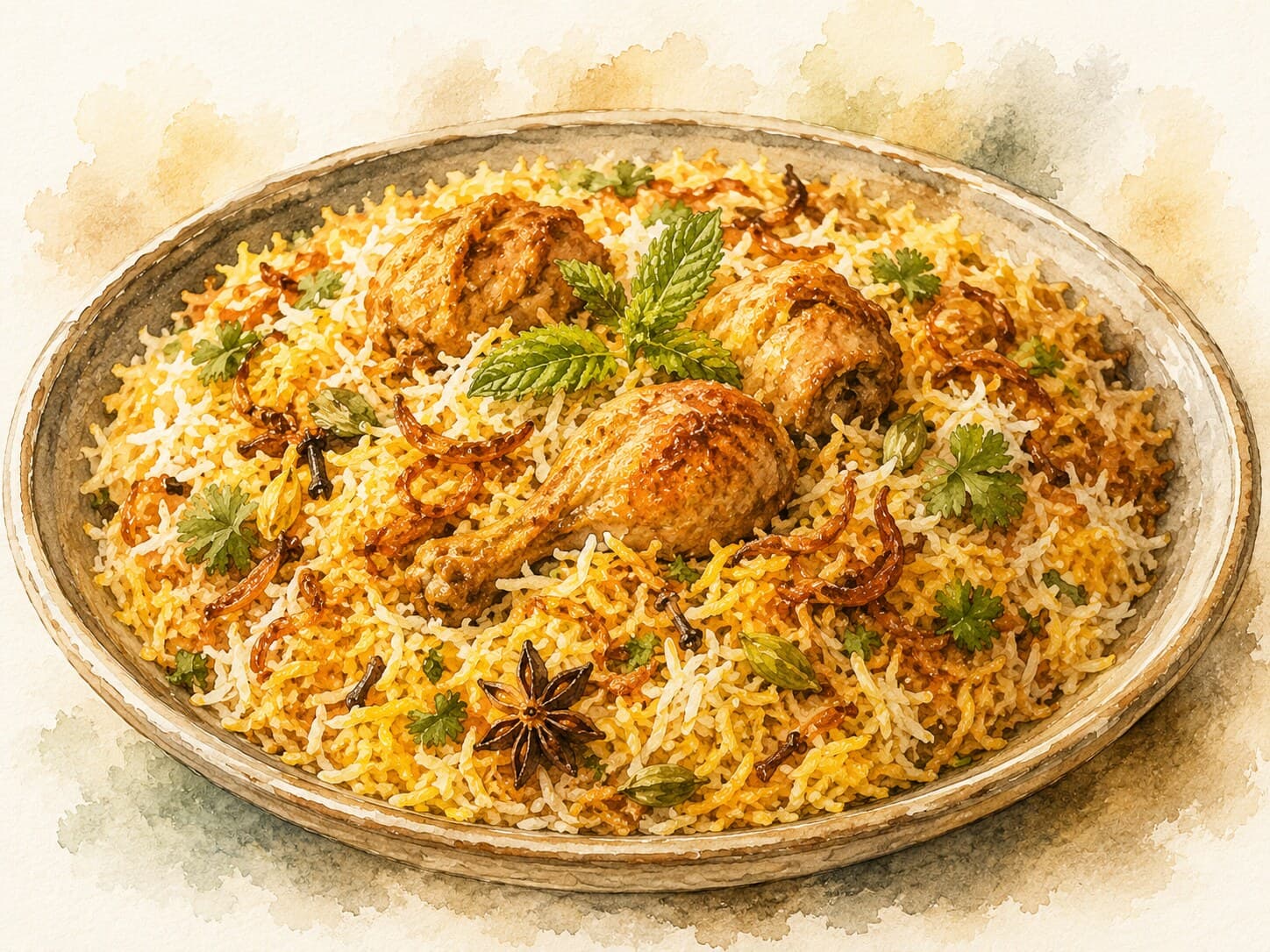
Hyderabadi Biryani is a fragrant and flavorful rice dish layered with marinated meat and saffron rice, cooked together using the dum technique.
Contents (5 sections)▾
Ingredients
- 500 g basmati rice
- 500 g chicken or mutton, cut into pieces
- 200 g plain yogurt
- 2 large onions, thinly sliced
- 4 cloves garlic, minced
- 1 inch ginger, grated
- 2 green chilies, slit
- 1/4 cup fresh mint leaves, chopped
- 1/4 cup fresh coriander leaves, chopped
- 1/2 tsp turmeric powder
- 1 tbsp red chili powder
- 1/2 tsp garam masala
- 1/4 tsp saffron strands, soaked in 2 tbsp warm milk
- 4 tbsp ghee or cooking oil
- Salt, to taste
- Water, as needed
- Dough (made of flour and water) to seal the pot
Steps
Rinse the basmati rice under cold water until the water runs clear, then soak it in water for 30 minutes.
In a bowl, mix yogurt, garlic, ginger, green chilies, mint, coriander, turmeric, red chili powder, garam masala, and salt. Add the meat and marinate for at least 30 minutes.
In a heavy-bottomed pot, heat ghee or oil over medium heat, add the sliced onions, and sauté until golden brown. Remove half for garnishing.
Drain the soaked rice and add to the pot with the remaining onions. Sauté for about 5 minutes, then add enough water to cover the rice and cook until it's 70% done, about 5-7 minutes.
Layer the marinated meat at the bottom of the pot, followed by the par-cooked rice. Drizzle saffron milk over the top and garnish with the fried onions.
Seal the pot with dough to trap steam and cook on low heat for 30-35 minutes, allowing the flavors to meld together.
Once done, remove from heat and let it rest for 10 minutes before serving. Serve hot with raita or salad.
Why this works
The dum cooking method is pivotal to the success of Hyderabadi Biryani, as it traps steam and flavors in a sealed pot. By layering marinated raw meat beneath par-cooked saffron rice, the juices from the meat infuse the rice with rich flavor while the rice finishes cooking. The sealing dough prevents any steam from escaping, ensuring that the entire dish cooks evenly. If the rice seems too dry during cooking, you can sprinkle a bit of water over the top before sealing the pot. This method guarantees moist, fragrant rice while the meat becomes tender and flavorful. The balance of spices in the marinade combined with the aromatic basmati rice creates a harmonious dish that is celebrated for its complexity.
Common mistakes
Opening the pot to check on the meat — and serving it underdone. Target: After the full dum (sealing the pot so the steam finishes cooking everything together) time, the meat must be cooked through — no pink at the center of the largest piece. Juices should run clear, not red or pink. Chicken thigh: 74°C/165°F internal on an instant-read thermometer. Mutton: tender enough that a fork pulls fibers apart cleanly with no raw band by the bone. Why it matters: The dum stage is the only cooking the meat gets — there's no pre-sear, only the marinade tenderizing it. If you open the seal early or undersize the dum time relative to the meat size, the largest piece can finish pink and raw at the bone, which is a real food-safety risk with poultry and a serious quality risk with mutton. This is the make-or-break safety step of the dish. What to do: Cut the meat to uniform pieces so they cook in the same time. After the 30–35 minute dum + 10 minute rest, pierce the largest piece all the way through with a thin knife. If the inside is still pink, reseal and steam another 10–15 minutes. Never serve pink poultry or mutton from a biryani.
Rice cooked past 70% before layering. Target: Rice grains 70% done — bendable but with a hard, white core still visible when one grain is pressed between fingers. About 5–7 minutes of par-boil. Why it matters: The rice finishes cooking during dum from steam and meat juices — if it's already nearly done at the layering stage, you end up with a soft, mushy upper layer by the time the meat below has cooked through. The hard core gives the rice the time-budget it needs to absorb flavor without disintegrating. What to do: Test a grain every minute after the 5-minute mark. Drain the instant a clear white pinpoint remains in the center. Cold water rinse is not needed — speed of drain matters more.
Skipping or rushing the marinade. Target: Meat in the yogurt-spice marinade for at least 2 hours, ideally overnight (refrigerated). Why it matters: Yogurt's lactic acid and live cultures break down surface proteins, helping the meat hold moisture during dum. Skipping this means tougher meat and the spice flavors sit on the surface instead of penetrating. The 30 minutes named in the steps is a minimum, not a target. What to do: Marinate the night before. If you have only 30 minutes, score the meat with shallow cuts so the marinade penetrates faster.
Seal that leaks steam. Target: A continuous rope of dough pressed firmly around the lid-pot junction with no visible gap, plus a heavy weight on the lid. Why it matters: Dum cooks by trapped steam (sealing the pot so the steam finishes cooking everything together). Any leak drops the internal pressure and temperature — the rice dries out, the meat undercooks, and the saffron aroma escapes instead of perfuming the dish. A weight on the lid is cheap insurance. What to do: Roll the dough into a thin sausage and press it firmly. Place a heavy pan or stone on top of the lid. After sealing, switch to the lowest possible heat — use a tawa or heat diffuser between pot and burner if you have one.
What to look for
- Marinated meat going into the pot: uniformly coated, golden-orange from turmeric and chili, smelling faintly of the toasted garam masala. Watery marinade = not enough yogurt or no rest time.
- Par-cooked rice on draining: individual grains separate, bendable but with a white core dot when crushed between fingers. Sticking grains = overcooked.
- Pot just before sealing: visible layers — fried onions on top, saffron-milk streaks in the rice, no liquid pooling at the bottom edge. Excess liquid will boil the bottom layer rather than steam it.
- After the 10-minute rest: lid lifted reveals a cloud of steam carrying saffron, cardamom, and the smell of cooked meat. A spoon scooped down to the meat layer should bring up a piece that is fully opaque inside, with clear (not pink) juices.
A note on history
Hyderabadi biryani originated in the kitchens of the Nizams of Hyderabad in the 18th century, where Mughlai techniques from Delhi met local South Indian flavors. Local tradition attributes its codification to the chef of Nizam-ul-Mulk, Asaf Jah I, around the mid-1700s. The dum pukht method — sealing a heavy handi (clay or copper pot) with wheat-flour dough so steam can never escape — was formalized in the Nizams' court kitchens during this same period. Hyderabadi biryani splits into two classical schools: kachchi (raw marinated meat layered with parboiled rice and cooked entirely under dum) and pakki (meat cooked first in a korma (a spiced braise), then layered). The recipe above follows the kachchi method — the more delicate and more demanding of the two. Sources: Wikipedia — Hyderabadi biryani, Deccan Chronicle — History of Hyderabadi biryani.
Get the essays in your inbox — free
Weekly notes on flavor, fermentation, and food history — the writing behind the Atlas of Flavor. No spam; unsubscribe anytime.