
Aloo Gobi
Aloo Gobi is an Indian dry curry featuring spiced potatoes and cauliflower, prepared by roasting vegetables and blending spices.
Contents (4 sections)▾
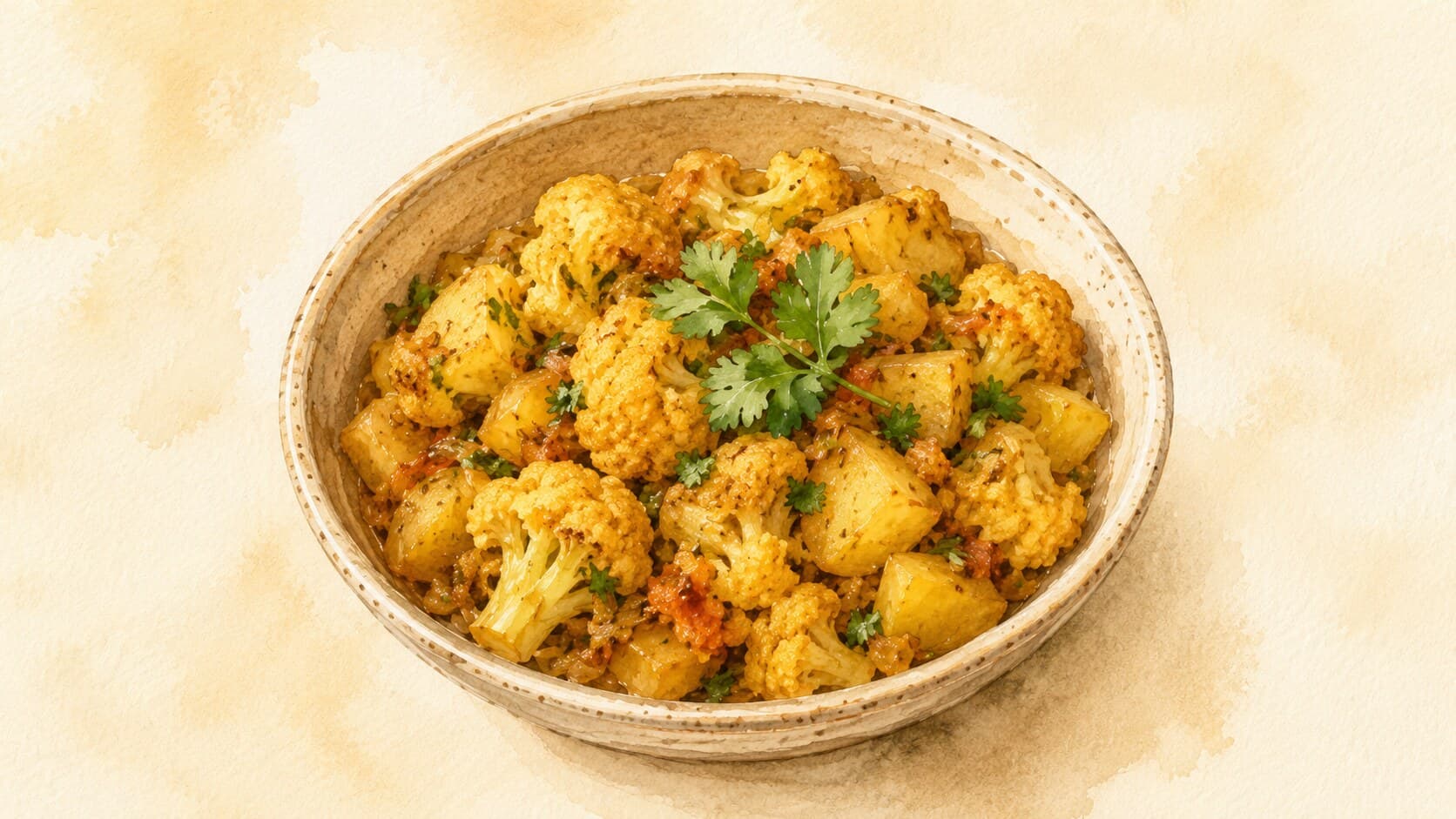
Ingredients
- 500 g potatoes, peeled and diced
- 500 g cauliflower, cut into florets
- 2 tbsp vegetable oil
- 1 tsp cumin seeds
- 1 tsp mustard seeds
- 1 tsp turmeric powder
- 1 tsp garam masala
- 1 tsp coriander powder
- 1 tsp chili powder
- Salt, to taste
- Fresh cilantro, for garnish
Steps
Heat the vegetable oil in a large pan over medium heat. This helps to release the flavors of the spices.
Add cumin and mustard seeds to the hot oil. Sauté for about 30 seconds until they start to crackle.
Stir in the diced potatoes and cook for 5 minutes, stirring occasionally to prevent sticking.
Add the cauliflower florets, turmeric, garam masala, coriander powder, chili powder, and salt. Stir well to coat the vegetables.
Cover the pan and cook for an additional 10 minutes, stirring occasionally, until the vegetables are tender.
Garnish with fresh cilantro before serving. This adds a burst of color and flavor to the dish.
Why this works
Aloo Gobi showcases the technique of tempering, where spices are infused in hot oil to enhance their flavors before incorporating them into the dish. Using cumin and mustard seeds as the base adds a fragrant depth, while turmeric lends a vibrant color and a warm, earthy flavor. The method of cooking the potatoes and cauliflower together allows them to absorb each other's flavors while the spices meld into the vegetables. If your curry seems too dry during cooking, add a splash of water to create a bit of steam, helping the vegetables cook evenly without burning. Conversely, if it appears too watery, increase the heat slightly and cook uncovered for a few minutes to allow excess moisture to evaporate, achieving the desired dry curry consistency. This balance of moisture and spice is key to a successful Aloo Gobi.
Common mistakes
Burning the seeds in the tempering step.
Target: Cumin and mustard seeds that crackle and turn fragrant in about 30 seconds, then get the potatoes added.
Why it matters: Whole spices go from fragrant to acrid in seconds. Burnt cumin turns bitter, and that bitterness carries through the whole dish with no way to remove it.
What to do: Have the potatoes ready beside the pan before the seeds go in. As soon as the mustard seeds start to pop and the cumin smells toasty, add the potatoes to drop the temperature.
Adding the ground spices to bare hot oil.
Target: Turmeric, garam masala, coriander, and chili added with the cauliflower, not into empty oil.
Why it matters: Ground spices scorch far faster than whole seeds. Dropped onto bare hot oil they burn almost instantly and taste harsh and dusty; tossed with the vegetables they bloom (warm gently in the oil so their flavor opens up) without catching.
What to do: Add the ground spices together with the cauliflower and stir to coat the vegetables right away.
Crowding and over-stirring the vegetables.
Target: Pieces that hold their shape, with the cauliflower still in distinct florets.
Why it matters: This is a dry curry, not a mash. Constant stirring breaks the cauliflower down and turns the potatoes to mush before they cook through.
What to do: Spread the vegetables in an even layer, cover, and stir only occasionally. Use a wide pan so they steam-roast rather than stew.
Letting it cook dry and catch.
Target: Tender vegetables with a little browning, but nothing scorched on the base.
Why it matters: With no added liquid, the pan can run dry and the spices on the bottom can burn before the potato centers soften.
What to do: If it looks too dry or starts to stick before the vegetables are tender, add a splash of water, cover, and let the steam finish the cooking. If it ends up watery instead, uncover and cook off the excess over slightly higher heat.
What to look for
-
The tempering: mustard seeds popping and cumin smelling toasty and nutty — pull them forward before they darken past golden-brown.
-
The spice coat: the vegetables turn even and golden with turmeric, with no dry powder visible and no acrid, scorched smell.
-
Doneness: a knife or fork slides into a potato piece with no resistance, and the cauliflower is tender but still holds as a floret.
-
Final texture: dry and glossy with oil and spice clinging to each piece — no pooled liquid in the pan.
-
truth:
approved -
quality:
approved(score 100) -
similarity:
approved(score 0.067 vs indian-tadka-base) -
regulatory:
approved -
image:
approved
Get the essays in your inbox — free
Weekly notes on flavor, fermentation, and food history — the writing behind the Atlas of Flavor. No spam; unsubscribe anytime.