
Baingan Bharta (Smoky Mashed Eggplant)
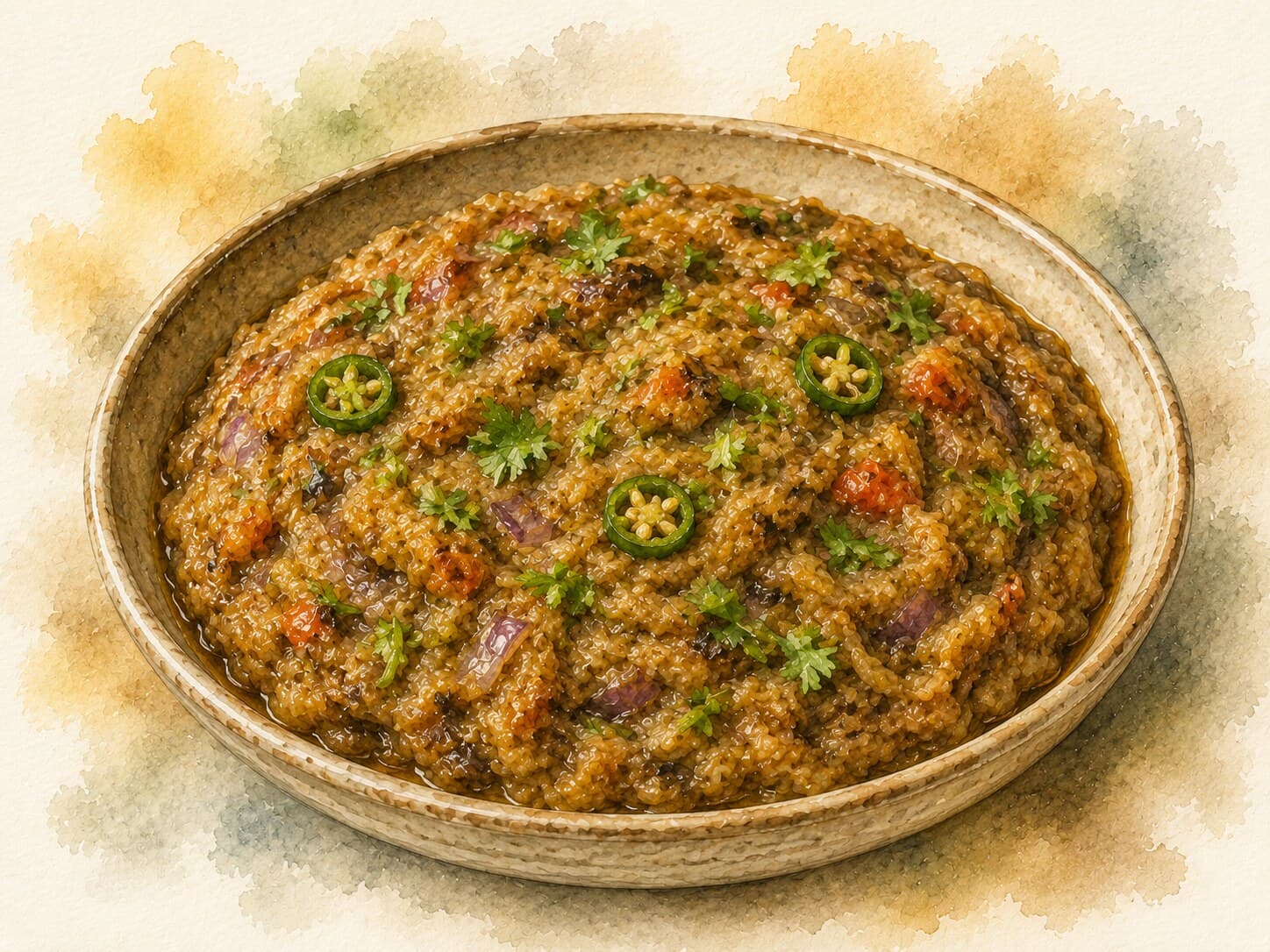
Baingan Bharta is a smoky, spiced mashed eggplant dish that brings depth and flavor to your table.
Contents (5 sections)▾
Ingredients
- 1 large eggplant (about 500g)
- 2 tbsp vegetable oil
- 1 medium onion, finely chopped
- 2 tomatoes, chopped
- 1 tsp ginger-garlic paste
- 1 tsp cumin seeds
- 1 tsp coriander powder
- 1/2 tsp turmeric powder
- 1 tsp red chili powder
- Salt to taste
- Fresh cilantro leaves for garnish
Steps
Char the eggplant over an open flame on a grill or stovetop until the skin is blistered and blackened, about 15 minutes. This process imparts a deep smoky flavor that is essential to the dish.
While the eggplant is charring, heat the vegetable oil in a pan over medium heat. Add cumin seeds and sauté until they splutter, releasing their aroma.
Add the chopped onions to the pan and cook until golden brown, about 5-7 minutes. This step builds the base flavors of the dish.
Stir in the ginger-garlic paste and cook for another minute until fragrant.
Add the chopped tomatoes, coriander powder, turmeric powder, red chili powder, and salt. Cook until the tomatoes soften and the oil separates, about 5 minutes.
Once the eggplant is charred, remove it from the heat, let it cool slightly, peel off the skin, and mash the flesh. Mix the smoky eggplant into the spiced onion-tomato base, combining well.
Garnish with fresh cilantro leaves and serve hot with naan or rice.
Why this works
The technique of charring the eggplant over an open flame is what sets Baingan Bharta apart, as it infuses the flesh with a distinct smoky flavor that no other cooking method can replicate. When the skin blisters and blackens, it helps to separate the flesh from the skin, making it easier to peel. The key is to ensure that the eggplant is thoroughly charred; if it appears undercooked, it won't develop that rich smoky taste. If the eggplant breaks while mashing, don’t worry; simply fold it into the spiced mixture without overmixing to maintain a rustic texture. Each ingredient in the onion-tomato base complements the smoky eggplant, creating a harmonious balance of flavors that defines this dish. This technique preserves the integrity of the eggplant and enhances the overall depth of the dish, making it a delightful main course for any meal.
Common mistakes
Under-charring the eggplant.
Target: Skin blistered and blackened all over, flesh collapsing soft to the center.
Why it matters: The smoke is the dish. A pale, only-partly-charred eggplant gives you mashed vegetable without the smoky character that defines bharta, and firm flesh near the stem will not mash smoothly.
What to do: Keep turning the eggplant over the open flame until every side is black and the whole thing sags. Pierce it once or twice first so trapped steam can escape instead of bursting.
Letting the steam back into the flesh while peeling.
Target: Skin removed cleanly; charred flesh kept fairly dry.
Why it matters: If you peel under running water to chase off bits of char, you wash away both the smoky flavor and concentrate, and you waterlog the flesh so the final dish turns soupy.
What to do: Let the eggplant cool just enough to handle, then peel by hand and scrape off stubborn flecks with a knife. A few specks of black are flavor, not a flaw.
Adding the eggplant before the base is properly cooked.
Target: Onion-tomato masala (the cooked-down base of onions, tomatoes, and spices) cooked until the oil separates and pools at the edges.
Why it matters: That oil-separation stage is the signal the tomatoes have broken down and the raw, sharp taste has cooked out. Fold the eggplant in too early and the dish tastes of raw tomato and harsh spice.
What to do: Cook the tomatoes and spices patiently until you see oil glistening around the mass, then add the mashed eggplant.
Over-mashing into a smooth purée (a completely smooth, blended paste).
Target: A coarse, rustic mash with some texture left.
Why it matters: Bharta is traditionally chunky; whipping it smooth makes it gluey and flattens the contrast against the spiced base.
What to do: Mash with a fork or the back of a spoon, stopping while a little texture remains.
What to look for
- Eggplant over the flame: the skin crackles and blackens, the body slumps, and a smoky aroma rises. When it sags and feels soft when pressed, it is done.
- Onions: deep golden brown, not pale and not burnt. This is the sweet base of the dish.
- The masala before the eggplant goes in: droplets of oil separating out around the edge of the tomato-onion mass. This is your green light.
- The finished bharta: thick and spoonable, glossy with the separated oil, smelling distinctly of smoke and spice — not watery or pooling liquid.
A note on history
Baingan bharta belongs to the cooking of northern India, particularly Punjab, where it is one of a family of dishes built on mashing a fire-roasted vegetable. In Hindi baingan means eggplant and bharta means a mash or mince, and regional versions differ — Punjabi cooks lean on butter or ghee (clarified butter with the milk solids removed), while parts of Bihar and Uttar Pradesh favor pungent mustard oil. (Wikipedia, 196 flavors)
Get the essays in your inbox — free
Weekly notes on flavor, fermentation, and food history — the writing behind the Atlas of Flavor. No spam; unsubscribe anytime.