
Hungarian Goulash (Gulyas)
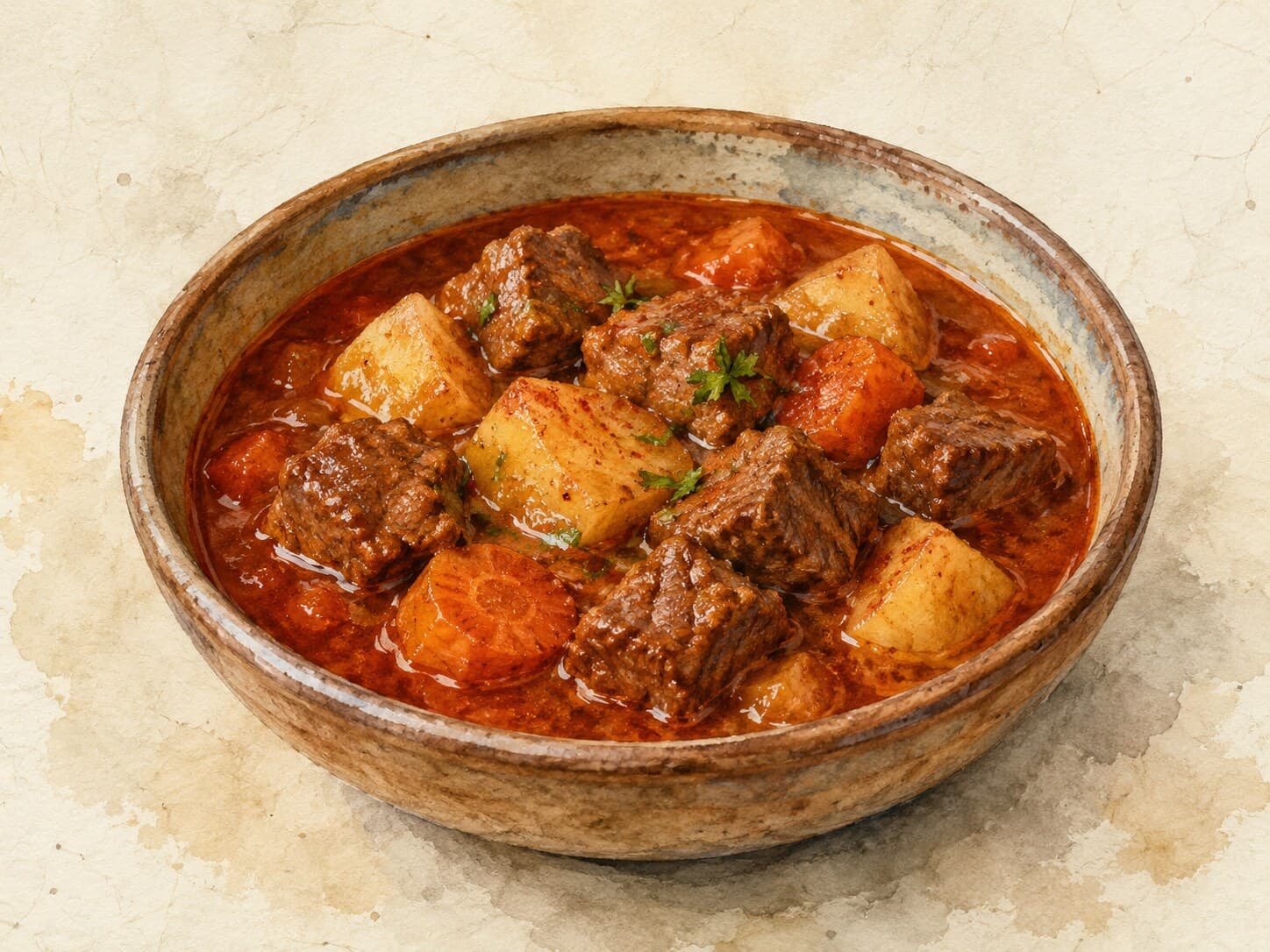
A robust and flavorful Hungarian Goulash, showcasing the rich taste of paprika and tender beef in a hearty soup.
Contents (5 sections)▾
Ingredients
- 600 g beef chuck, cut into 2 cm cubes
- 2 large onions, finely chopped
- 3 tbsp sweet paprika
- 2 cloves garlic, minced
- 2 medium tomatoes, diced
- 2 medium potatoes, peeled and diced
- 1 bell pepper, diced
- 1 tsp caraway seeds
- 1 liter beef broth
- 2 tbsp vegetable oil
- salt to taste
- black pepper to taste
- fresh parsley, chopped for garnish
Steps
In a large pot, heat the vegetable oil over medium heat. Add the chopped onions and sweat them for about 10 minutes until they become translucent.
Remove the pot from heat and stir in the sweet paprika quickly to avoid burning. This step is crucial as burned paprika can turn bitter.
Return the pot to low heat. Add the beef cubes and cook for 5 minutes, stirring often until the beef is browned.
Add the minced garlic, diced tomatoes, bell pepper, and caraway seeds. Stir well and cook for another 2 minutes.
Pour in the beef broth and bring the mixture to a gentle simmer. Cover and allow it to cook for about 1.5 hours, or until the beef is tender.
In the last 20 minutes of cooking, add the diced potatoes. Season with salt and black pepper to taste, and continue to simmer until the potatoes are tender.
Serve hot, garnished with fresh parsley.
Why this works
The technique of sweating the onions develops a sweet base flavor which balances the rich and earthy tones of the paprika. By removing the pot from heat before adding paprika, you prevent it from burning, which would impart a bitter taste to the goulash. The long simmering process allows the beef to become tender while infusing the soup with the depth of flavors from the ingredients. If the soup seems too thick, you can adjust by adding more broth or water to achieve your desired consistency. Properly executed, this dish is a vibrant, hearty soup, not a stew, which is a common misunderstanding.
Common mistakes
Adding paprika to the hot pan. Target: Pan visibly off the heat for at least 30 seconds before the paprika hits — the oil should still be warm but no longer shimmering. Why it matters: Paprika is mostly ground sweet pepper, and its red color comes from carotenoid pigments that are extremely heat-sensitive. Above about 150°C they scorch in seconds, turning bitter and acrid. That bitterness can't be fixed — the whole pot is ruined. Warm (not hot) oil instead does the opposite: it gently extracts the carotenoids into the fat (this is "paprika bloom" — color and aroma dissolving into the oil), giving you the deep red color and warm, sweet aroma that defines gulyás. What to do: Move the pot off the burner. Wait a beat. Stir the paprika in fully — every grain coated — before any liquid goes in, then return to low heat.
Skipping the meat browning. Target: Beef cubes patted dry, surface developing a dark caramel color before the broth is added. Why it matters: Browning triggers the Maillard reaction (the protein-and-sugar browning that makes seared meat smell like seared meat) — it builds savory depth that a long simmer alone cannot generate. Wet beef just steams in the pot and stays one-dimensional. What to do: Pat the cubes dry with paper towel. Add to the pot after the paprika is stirred in, and let each side color before stirring.
Boiling instead of simmering. Target: Surface barely trembling — a slow lazy bubble every few seconds, not a rolling boil. Why it matters: Beef chuck is mostly connective tissue (collagen) that needs to slowly convert to gelatin between roughly 75–85°C over 1.5–2 hours. A hard boil drives the muscle fibers above that range — they contract, squeeze out moisture, and turn stringy and dry. The gentle simmer is what makes the meat fork-tender. What to do: Bring to a boil once, then drop the heat low and partially cover. Watch the surface — adjust the burner so you see only the occasional bubble.
Treating goulash as a thick stew. Target: A pourable soup — liquid covers the meat and potatoes generously and runs from a spoon, not clings to it. Why it matters: Real gulyás is a soup (the Hungarian word gulyásleves literally means "goulash soup"). The thick stewed version sold abroad is a different dish. Reducing it too far concentrates the salt and obscures the bright paprika top-note. What to do: Keep the liquid level high through the simmer. If it has reduced by serving time, add hot water or broth back in to thin to a soup consistency.
What to look for
- Onions before paprika: soft, translucent, taking on a faint pale gold — no brown edges. If they brown, the sugars caramelize too far and the base loses its sweetness.
- Paprika bloom moment: oil turning a deep, glossy brick-red within seconds of stirring in the powder. No black flecks, no acrid smell. If you see either, you didn't pull the pan off the heat soon enough — start over.
- Beef after the slow simmer: a fork breaks through without pressure but the cube still holds its shape. Falling apart = overcooked; resisting = not done. The collagen has converted when the fibers slide apart with no shred.
- Finished soup: deep ruby red, lightly translucent, glistening with paprika-tinted fat on top. A muddy brown soup means burned paprika or too much browning of the onions.
A note on history
Gulyás takes its name from gulya (a herd of cattle) — a gulyás was a Hungarian cattle herdsman. The dish traces back to the Magyar herdsmen of the Hungarian plains, who carried slow-cooked, dried strips of beef and onions in sheep-stomach pouches to rehydrate into soup on the road. Paprika, today the soul of the dish, is a relatively recent addition: capsicum peppers arrived in the Old World after the Columbian exchange in the 16th century, but ground paprika only entered the gulyás recipe in the 18th century. The thick stewed version most non-Hungarians know is a derivative — the original Hungarian dish is gulyásleves, a soup. Sources: Wikipedia — Goulash, Britannica — Goulash.
Get the essays in your inbox — free
Weekly notes on flavor, fermentation, and food history — the writing behind the Atlas of Flavor. No spam; unsubscribe anytime.