
Gulyás
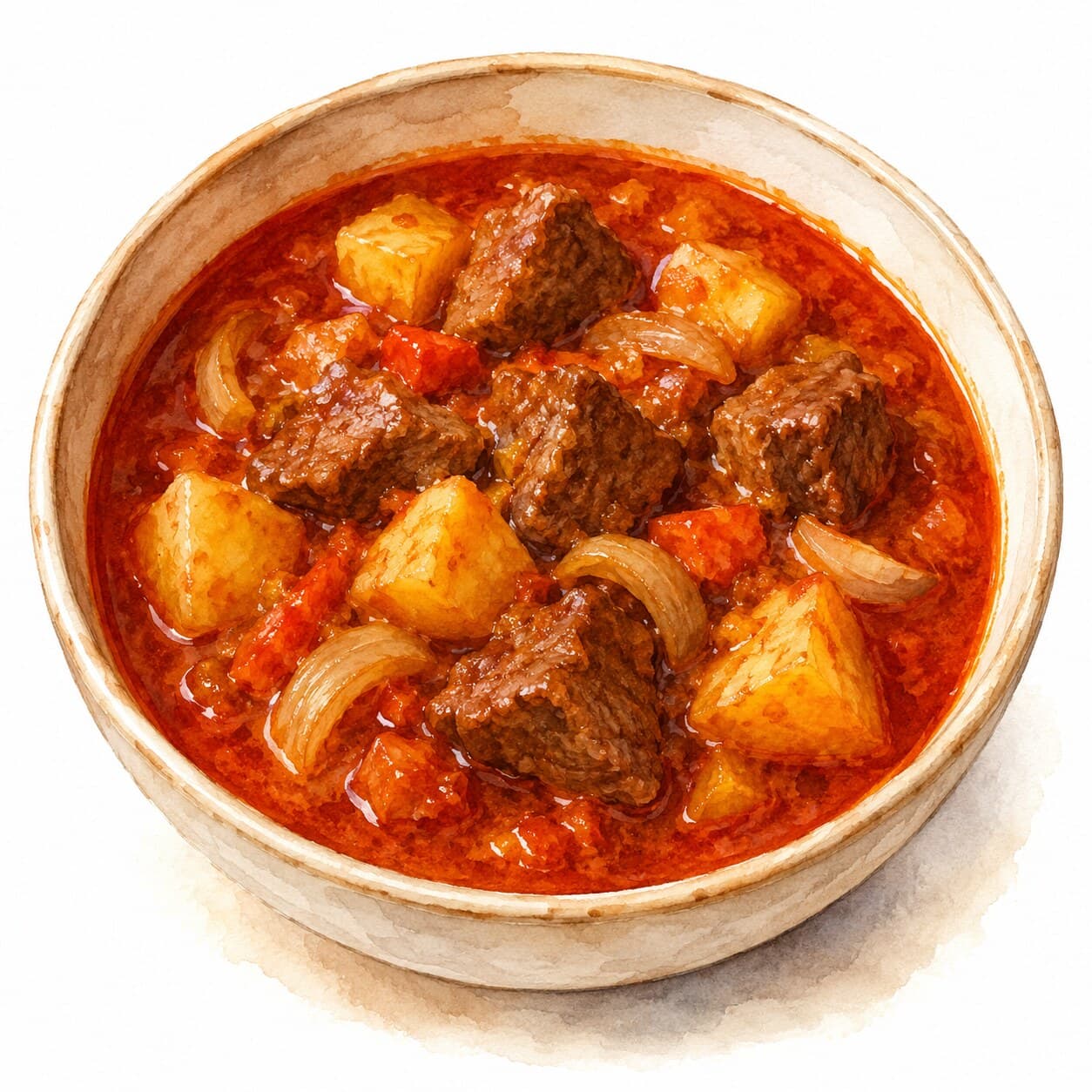
Gulyás is a traditional Hungarian beef-paprika stew, simmered to perfection to showcase the rich flavors of its ingredients.
Contents (5 sections)▾
Ingredients
- 1 kg beef chuck, cut into 2.5 cm cubes
- 3 tbsp sweet paprika
- 2 large onions, chopped
- 1 tsp caraway seeds
- 4 medium potatoes, peeled and diced
- 2 large carrots, sliced
- 1.5 liters beef broth
- Salt to taste
- Black pepper to taste
- 2 tbsp vegetable oil
Steps
Heat the vegetable oil in a large pot over medium heat. Add the chopped onions and sauté until translucent, about 5 minutes.
Add the beef chunks to the pot, searing them until browned on all sides, approximately 10 minutes. This step develops the stew's base flavor.
Stir in the sweet paprika and caraway seeds, cooking for 1 minute to release their aromas. Paprika is crucial here as it imparts the dish’s signature flavor.
Pour in the beef broth, ensuring it covers the meat entirely. Bring to a simmer.
Reduce the heat to low and let the stew simmer for at least 1.5 hours, or until the beef is tender. The long cooking time allows the flavors to meld beautifully.
Add the diced potatoes and sliced carrots, continuing to simmer for an additional 30 minutes until the vegetables are tender.
Season with salt and black pepper to taste before serving. Serve hot with crusty bread.
Why this works
The essence of gulyás lies in its long-simmering process which allows the flavors of the beef and paprika to develop fully. The beef chuck is ideal for stewing due to its marbling (the fine veins of fat running through the meat), which becomes tender and juicy during cooking. Sweet paprika is the soul of this dish and contributes a vibrant color and a depth of flavor that is uniquely Hungarian. Care must be taken not to burn the paprika when adding it to the hot oil, as this can create bitterness. If the stew seems too thick, add a bit more beef broth to reach your desired consistency. Conversely, if it is too thin, you can let it simmer uncovered for a few more minutes to reduce it. This method will ensure a hearty, warming stew that embodies comfort food at its best.
Common mistakes
Letting the paprika scorch in a hot, dry pot.
Target: Pull the pot off the heat (or turn it down low) before stirring in the sweet paprika and caraway (small, aromatic seeds common in Central European cooking), then let them sizzle for only about 30–60 seconds.
Why it matters: Paprika (ground dried sweet peppers) is mostly natural sugars and delicate red pigment; a few extra seconds over high heat turns it from sweet and deep red to scorched and bitter, and that bitterness won't cook back out later.
What to do: Take the pot off the burner, stir in the paprika and caraway, wait until they smell fragrant rather than smoky, then pour in the broth right away to stop the cooking.
Reaching for whatever paprika happens to be in the cupboard.
Target: Use fresh, sweet (not smoked or hot) paprika, and check that it still smells vividly of dried peppers before adding it.
Why it matters: Ground paprika's color and aroma fade within a year or so of grinding; a dull, faded jar leaves the stew washed-out and thin-tasting no matter how much you add, and smoked or hot paprika turns the dish into something else entirely.
What to do: Smell the paprika before using it — it should smell bright and peppery, not just dusty — and replace it if you can't remember when the jar was opened.
Adding the potatoes and carrots at the same time as the beef.
Target: Let the beef simmer on its own for the first 1 to 1.5 hours, and add the potatoes and carrots only for the last 30 minutes.
Why it matters: Beef chuck (a tough, well-marbled cut suited to long, slow cooking) needs a long simmer to soften its connective tissue, but potatoes and carrots turn to mush long before that — added at the start, they'll have all but dissolved into the broth by the time the meat is finally tender.
What to do: Set a timer for the vegetables rather than adding everything up front; they should still hold their shape but yield easily to a knife when done.
Boiling the stew hard to save time.
Target: Keep the broth at a low, gentle simmer — a few lazy bubbles, not a rolling boil — for the full cooking time.
Why it matters: A hard boil toughens the muscle fibers in the beef faster than the collagen (a connective-tissue protein) can melt into gelatin (the soft, silky substance that makes slow-cooked meat tender and moist), leaving chewy meat even after an hour or more on the stove.
What to do: Turn the heat down until the surface just barely trembles, and if it's boiling hard, add a splash more broth and lower the burner rather than rushing it.
What to look for
- Beef that pulls apart with gentle fork pressure and shows no raw or pink color inside. As with any long-simmered stew, the meat is safe, and at its most tender, once it's cooked well past 90 °C internal; if a piece still resists, it needs more time at a low simmer.
- A deep brick-red broth, not a dull orange-brown. That color comes from paprika that was briefly toasted rather than burnt or stale; a flat, muddy color usually means one or the other happened.
- Potatoes and carrots that are tender to a knife but still hold their shape. They should offer a little resistance before giving way, not have started dissolving into the broth.
- A broth thin enough to coat a spoon lightly, rather than a thick gravy. Gulyás is meant to pour like a hearty soup, not sit like a stew; if it's reduced too far, thin it with a little extra broth or water.
A note on history
Gulyás takes its name from the Hungarian word for a cattle herdsman; the dish began as simple food cooked by herders on the Great Hungarian Plain in a bogrács (a kettle hung over an open fire), using whatever meat, onion, and water were on hand. What often surprises people is that paprika — now the ingredient most associated with the dish — was a comparatively late arrival in Hungarian kitchens. The pepper reached the region via Balkan and Ottoman trade routes and only became a common household seasoning some generations after the dish's herding origins, eventually becoming so central that it's hard to picture the stew without it.
Hungarian cooking also draws a line, often lost in translation abroad, between gulyás itself — a brothy, soup-like dish closer to what this recipe makes — and pörkölt, a thicker, more concentrated stew made without broth or root vegetables; many dishes served as "goulash" outside Hungary are closer to pörkölt than to true gulyás.
Get the essays in your inbox — free
Weekly notes on flavor, fermentation, and food history — the writing behind the Atlas of Flavor. No spam; unsubscribe anytime.