
Singapore Hokkien Mee
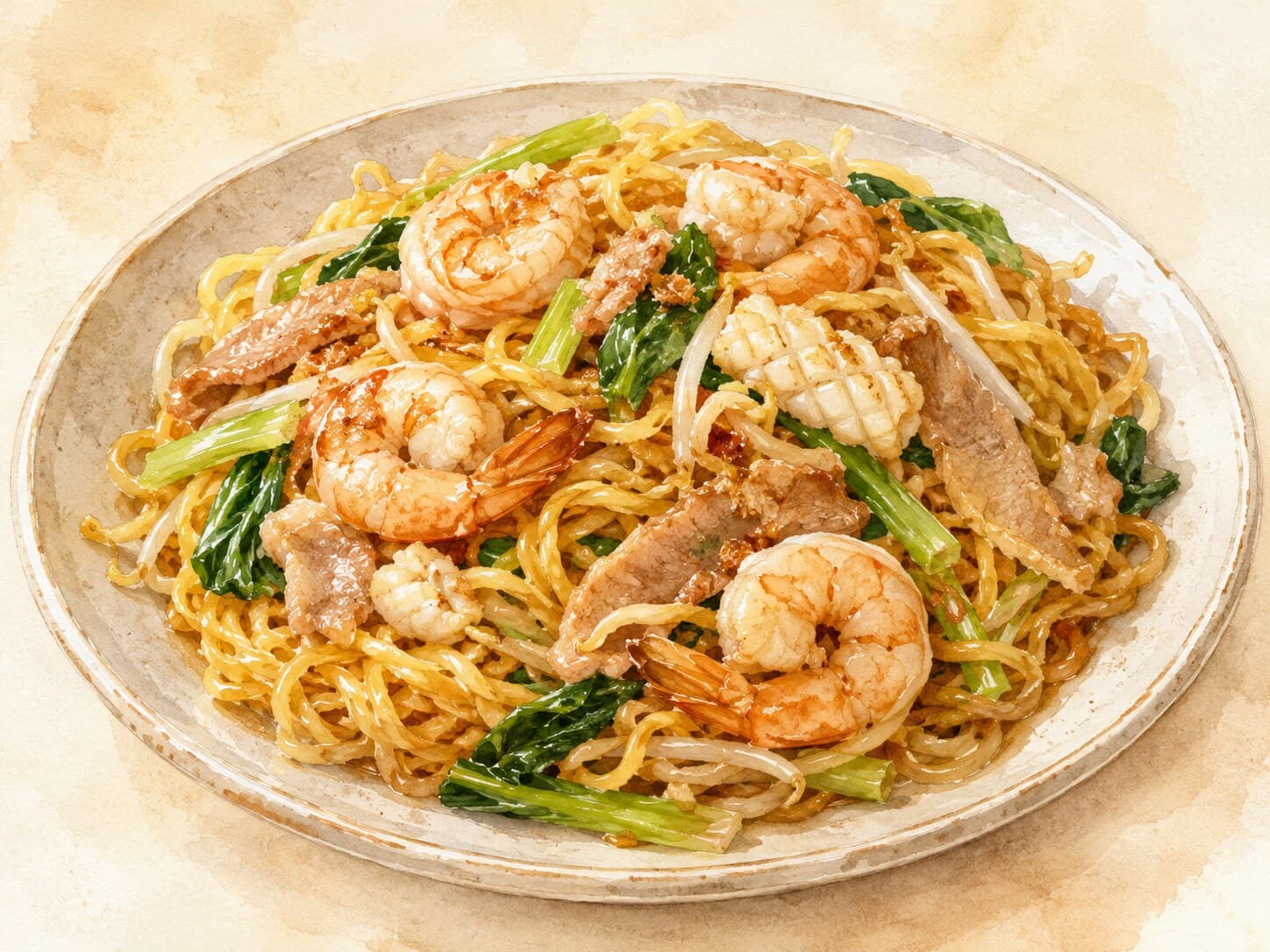
Delve into the rich flavors of Singapore Hokkien Mee, a smoky prawn and pork noodle dish served with sambal.
Contents (5 sections)▾
Ingredients
- 200 g yellow noodles
- 100 g rice vermicelli
- 500 ml prawn and pork stock
- 200 g prawns, peeled and deveined
- 100 g squid, cleaned and sliced
- 2 tbsp vegetable oil
- 2 cloves garlic, minced
- 1 tbsp soy sauce
- 1 tbsp oyster sauce
- 1 lime, cut into wedges
- sambal, to taste
- spring onions, chopped, for garnish
Steps
Heat a wok over high heat and add the vegetable oil. Once hot, add the minced garlic and stir-fry for 30 seconds until fragrant.
Add the prawns and squid to the wok, cooking for 2-3 minutes until they turn opaque. Remove them from the wok and set aside.
In the same wok, add the yellow noodles and rice vermicelli, and pour in the prawn and pork stock. Stir-fry for 5-7 minutes, allowing the noodles to absorb the stock.
Add the cooked seafood back into the wok along with the soy sauce and oyster sauce. Stir-fry for an additional 2 minutes until well combined and noodles are slightly charred.
Serve immediately, garnished with spring onions and accompanied by lime wedges and sambal to taste.
Why this works
The key to achieving a perfect Singapore Hokkien Mee lies in the technique of 'braise-frying,' where the noodles are stir-fried while soaking up the flavors of the prawn and pork stock. This method allows the noodles to develop a unique texture and depth of flavor, as they absorb the rich stock. The high heat from the wok creates a smoky char, known as 'wok-hei,' which adds complexity to the dish. If the noodles seem too dry during cooking, add a bit more stock to ensure they remain moist and flavorful. Conversely, if the dish gets too soupy, increase the heat and stir-fry quickly to evaporate excess liquid while allowing the noodles to char slightly. This balance between moisture and heat is critical to mastering this dish.
Common mistakes
Throwing away the prawn shells and heads.
Target: Always reserve the shells and heads when peeling prawns; toast them in oil, then simmer with pork bones (or pork belly trim) and water to build the stock.
Why it matters: The stock is the dish. Singapore Hokkien mee is defined by a stock made specifically from prawn shells and pork — without that base, the noodles only carry soy and oyster sauce, which is closer to generic stir-fried noodles than to Hokkien mee. The shells contain glutamates and nucleotides that, combined with pork's amino acids, produce a layered umami (the savory taste from amino acids and nucleotides that registers as depth and length on the palate) you cannot fake.
What to do: Toast the shells in the wok with a little oil until they turn deep orange and smell intensely sweet, then add the pork and water and simmer 30–45 minutes. Strain. Use within a day or freeze.
Wok not hot enough for wok hei.
Target: A heavy carbon-steel or cast-iron wok preheated until a drop of water vaporizes within a second, with the burner on its highest setting and the wok empty for at least 30 seconds before oil goes in.
Why it matters: Wok hei (the smoky char and aroma from a very hot wok) requires the wok surface to be hotter than the boiling point of any liquid clinging to the food, so noodles and stock vaporize on contact instead of sitting and stewing. That instant vaporization at the metal surface is what produces the faint smoke and toasted aroma that Singaporeans recognize as Hokkien mee. A lukewarm pan can only steam.
What to do: Preheat the empty wok longer than feels reasonable. Use a high-smoke-point oil (peanut, rice bran). Cook in small batches — two portions max per round — so the wok doesn't crash.
Adding raw prawns and squid back at the wrong time.
Target: Sear the prawns and squid first until just opaque (about 90 seconds), remove and set aside, then return them only in the final 60 seconds with the seasoning toss.
Why it matters: Prawns and squid go from tender to rubbery very fast. If you leave them in through the full braise-fry stage with the noodles and stock, they overcook and turn squeaky. All proteins in this dish — prawns, squid, pork belly — should be fully cooked through, but seafood especially must finish at the right moment. Sear-out, hold, return-at-the-end gives clean texture and full cook through.
What to do: A short sear builds a thin Maillard surface (the browning reaction between amino acids and sugars that creates roasted aromas) on the prawn shell-side. Bring them back when the noodles are nearly done and toss for 30–60 seconds to reheat and absorb sauce.
Drowning the noodles in stock all at once.
Target: Add the stock in two or three ladles, letting each one almost fully absorb before the next.
Why it matters: The signature texture of Hokkien mee — neither soup noodles nor dry stir-fry, but glossy noodles holding stock inside themselves — comes from a slow, staged absorption. Dump the stock in at once and the noodles boil in liquid, which strips wok hei and produces a sad soupy mass. Stage the additions and the noodles drink the stock the way risotto drinks broth.
What to do: First ladle: stir until it's almost gone. Second ladle: same. Stop when the noodles look glossy and wet but no liquid pools around them. Salt and oyster sauce go in with the final ladle.
What to look for
- The stock before frying: deep amber-pink, smelling sweet and shellfish-forward, glossy on the spoon — if it's pale, simmer longer or add more roasted shells.
- The wok at the moment oil hits: the oil shimmers, ripples, and a wisp of smoke rises within 5 seconds — that is the wok-hei threshold; cold oil into a cold wok will never get there.
- Mid-braise-fry: noodles glossy and yielding, with no visible liquid pooling at the wok base and the rim faintly charred where noodles touch the metal — that touch-line is where wok hei actually lives.
- At plating: each noodle coated but separate, prawns plump and opaque, squid rings curled and tender, a faint smoky aroma rising from the plate — the dish reads "wet but not soup," browned but not burnt.
A note on history
Singapore Hokkien mee descends from the noodle traditions of Fujian (Hokkien) immigrants from southeastern China, who began arriving in significant numbers in Singapore in the 1880s and brought wheat noodles and shellfish-stock techniques with them (NLB Singapore Infopedia, Wikipedia). Singapore has the largest Hokkien community among Southeast Asian Chinese populations, and by the early 20th century the dish had moved from migrant home cooking to itinerant hawker stalls, eventually settling into the wet-fried prawn-and-pork-stock noodle dish recognized today, distinct from the dark-soy Kuala Lumpur version and from the soup-based Penang Hokkien prawn mee (Johor Kaki, Monster Day Tours).
Get the essays in your inbox — free
Weekly notes on flavor, fermentation, and food history — the writing behind the Atlas of Flavor. No spam; unsubscribe anytime.