
Singapore Chili Crab
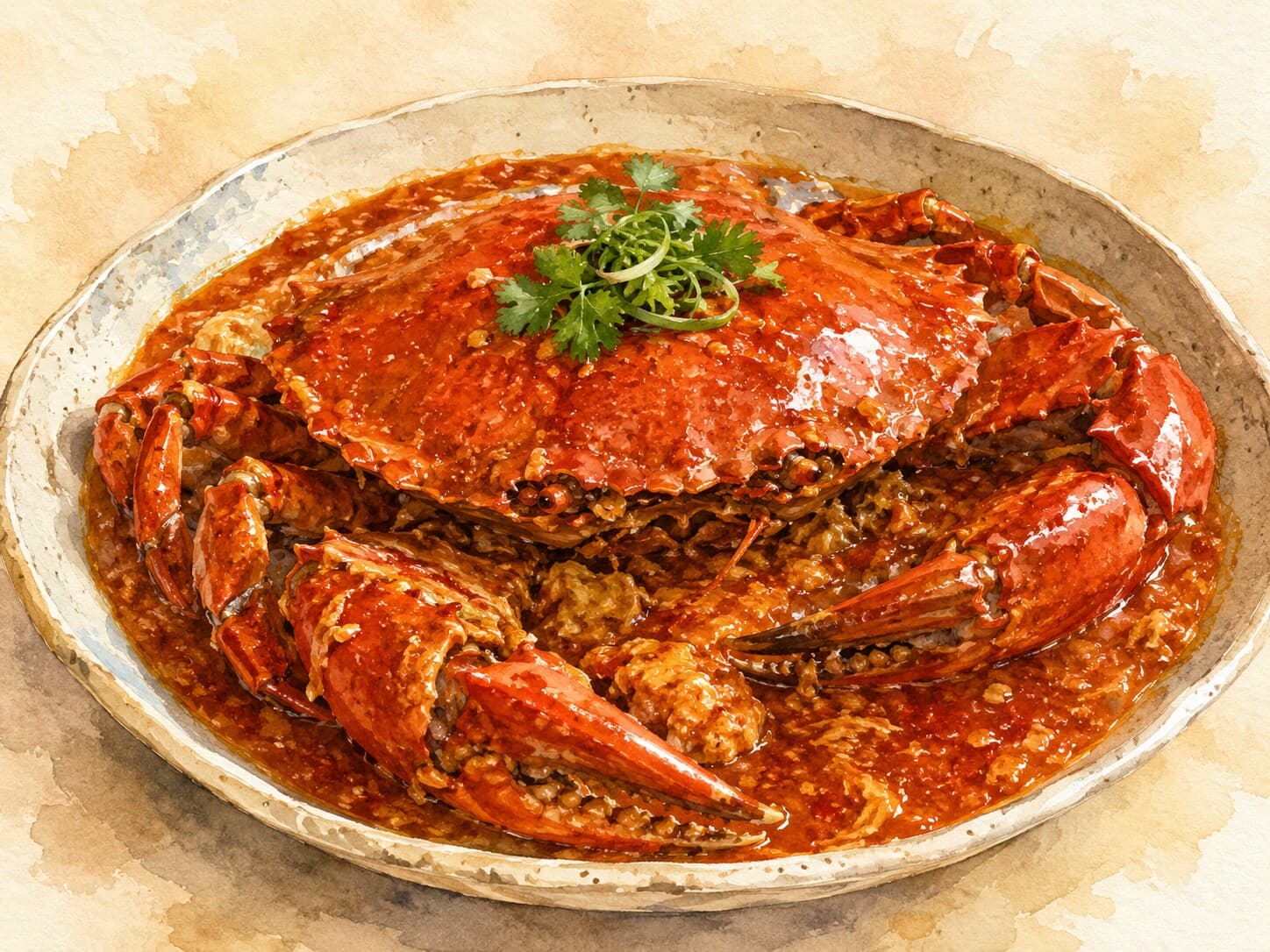
A delicious Singapore chili crab recipe featuring a sweet-savory tomato-chili gravy and silky egg ribbons.
Contents (5 sections)▾
Ingredients
- 1 kg mud crab, cleaned and cut into pieces
- 2 tbsp vegetable oil
- 4 cloves garlic, minced
- 1 thumb-sized ginger, minced
- 2 red chilies, chopped (adjust to taste)
- 1 cup tomato puree
- 1/4 cup ketchup
- 2 tbsp soy sauce
- 2 tbsp sugar
- 1/2 cup water
- 2 large eggs, beaten
- Salt to taste
- Steamed buns, for serving
Steps
Heat the vegetable oil in a large wok over medium-high heat until shimmering, about 2 minutes.
Add the minced garlic and ginger, stir-frying for 30 seconds until fragrant.
Incorporate the chopped red chilies and stir for another minute, allowing their flavor to infuse the oil.
Add the cleaned crab pieces, stirring to coat them in the aromatic mixture, cooking for about 5 minutes.
Pour in the tomato puree, ketchup, soy sauce, sugar, and water; stir well and bring to a simmer.
Reduce the heat to medium-low and let the sauce bubble gently for about 5-7 minutes until slightly thickened.
Gradually stream the beaten eggs into the simmering sauce while stirring gently; this will create silky ribbons in the gravy.
Season with salt to taste and cook for an additional 2-3 minutes until the eggs are fully set.
Serve hot with steamed buns for mopping up the delicious sauce.
Why this works
The technique of stir-frying the crab in a sweet-savory tomato-chili gravy brings out the natural sweetness of the crab while infusing it with robust flavors. The gradual addition of beaten eggs creates silky ribbons that enrich the sauce, offering a delightful texture and visual appeal. If the egg ribbons seem too thick or clumpy, simply stir the sauce gently over low heat, adding a splash of water to loosen it. It's important to maintain a gentle simmer (a low heat where only small bubbles rise, never a full boil) while streaming in the eggs; too high a temperature can cause them to curdle (seize into hard, grainy lumps) instead of create the desired ribbons. The balance of sweetness from the sugar and ketchup with the heat from the chilies is key, so adjust accordingly to your taste preference. This dish embodies the essence of Singapore's culinary scene, making it a memorable centerpiece for any meal.
Common mistakes
Pulling the crab before it is cooked through.
Target: Crab simmered in the sauce until the shell is fully red-orange and the meat is opaque white all the way through — no glassy, translucent flesh near the joints.
Why it matters: Crab is a shellfish that must be cooked fully; undercooked meat stays glassy and slippery and is unsafe to eat. The shell turning bright red-orange is your visual signal that the meat inside has set.
What to do: Keep the pieces at a steady simmer in the sauce, turning them so all sides cook. With pre-cut pieces this takes several minutes; the thickest claw is the last to finish, so judge by that one.
Streaming the egg into a hard boil.
Target: Beaten egg poured into a sauce that is at a gentle simmer, in a thin stream, stirred slowly.
Why it matters: The silky ribbons form when egg proteins set gently (coagulation — proteins firming up with heat). Poured into a violent boil, the egg seizes instantly into tight, grainy clumps instead of soft sheets, and can cloud the sauce.
What to do: Lower the heat to a bare simmer, pour the egg slowly in a thin line, and give the sauce one or two slow stirs — then stop. Let the ribbons set undisturbed.
Safety note: Keep cooking for 2–3 minutes after the egg goes in so it is fully set, not runny.
A flat, one-note sauce.
Target: A gravy that hits sweet, savory, tangy, and spicy all at once, with no single axis dominating.
Why it matters: Chili crab lives on balance. Sugar alone reads as cloying, ketchup alone as flat and candied, chili alone as harsh. The sweet–savory–tangy–hot interplay is the whole point of the dish, and crab's natural sweetness needs the acid and salt to frame it.
What to do: Taste the sauce before the crab goes in and adjust: more sugar to round, soy for savory depth, a splash of vinegar or lime for lift, more chili for heat.
Burning the aromatics.
Target: Garlic, ginger, and chili fried in oil just until fragrant — 30 to 60 seconds — golden, never browned.
Why it matters: Garlic and ginger scorch fast in hot oil and turn bitter, and that bitterness threads through the entire sauce since they are the flavor base. Burnt aromatics cannot be undone.
What to do: Have the sauce ingredients measured and ready before you start, so you can add them the moment the aromatics smell fragrant and stop the cooking.
What to look for
- Aromatics in the wok: pale gold and intensely fragrant, sizzling but not coloring fast. That fragrance without browning is the window where flavor peaks and bitterness has not begun.
- The crab: shell turned deep red-orange, meat opaque white to the center. The color change in the shell tracks the meat setting inside — your cue it is cooked safely through.
- The egg going in: soft ribbons forming and floating as you stream, not tight curds. Gentle sheets mean the heat is right; grainy clumps mean the sauce was too hot.
- Final gravy: glossy and lightly thickened, clinging to the crab and coating a spoon. That sheen and body mean the sauce has reduced enough to grip the shell and is ready to mop up with buns.
A note on history
Singapore chili crab is unusually well documented: it was created in the mid-1950s by Cher Yam Tian, who swapped the tomato sauce she normally used on stir-fried crab for bottled chili sauce. In 1956 she and her husband began selling it from a pushcart along the East Coast seaside, later opening the Palm Beach restaurant in 1962 (Wikipedia, National Library Board Singapore). It is now recognised as a national dish, and the egg-thickened, tomato-and-chili gravy of this home version descends directly from that original (Roots, National Heritage Board).
Get the essays in your inbox — free
Weekly notes on flavor, fermentation, and food history — the writing behind the Atlas of Flavor. No spam; unsubscribe anytime.