
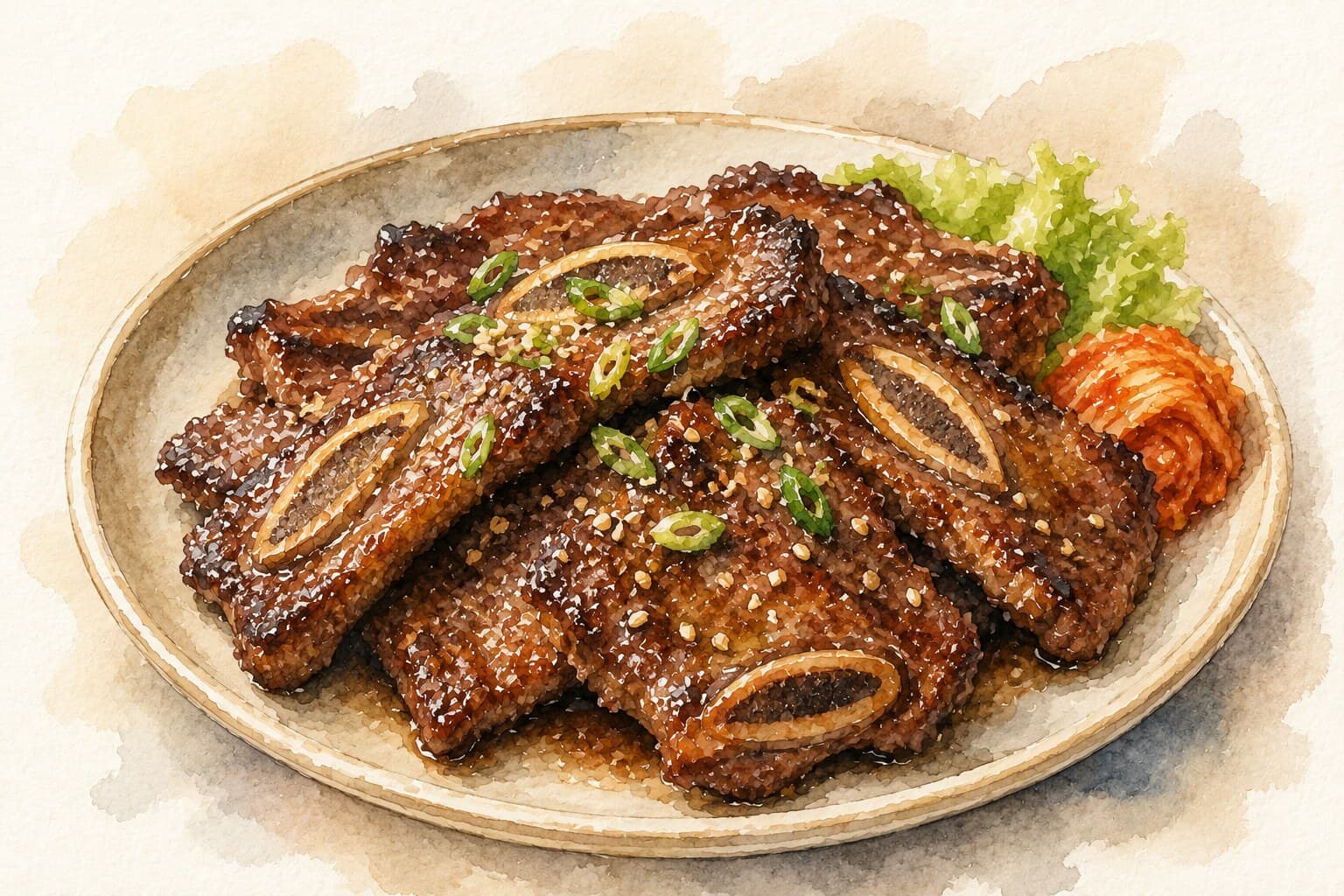
Galbi (Korean Grilled Short Ribs)
Discover the secret to perfect Galbi with tender, flavorful grilled short ribs marinated in a sweet soy-pear sauce.
Contents (5 sections)▾
Ingredients
- 1 kg beef short ribs, thinly sliced
- 120 ml soy sauce
- 60 g brown sugar
- 1 medium Asian pear, grated
- 4 cloves garlic, minced
- 1 tbsp sesame oil
- 1 tsp black pepper
- 2 green onions, chopped
- to taste sesame seeds
Steps
Slice the beef short ribs thinly along the bone (butterflying) to ensure even cooking and better absorption of the marinade.
In a bowl, combine soy sauce, brown sugar, grated Asian pear, minced garlic, sesame oil, black pepper, and chopped green onions. This mixture will tenderize the meat with the pear's enzymes.
Marinate the beef short ribs in the mixture for at least 30 minutes, or up to 2 hours for deeper flavor.
Preheat your grill to high heat (around 200°C or 400°F). This high temperature will create a nice sear and caramelization.
Grill the marinated short ribs for about 3-4 minutes on each side, or until they are nicely charred with caramelized edges.
Remove from the grill and let them rest for a few minutes before serving, garnished with sesame seeds.
Why this works
This recipe showcases the unique tenderizing properties of fruit enzymes found in Asian pears, which break down the protein structure of the beef short ribs, making them exceptionally tender. The combination of soy sauce and brown sugar enhances the flavor and aids in caramelization during grilling, resulting in those desirable crispy edges. It's crucial to monitor the grilling time; overcooking can lead to dryness. If the meat seems too tough after marinating, you can let it marinate for an additional hour, as the enzymes need time to work their magic. Slicing the ribs thinly helps them absorb the marinade better and allows for quicker cooking, ensuring a perfect balance of tenderness and flavor.
Common mistakes
Over-marinating in the pear enzyme.
Target: 30 minutes to 2 hours for thin-cut galbi; do not push past a few hours.
Why it matters: Asian pear and kiwi contain protease enzymes (proteins that cut other proteins apart) that break down muscle fiber. Left too long, they don't just tenderize — they dissolve the surface into mush, and the meat turns mealy and pasty once grilled. The marinade is doing chemistry, and chemistry keeps going whether you want it to or not.
What to do: For thin slices, treat 2 hours as a ceiling. If you want to prep further ahead, marinate without the grated pear and stir the pear in only for the last 30–60 minutes.
Grilling over a wet, sugary surface.
Target: Lift each piece from the marinade and let it drip for a few seconds before it hits the grate.
Why it matters: The soy-and-sugar marinade is mostly water. A sheet of liquid on the meat boils instead of browning, so you steam-grey the surface and never reach the Maillard reaction (the browning chemistry between amino acids and sugars that builds savory, roasted flavor). The sugar then scorches in the puddle before the meat colors.
What to do: Drip-drain, then grill hot and fast. Reserve a little marinade as a brush-on glaze for the final minute, when the sugar can caramelize instead of burn.
Cooking the ribs through before the surface chars.
Target: High heat (around 200°C / 400°F), roughly 3–4 minutes per side, surface well-browned and the meat cooked through with no pink at the bone-line.
Why it matters: These are thin slices, so they reach a safe, fully-cooked interior almost as fast as they brown. The flavor of galbi lives in the charred, caramelized edges — pulling it the instant it is cooked but pale wastes that. Beef short rib should be cooked through here; this is grilled marinated beef, not a seared steak you serve rare.
What to do: Get the grate genuinely hot before the meat goes on, leave each piece undisturbed long enough to take color, then flip once.
Crowding the grill so it steams.
Target: Single layer, space between pieces, cooked in batches if needed.
Why it matters: Cold marinated meat drops the grate temperature. Pack it tight and the released moisture has nowhere to escape, so the whole surface steams grey instead of searing.
What to do: Grill in batches and let the grate recover its heat between them. Crowded-but-fast beats one giant sad layer.
What to look for
- Marinade at the end of its window: the surface looks glossy and slightly swollen, not slimy or breaking down. If it has gone soft and ragged, the enzymes have over-worked it — grill it now.
- The grate is ready: a drop of marinade hisses and evaporates on contact. A quiet grate is too cool and will steam the meat.
- Doneness on thin slices: deep brown lacquered edges, the meat opaque all the way through, juices running clear. No translucent pink at the thickest part along the bone.
- The caramelized crust: dark, almost-but-not-quite burnt at the edges, sticky-shiny across the face. That lacquer is rendered sugar plus Maillard browning — the signature of good galbi.
A note on history
Galbi is simply the Korean word for "rib," and marinated grilled ribs descend from a long Korean tradition of grilled meat (gui) that reaches back through the Joseon-era court dish neobiani — thin, seasoned, grilled beef once reserved for royalty when cattle slaughter was tightly restricted (Wikipedia: Galbi). The widely cooked "LA galbi" cut — short rib sliced thin across the bones rather than along a single rib — is generally traced to Korean immigrants in Los Angeles, who adapted the dish to the flanken-cut short ribs available in American markets (Maangchi: LA galbi).
Get the essays in your inbox — free
Weekly notes on flavor, fermentation, and food history — the writing behind the Atlas of Flavor. No spam; unsubscribe anytime.