
Doro Wat (Ethiopian Chicken Stew)
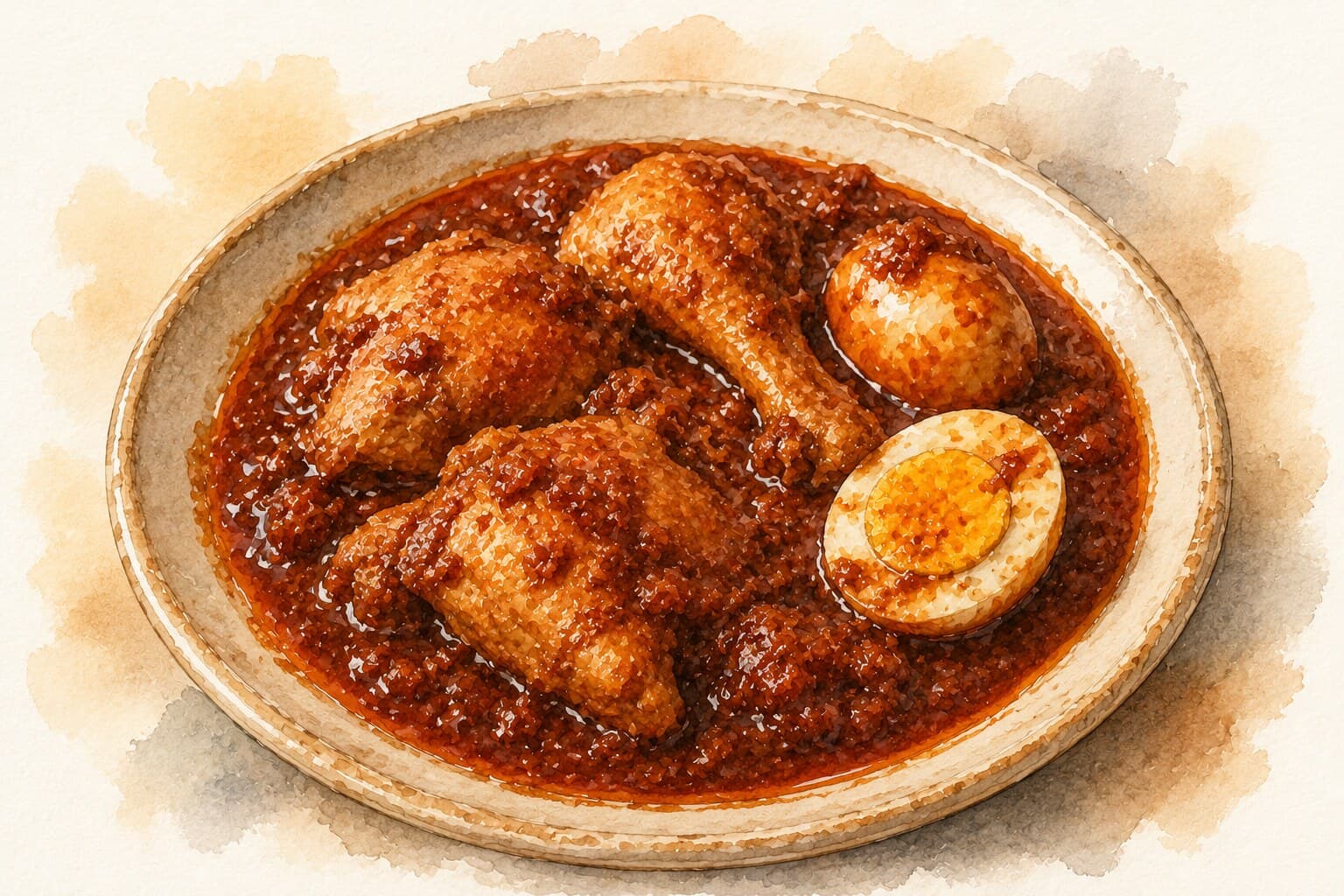
Doro Wat is a rich Ethiopian chicken stew featuring a deep red berbere-spiced sauce and slowly cooked onions.
Contents (5 sections)▾
Ingredients
- 1 kg chicken, cut into pieces
- 1 cup berbere spice mix
- 1 cup unsalted butter
- 1 kg onions, finely chopped
- 4 cloves garlic, minced
- 1 tablespoon ginger, grated
- 4 whole eggs
- salt to taste
- water as needed
Steps
In a large pot, add the finely chopped onions without any oil. Cook on medium heat for about 45 minutes, stirring occasionally, until they are caramelized and translucent. This is crucial for developing depth in flavor.
Once the onions are cooked down, add the unsalted butter and let it melt. Stir in the berbere spice mix, garlic, and ginger. Cook for an additional 5 minutes until fragrant.
Add the chicken pieces to the pot, stirring well to coat them in the spice mixture. Cook for about 10 minutes until the chicken is no longer pink.
Pour in enough water to cover the chicken, then bring to a boil. Reduce the heat and let it simmer for 30 minutes, allowing the flavors to meld.
Carefully add the whole eggs to the pot, ensuring they are submerged in the stew. Continue simmering for another 10 minutes, then season with salt to taste.
Serve hot with injera or rice, ensuring each plate has chicken, egg, and plenty of sauce.
Why this works
The key technique in Doro Wat is the initial slow cooking of onions without oil, which allows them to caramelize and develop a rich, umami flavor that serves as the stew's base. This process takes time, often up to 45 minutes, but it sets the stage for the entire dish. The berbere spices, which include chili, garlic, and other warm spices, are added after the onions have cooked down, allowing their flavors to meld into the base. The butter then enriches the stew, providing a luxurious mouthfeel. If the onions seem to stick to the pot or start to brown too much, reduce the heat and add a splash of water to deglaze the pan and continue the caramelization without burning. The addition of whole eggs is traditional, and they absorb the stew's flavor, making them a delightful addition. Proper seasoning and sufficient simmering time are essential for balancing the heat of the spices with the richness of the dish.
Common mistakes
Rushing the dry onions.
Target: A full 40–45 minutes of slow cooking until the onion mass is soft, jammy, and deep golden — no raw onion smell left.
Why it matters: This is the whole foundation of the dish. The onions are cooked dry (no oil) so their water evaporates and their sugars slowly brown — a Maillard reaction (the browning that builds savory, roasted flavor when sugars and proteins are heated) plus caramelization. Skip the time and you get a thin, sharp, raw-tasting sauce instead of the deep sweet-savory base doro wat is known for.
What to do: Keep the heat moderate, stir often, and be patient. If the pan gets too dry or sticky, add a splash of water to loosen and keep going rather than turning up the heat.
Burning the onions instead of browning them.
Target: Even deep-gold color; any sticking lifts off easily with a splash of water.
Why it matters: Dry-cooking lives on a fine line. Gentle browning is flavor; scorched onion is bitter and cannot be fixed — it will haunt the whole pot.
What to do: If brown bits start to catch on the bottom, deglaze (add a little liquid to dissolve the browned residue and stir it back in). Lower the heat. Browned-but-not-black is the goal.
Scorching the berbere and butter.
Target: Bloom the spice in the melted butter just until fragrant — a minute or two over moderate heat.
Why it matters: Berbere is chili-based and rich in ground spices that burn quickly; butter also browns fast. Gentle warming in fat "blooms" the spices (releases their fat-soluble aroma and color), but a few seconds too long turns them acrid.
What to do: Stir constantly once the berbere goes in, keep the heat moderate, and move straight to adding the chicken and liquid before it can catch.
Under-cooking the chicken.
Target: Chicken simmered until fully cooked — 74°C / 165°F at the thickest point, juices running clear, meat pulling easily from the bone.
Why it matters: Bone-in chicken in a thick stew needs real simmering time to reach a safe temperature all the way through. The deep red sauce hides color cues, so judge by temperature and texture, not by looks.
What to do: Simmer gently for the full time, then check the thickest piece. The traditional hard-boiled eggs are added already cooked and simply warmed through in the sauce.
What to look for
- Onions ready for butter: a soft, glistening, deep-golden mass that smells sweet rather than sharp. This is the caramelized base; everything else is built on it.
- Berbere bloomed correctly: the butter turns brick-red and the kitchen fills with toasted-spice aroma — no acrid, scorched smell. That color and smell mean the spices have released into the fat.
- Sauce body: thick enough to coat the back of a spoon, glossy from the butter, clinging to the chicken. A reduced, unified sauce rather than a watery one.
- Chicken done: the meat pulls cleanly from the bone and shows no pink at the center. Tender and fully cooked through.
A note on history
Doro wat is widely regarded as the national dish of Ethiopia, traditionally eaten with injera, the spongy sour flatbread made from teff (National Dish: Doro Wat & Injera). Its defining flavors come from berbere, a red chili-and-spice blend, and niter kibbeh, a spiced clarified butter, and the dish is classically served with hard-boiled eggs. Its roots are often traced to the historic Ethiopian highlands, and during the Gondarine period it was served at royal and religious occasions as a mark of generosity and status (Eats History: Doro Wat and Injera).
Get the essays in your inbox — free
Weekly notes on flavor, fermentation, and food history — the writing behind the Atlas of Flavor. No spam; unsubscribe anytime.