
Claypot Rice (Bo Zai Fan)
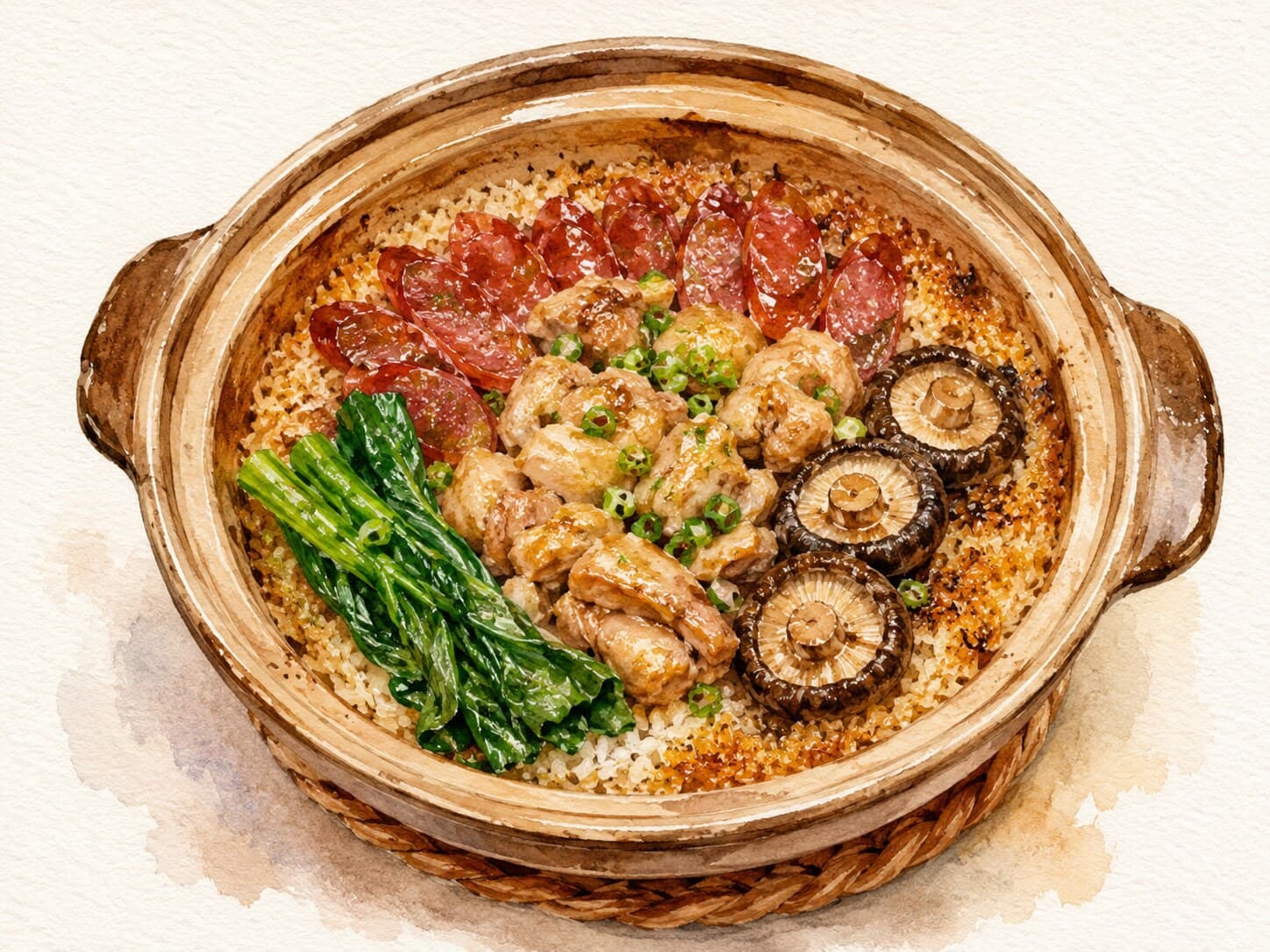
Delight in this Cantonese Claypot Rice (Bo Zai Fan) with a crispy crust and savory cured meats.
Contents (5 sections)▾
Ingredients
- 200 g jasmine rice
- 400 ml water
- 100 g Chinese cured sausage, sliced
- 150 g chicken thighs, boneless and skinless, cut into pieces
- 1 tbsp soy sauce
- 1 tbsp oyster sauce
- 1 tsp sesame oil
- 2 green onions, finely chopped
- Salt to taste
Steps
Rinse the jasmine rice under cold water until the water runs clear, then soak it in water for 30 minutes to enhance texture.
In a claypot, drain the rice and add 400 ml of fresh water. Bring to a boil over medium-high heat.
Once boiling, reduce the heat to low, cover with a lid, and let it simmer for about 10 minutes. This initial cooking creates the steam needed for the socarrat.
After 10 minutes, add the sliced cured sausage and chicken pieces on top of the rice. Drizzle soy sauce, oyster sauce, and sesame oil over the meat.
Cover the pot and cook on low heat for an additional 5 minutes. This allows the meats to steam and impart flavor into the rice. Cook until the thickest part reaches 74 °C / 165 °F on an instant-read thermometer — colour, juices and time are guides, not the safety test.
To achieve the perfect socarrat, increase the heat to medium for the last minute, allowing the bottom to crisp up. Listen for a crackling sound.
Remove from heat and let rest for 5 minutes before serving. Garnish with chopped green onions.
Why this works
Claypot rice, or Bo Zai Fan, is a quintessential dish in Cantonese cuisine, celebrated for its unique texture and flavor. The key to this dish lies in the cooking technique, which allows for a glorious socarrat — a crispy layer of rice at the bottom. By initially boiling the rice and then reducing the heat, you create steam that cooks the rice evenly. The addition of cured sausage and chicken enhances the taste and allows their juices to seep into the rice. If the socarrat seems too burnt, reduce the heat next time or check the rice earlier. The essence of this dish is balancing the moisture and heat to achieve that tender rice with a satisfying crust — an art that may take a few tries but is well worth the effort in the end.
Common mistakes
Skipping the rinse and soak. Target: Rinse jasmine rice until the water runs clear, then soak 30 minutes before cooking. Why it matters: Rinsing washes off loose surface starch that otherwise makes the grains gummy and sticky; the soak lets water penetrate each grain so it cooks evenly to a fluffy, separate texture. Unsoaked rice tends to cook hard at the center while the outside turns to paste. What to do: Swirl in cold water, pour off, and repeat until clear, then let the grains sit covered in water for the full half hour before draining.
Lifting the lid too often while the rice cooks. Target: Cover and simmer (cook gently with the liquid barely bubbling) on low for the full 10 minutes before adding the meat. Why it matters: The rice cooks in trapped steam. Every time the lid comes off, that steam escapes and the temperature drops, leaving you with unevenly cooked, partly hard rice. The closed pot is doing the work. What to do: Trust the timer. Leave the lid on and listen rather than peek; only open it when the step says to add the toppings.
Not cooking the chicken and sausage through. Target: Chicken thigh pieces cooked fully — the thickest piece reads 74°C / 165°F on a food thermometer by the end of the covered steaming. Opaque flesh and clear juices are cues, not the safety test. Why it matters: The meat sits on top and cooks in the rice's steam, which is gentler than direct heat. Thick pieces can stay raw inside even when the surface looks done. Undercooked poultry is a real food-safety risk, not just a texture problem. What to do: Cut the chicken into evenly small, thin pieces so it cooks through in the 5-minute steam; check the largest piece with a food thermometer for 74°C / 165°F before serving. If it reads lower, cover and give it a few more minutes.
Burning the crust instead of crisping it. Target: A golden, crackling rice crust (fan jiu) at the bottom — toasted, not blackened. Why it matters: The crust forms when the bottom layer of rice loses its last moisture and the starches brown — the same Maillard browning (the reaction that turns starches and proteins savory and golden under heat) that makes toast taste like toast. Push the heat too high or too long and that browning tips into bitter scorching. What to do: Raise the heat to medium for only the last minute and listen for a gentle crackle; the moment you smell toasted rice (not smoke), pull it off the heat. A drizzle of oil down the side before this step helps the crust crisp evenly.
What to look for
- The rice before the meat goes on: grains plumped and most of the water absorbed, with small steam holes on the surface. This is the steam-cooking stage; the rice should look set, not soupy.
- The chicken at doneness: opaque and firm all the way through, with clear (not pink) juices when cut. These are cues, not the safety check — confirm the largest piece reaches 74°C / 165°F on a thermometer.
- The crust forming: a steady, gentle crackle and the smell of toasted rice. That sound is moisture leaving the bottom layer as it browns; smoke or an acrid smell means it is tipping into burnt.
- The finished pot: fluffy, separate grains on top and a golden, crisp layer prying up from the bottom. The contrast between soft rice and crackling crust is the whole point of the dish.
A note on history
Claypot rice (bo zai fan, literally "little pot rice") comes from Guangdong, where a small clay pot is called a bao zai (Wikipedia, TasteAtlas). Folk accounts trace it to fishermen and street vendors who cooked rice over charcoal in small clay pots, the aroma drifting through alleys as a signal of a hot meal (Baidu Baike). Street vendors in Hong Kong popularized the dish in the 20th century, and it rose to wide fame in the 1980s, prized above all for the crackling crust at the bottom of the pot (Michelin Guide).
Get the essays in your inbox — free
Weekly notes on flavor, fermentation, and food history — the writing behind the Atlas of Flavor. No spam; unsubscribe anytime.