
Siu Yuk (Crispy Roast Pork Belly)
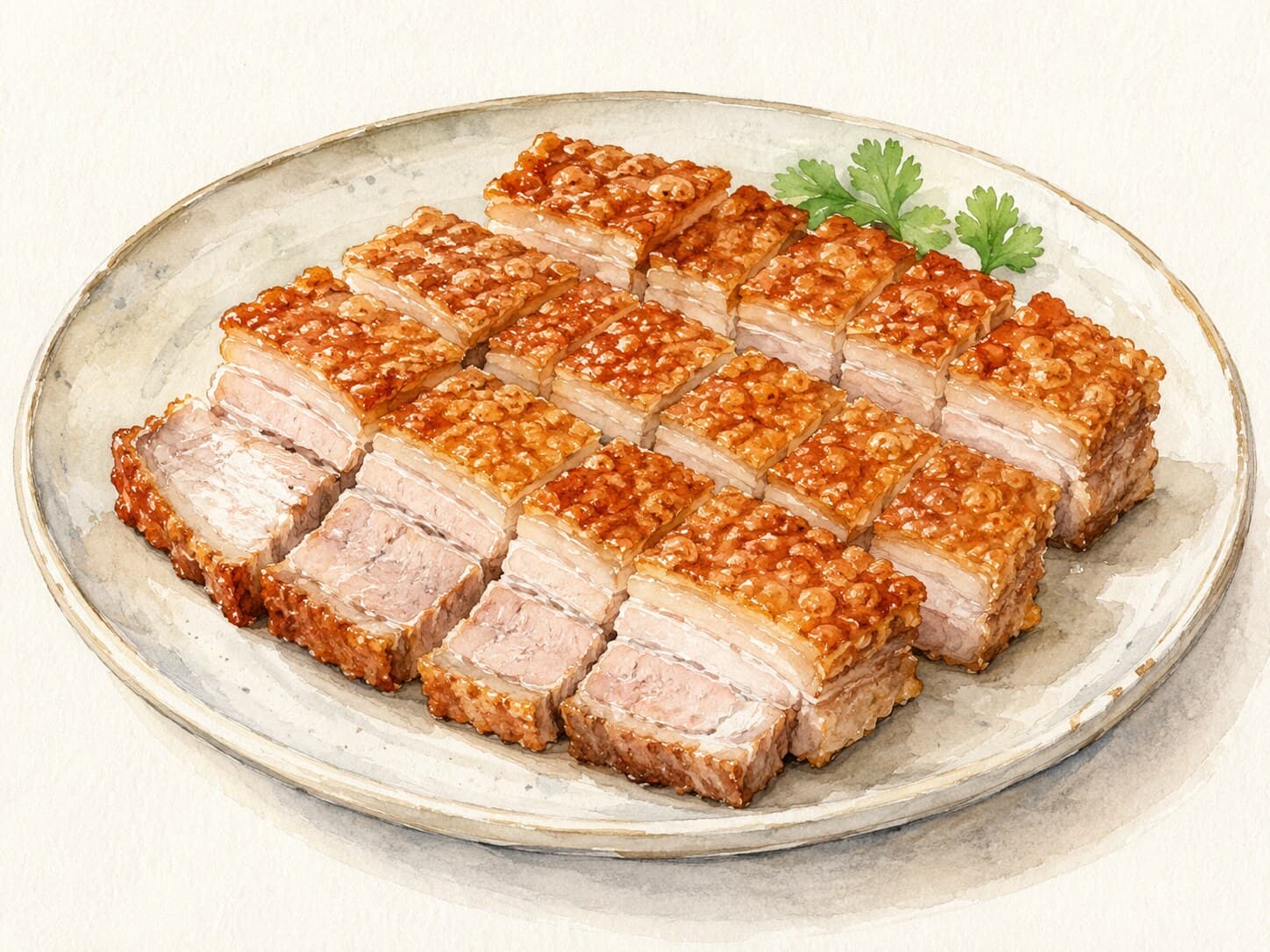
Siu Yuk, or Crispy Roast Pork Belly, achieves a shattering crackling skin through precise drying and roasting techniques.
Contents (5 sections)▾
Ingredients
- 1 kg pork belly, skin on
- 2 tbsp salt
- 1 tbsp five-spice powder
- 1 tbsp white vinegar
- 1 tbsp soy sauce
- 1 tsp sugar
- 1 clove garlic, minced
Steps
Score the pork belly skin in a crosshatch pattern every 1 cm, being careful not to cut into the meat. This allows the fat to render and the skin to blister.
Pat the scored skin dry thoroughly with paper towels. The drier the skin, the better the crackling.
Rub salt and five-spice powder into the skin and meat, ensuring it penetrates the scores. This enhances flavor and aids in drying the skin.
Brush the skin with white vinegar and allow the pork belly to air dry in the fridge for at least 24 hours. This step is crucial to achieving the desired crispiness.
Preheat the oven to 220°C (428°F). Place the pork belly on a roasting rack in a baking tray.
Roast the pork belly for 30 minutes to blister the skin. Then reduce the temperature to 160°C (320°F) and roast for an additional 1.5 hours until the meat is tender.
After roasting, turn on the grill function and cook for an additional 5-10 minutes until the skin is crispy and crackling.
Remove from the oven and let it rest for 10 minutes before slicing. Serve with soy sauce or hoisin sauce.
Why this works
The secret to achieving the perfect Siu Yuk lies in the preparation of the skin. By scoring (cutting shallow crosshatch lines into the skin so fat escapes and it blisters) and thoroughly drying it, you create a structure that allows the fat underneath to render (slowly melt out under heat) effectively during roasting. The key is not just heat but the absolute dryness of the skin, which leads to that iconic crackling texture (the hard, shatteringly crisp roasted skin). The use of vinegar further helps in drying the skin and enhancing the flavor. If your skin doesn’t blister as expected, it may not have been dried sufficiently or the temperature may have been too low. In such cases, try increasing the oven temperature for the crisping phase, ensuring to keep an eye on the skin to prevent burning. The balance of flavors in the seasoning also contributes to the overall taste, allowing the pork belly to remain juicy while the exterior achieves that satisfying crunch.
Common mistakes
Rushing the dry. Roasting skin that is still moist.
Target: Skin air-dried, uncovered, in the fridge for at least 24 hours until it feels papery and tight.
Why it matters: This is the whole secret of siu yuk — the crackle is a drying problem, not a heat problem. As long as the skin holds surface water, that water boils off and keeps the surface below the temperature where it can bubble and crisp. Bone-dry skin puffs into glass; damp skin turns to leather.
What to do: Salt the skin, leave it uncovered on a rack in the fridge a full day or more, and pat it dry again before roasting. Do not cover it — covering traps moisture.
Scoring too shallow, or cutting down into the meat.
Target: Close crosshatch cuts (about every 1 cm) through the skin and into the top of the fat, but never into the meat.
Why it matters: The scores let the thick fat layer render (melt slowly out) and let the skin blister into separate little tiles instead of one tough sheet. Cut down into the meat, though, and juices weep up onto the skin during roasting — and a wet surface will not crackle.
What to do: Use a sharp blade and feel for the give: through the rind, into the fat, then stop. Keep the meat side sealed.
Letting the brine or seasoning touch the skin.
Target: Salt and five-spice on the meat and the cut sides; the skin surface stays dry, with only the vinegar wash on top.
Why it matters: Salt and sauces on the skin pull moisture back to the surface and can scorch (burn before the skin crisps), leaving dark, bitter, soft patches. The thin vinegar brushed on top works differently — it helps dry and tighten the skin and raises its surface slightly so it blisters more evenly.
What to do: Season the flesh; wipe any stray seasoning off the skin; brush the skin only with the vinegar before it goes to dry.
Slicing into it without checking it is cooked through.
Target: Pork roasted until the meat is fully cooked and tender — an internal temperature of at least 71°C / 160°F is a safe, reliable mark.
Why it matters: Pork belly needs to be cooked through; this is not a cut to serve pink or rare. The long, gentler second roast is what renders the fat and brings the meat to safe, melting tenderness under the crisp top.
What to do: Check the thickest part with an instant-read thermometer, away from bone. If it is not there yet, keep roasting at the lower temperature; rest 10 minutes before slicing so it comes off its peak heat and less juice runs onto the board when cut.
What to look for
- Skin before roasting: pale, dry, papery and taut, like parchment. If it feels at all tacky or damp, it needs more time drying.
- Skin under the first high blast: bubbling up into pebbly, blistered tiles, going from pale to golden. Flat, glassy-but-unblistered skin needs more heat.
- Finished crackling: deep gold, hard, hollow-sounding when tapped — it shatters, not bends. Leathery or chewy skin was too wet or too cool.
- The cut surface: fat rendered to soft translucency, meat juicy and fully opaque — no pink, no raw sheen. That is the doneness you want.
A note on history
Siu yuk belongs to the Cantonese siu mei tradition of roasted meats from Guangdong province in southern China, centered on Guangzhou, where the marinate-and-roast techniques of that family of dishes developed over many centuries (Grokipedia). The Cantonese style prizes fresh local pork seasoned simply — mostly salt — so the meat's own savor leads, with the skin pricked all over and roasted hard to blister it into the signature shattering crackle (Grokipedia). It carries real cultural weight: a dish of prosperity and celebration served at Lunar New Year, weddings, and family reunions, and offered in ancestral worship (Grokipedia).
Get the essays in your inbox — free
Weekly notes on flavor, fermentation, and food history — the writing behind the Atlas of Flavor. No spam; unsubscribe anytime.