
Causa Rellena
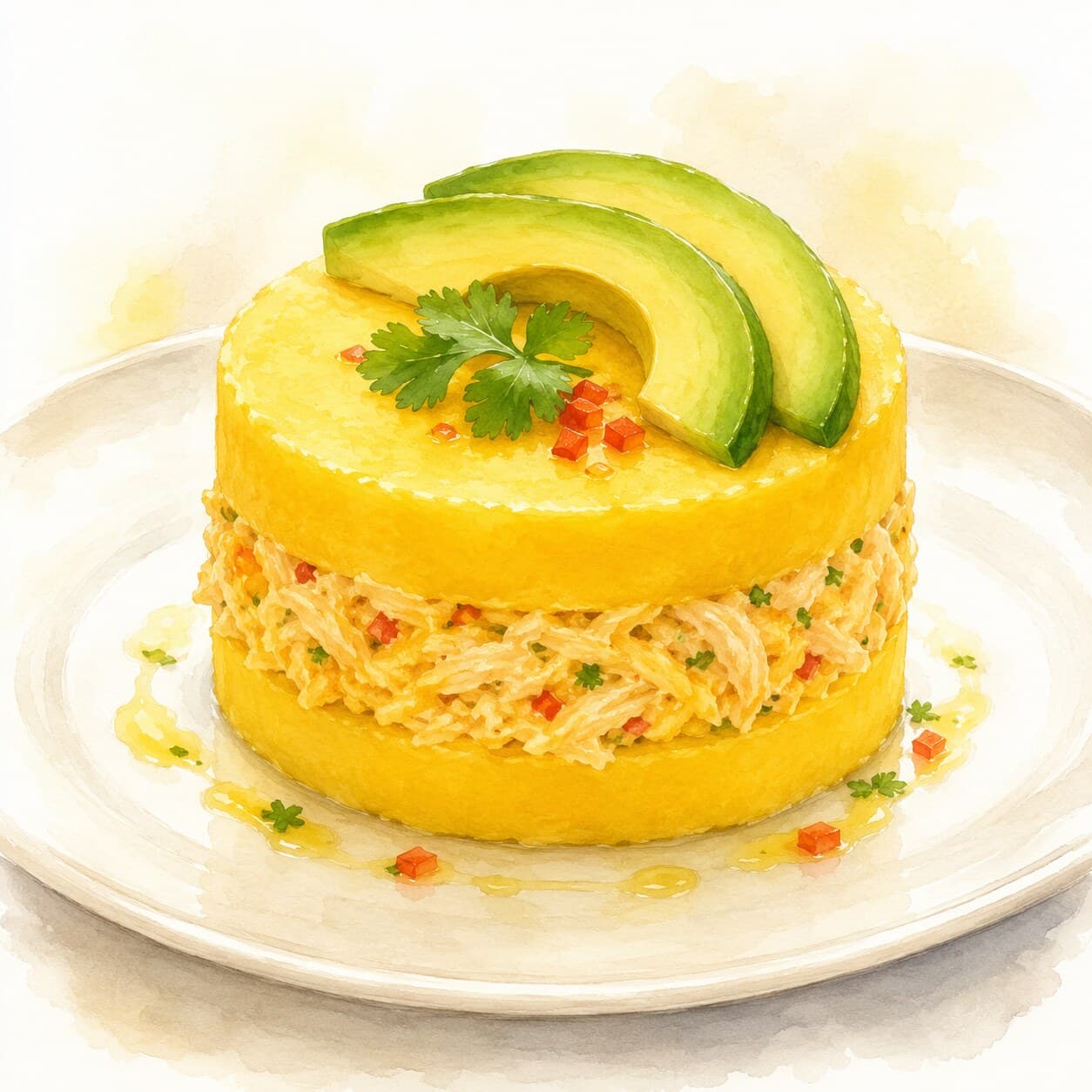
Causa Rellena is a vibrant Peruvian cold potato terrine, layering flavorful mashed potatoes with a savory chicken or tuna salad.
Contents (5 sections)▾
Ingredients
- 500 g yellow potatoes
- 2 tbsp lime juice
- 2 tbsp aji amarillo paste
- 200 g cooked chicken or tuna, shredded
- 1 avocado, sliced
- 1/2 cup mayonnaise
- 1/4 cup diced red onion
- Salt to taste
- Pepper to taste
Steps
Peel and boil the yellow potatoes in salted water for about 15 minutes or until tender. Drain and let cool.
In a mixing bowl, mash the potatoes with lime juice, aji amarillo paste, salt, and pepper until smooth.
In another bowl, combine the shredded chicken or tuna, mayonnaise, diced red onion, salt, and pepper. Mix well.
In a rectangular mold, layer half of the mashed potato mixture at the bottom, pressing down firmly.
Spread the chicken or tuna salad evenly over the potato layer, followed by a layer of avocado slices.
Top with the remaining mashed potato mixture, smoothing the surface. Cover and refrigerate for at least 1 hour to set.
To serve, carefully unmold the terrine onto a serving platter and slice into portions.
Why this works
The technique of creating a layered cold potato terrine (a dish built up in layers and pressed into a mold, then chilled and sliced) capitalizes on the structural integrity of the mashed potato mixture, which is enhanced by the addition of aji amarillo paste and lime juice. This imparts flavor and helps to bind the potatoes, providing a smooth texture. The key to a successful causa rellena is achieving the right consistency in the potato mix; if it seems too dry, add a little more lime juice or a splash of water to help it hold together. Conversely, if the mixture is too wet, it may not hold its shape when unmolded. The contrasting flavors and textures of the creamy avocado and savory chicken or tuna salad make each bite a delightful experience, while the vibrant colors enhance the visual appeal, making it an attractive starter for any occasion.
Common mistakes
Using a watery potato, or not drying it after boiling.
Target: Choose a dry, mashable yellow potato, drain it well once tender, and let it sit briefly in the hot, dry pot to steam off excess moisture before mashing.
Why it matters: Leftover water in the potato dilutes the mash and weakens its structure, so the causa (the seasoned mashed-potato layer that gives the dish its name) turns gluey and won't hold a clean shape once unmolded.
What to do: Drain the boiled potatoes thoroughly, return them to the empty hot pot for a minute so the steam escapes, then mash while still warm.
Adding too much lime juice or liquid to the mash at once.
Target: Mix in the lime juice and aji amarillo paste (a bright yellow Peruvian chili paste) gradually, stopping as soon as the mash is smooth and just cohesive enough to hold together.
Why it matters: Causa depends on the potato behaving like a moldable dough; too much liquid turns it soft and sticky, so instead of holding distinct layers, it slumps when unmolded.
What to do: Add the lime juice and aji paste in stages, pressing a spoonful together after each addition to check that it still holds its shape.
Skipping the chilling time, or serving it straight from the fridge without resting.
Target: Chill the assembled terrine (a dish set and sliced from a mold) for at least an hour so the layers firm up, then let it stand a few minutes at room temperature just before unmolding and slicing.
Why it matters: Without enough time to set cold, the potato layer is too soft to hold together once unmolded, and the layers can slide apart when sliced; serving it ice-cold straight from the fridge can also mute the aji amarillo's flavor.
What to do: Refrigerate the mold, covered, for at least an hour, unmold onto a platter, let it rest briefly, then slice with a clean, sharp knife, wiping the blade between cuts.
Not pressing each layer firmly enough while assembling.
Target: Press each layer down firmly and evenly — the flat bottom of a glass or the back of a spoon works well — before adding the next one.
Why it matters: Air pockets or loosely packed layers are what cause a causa to crumble or collapse once unmolded and sliced; even, firm pressing is what lets it hold together as a clean, sliceable terrine.
What to do: Build the layers directly in the mold, pressing each one flat before adding the next, and smooth the top potato layer before it goes into the fridge.
What to look for
- Clean, distinct layers visible once sliced, with the potato holding its shape rather than oozing into the filling.
- A smooth mash that holds a clean edge when cut, not crumbly or visibly wet.
- A bright yellow color running through the potato layer, with a light sheen from the aji amarillo.
- A terrine that stays cool, firm, and dry-looking on the cut surface rather than sweating or turning watery once plated.
A note on history
Causa's story begins with the potato itself: Peru is home to thousands of documented potato varieties, and long before Spanish contact, boiled potato mashed with aji amarillo was already a basic Andean dish. Food historians trace the name "causa" to the Quechua word kausay, meaning roughly "life" or "sustenance" — kausay was also an old Quechua word for the potato itself, before it was replaced by "papa." After the Spanish conquest, cooks folded in ingredients like lime juice, egg, olives, and seafood, building the layered, filled version closer to what's served today. A separate, popularly repeated story ties the name instead to "la causa" — "the cause" — supposedly from a period when the dish was prepared to support a patriotic cause; sources differ on the details, so it's best treated as a well-loved legend alongside the Quechua origin rather than settled fact.
Get the essays in your inbox — free
Weekly notes on flavor, fermentation, and food history — the writing behind the Atlas of Flavor. No spam; unsubscribe anytime.