
Bo Kho (Vietnamese Beef Stew)
This Vietnamese Beef Stew, Bo Kho, features tender beef shank braised with aromatic spices and sweet carrots for a rich, comforting dish.
Contents (5 sections)▾
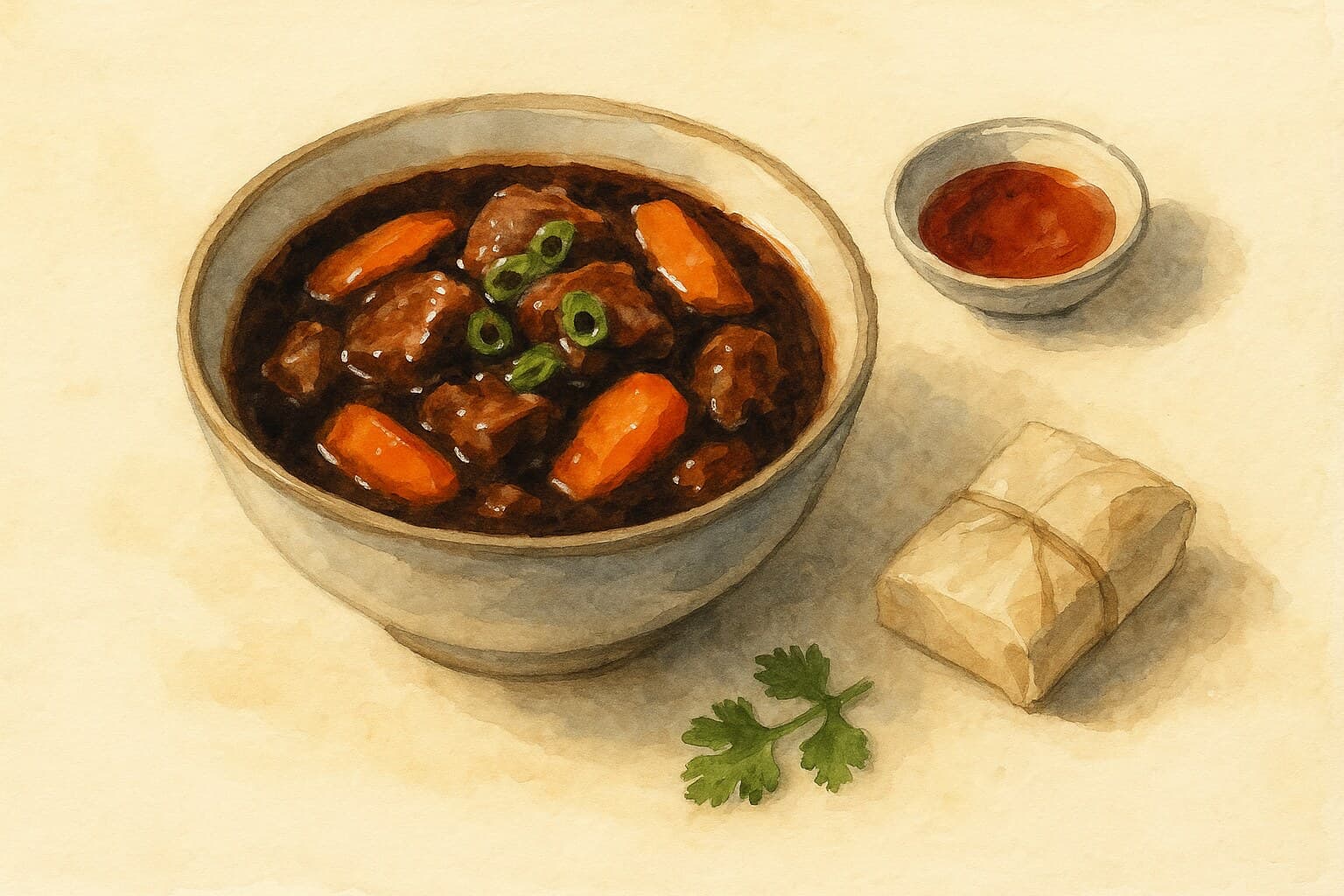
Ingredients
- 800 g beef shank or chuck, cut into 3 cm pieces
- 2 tbsp five-spice powder
- 4 cloves garlic, minced
- 3 tbsp vegetable oil
- 2 stalks lemongrass, trimmed and smashed
- 2 tbsp tomato paste
- 1 liter beef broth
- 3 medium carrots, peeled and cut into chunks
- Salt, to taste
- Black pepper, to taste
Steps
In a bowl, combine the beef, five-spice powder, minced garlic, salt, and black pepper. Marinate for at least 30 minutes to enhance flavor.
Heat vegetable oil in a large pot over medium-high heat. Add the marinated beef and sear until browned on all sides, about 5-7 minutes.
Remove the beef and set aside. In the same pot, add the smashed lemongrass and tomato paste. Cook for 2-3 minutes until fragrant, allowing the aromatics to bloom.
Return the beef to the pot and pour in the beef broth. Bring to a boil, then reduce heat to low, cover, and simmer gently for 1.5 hours.
Add the carrot chunks to the pot, cover, and continue to braise for an additional 30 minutes until the beef is tender and the carrots are soft.
Why this works
The key to a successful Bo Kho lies in the technique of blooming the aromatics (gently frying the spices and aromatics in fat to wake up their flavor). By searing the marinated beef first, you develop the Maillard reaction (the browning that builds deep, savory, roasted flavor), creating a deep, rich flavor. The subsequent blooming of lemongrass and tomato paste in the rendered fat (the fat that has melted out of the meat) releases essential oils, enhancing the broth's aroma and depth. This method ensures the final dish is flavorful and well-balanced, as the sweetness of the carrots rounds out the spiced broth. If the stew seems too thick, add a bit more broth or water to achieve the desired consistency. Conversely, if it's too watery, let it simmer uncovered for a few minutes to reduce and concentrate the flavors further.
Common mistakes
Skimping on the marinade time.
Target: Beef tossed with five-spice, garlic, salt, and pepper and left to marinate (sit in seasoning so flavor soaks in) for at least 30 minutes — longer, even overnight in the fridge, is better.
Why it matters: Five-spice and garlic need time to work past the surface of the meat. Season and cook immediately and the spice sits only on the outside, so the inside of each cube tastes plain against a spiced broth.
What to do: Mix the beef with the seasonings early and let it rest while you prep everything else. If you have the time, cover and refrigerate it for a few hours so the flavor reaches deeper.
Adding the lemongrass and tomato paste straight to liquid instead of frying them first.
Target: Smashed lemongrass and tomato paste cooked in the hot fat for 2–3 minutes until fragrant and the paste darkens, before any broth goes in.
Why it matters: Many aroma and color compounds are fat-soluble — frying them in oil first (this is called blooming) pulls those flavors out and spreads them through the dish. Dropped straight into water, the paste stays raw-tasting and the broth stays thin and pale.
What to do: After searing and removing the beef, lower the heat, add the lemongrass and tomato paste to the fat, and stir until the paste turns a deeper brick red and smells sweet and toasty. Then add the broth.
Boiling the stew hard instead of simmering it gently.
Target: A bare, lazy simmer (small bubbles barely breaking the surface) with the lid on for the long cook.
Why it matters: Beef shank and chuck are full of collagen, the connective tissue that turns silky only with slow heat. A hard, rolling boil squeezes the muscle fibers and makes the meat tough and dry, and clouds the broth.
What to do: Bring it up to a boil once, then drop the heat until the surface just shivers. Keep it there for the full 1.5 hours-plus, until the beef is fork-tender and cooked all the way through.
Adding the carrots too early.
Target: Carrots stirred in only for the last 30 minutes or so, once the beef is nearly tender.
Why it matters: Carrots cook much faster than tough beef. Put them in at the start and they dissolve into mush and lose their shape and sweet bite long before the meat is done.
What to do: Give the beef its head start, then add the carrot chunks for the final stretch so they come out soft but still holding together.
What to look for
- The aromatics blooming: the tomato paste turns a deeper brick red and smells sweet and toasted, not sharp — that color change is your signal the broth is ready to go in.
- The broth as it builds: glossy and reddish-brown with a slick of fragrant fat on top — thin and watery means the paste wasn't fried long enough.
- The simmer: bubbles barely break the surface, lid on — a hard boil here toughens the meat and muddies the liquid.
- The beef when done: a chunk gives way easily to a fork and is cooked evenly through — tender all the way in, with no firm, raw-looking core.
- The carrots at the end: soft enough to cut with the spoon but still holding their shape — not collapsed into the broth.
A note on history
Bò kho emerged in Vietnam during the French colonial period, when French cooks and influence introduced beef to a cuisine that had largely treated cattle as working animals — the same era that brought the carrot and the baguette still served alongside the stew to soak up the broth. The dish is often described as a Vietnamese reimagining of a French beef stew, but its character is its own: lemongrass brightens and lifts the braise (the slow-simmered stew), while star anise, cinnamon, and five-spice trace a deeper layer of Chinese culinary influence woven through Vietnamese cooking. (Wikipedia: Bò kho, Vietnam Coracle: Beef Stew (Bò Kho))
Get the essays in your inbox — free
Weekly notes on flavor, fermentation, and food history — the writing behind the Atlas of Flavor. No spam; unsubscribe anytime.