
Bánh Cuốn
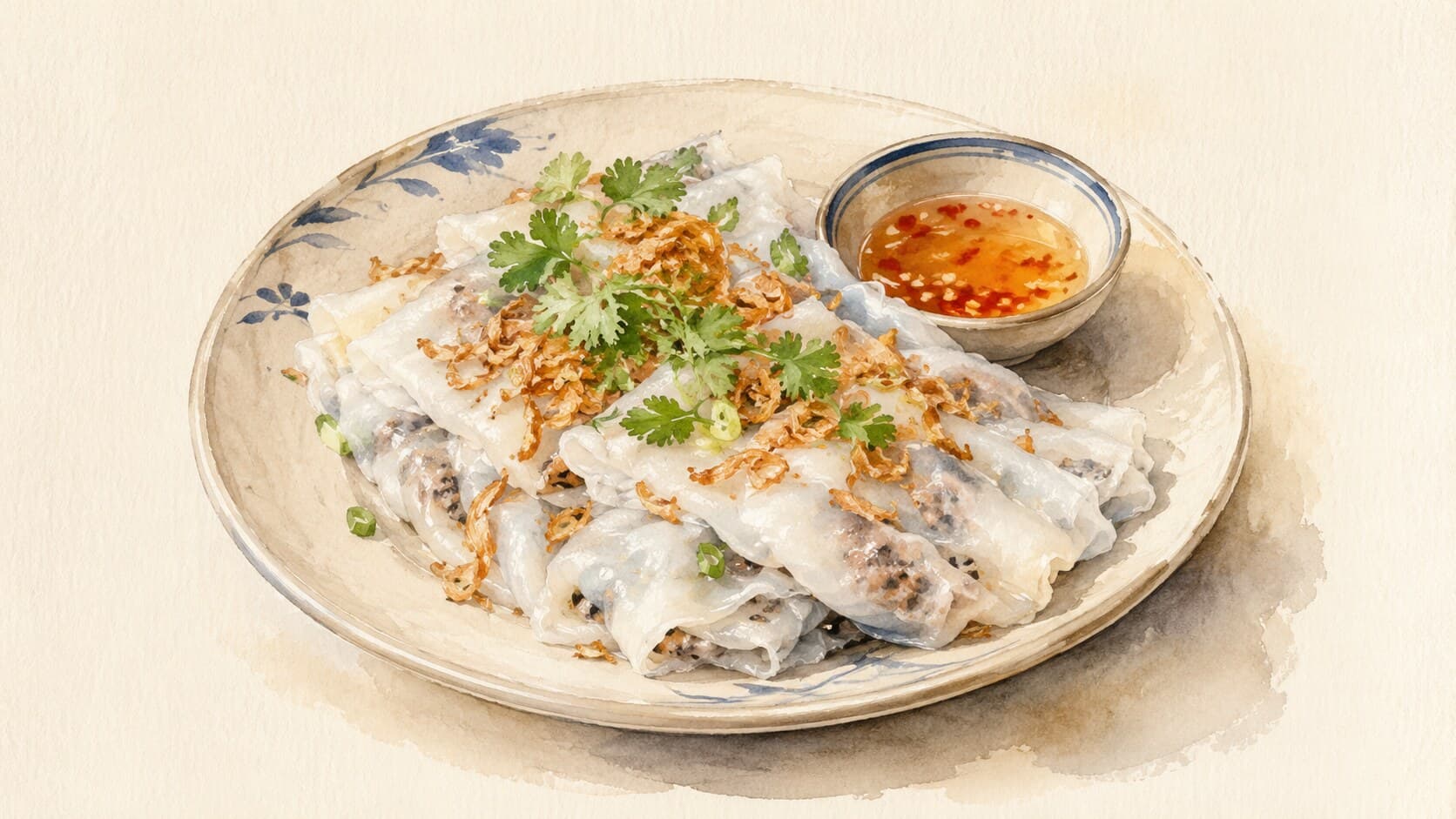
Bánh Cuốn is a delicate Vietnamese breakfast dish featuring steamed rice sheets filled with savory pork and herbs.
Contents (5 sections)▾
Ingredients
- 200 g of rice flour
- 50 g of tapioca flour
- 750 ml of water
- 200 g of ground pork
- 1 tbsp of fish sauce
- 2 cloves of garlic, minced
- 1 tsp of black pepper
- 50 g of fried shallots
- Fresh herbs (mint, cilantro, or basil) to taste
- Nuoc cham (dipping sauce) to serve
Steps
In a bowl, mix rice flour, tapioca flour, and 750 ml of water until smooth. Let it rest for 30 minutes to hydrate and ensure a thin batter.
In a skillet over medium heat, sauté minced garlic until fragrant, then add ground pork, fish sauce, and black pepper. Cook for about 5-7 minutes until fully cooked — the ground pork should reach 71 °C / 160 °F with no pink (check with an instant-read thermometer); this step is where the pork is cooked, as the later steaming only sets the rice sheet.
Bring a steamer to a boil. Pour a thin layer of the batter onto a greased steaming tray, covering the surface evenly. Steam for 3-5 minutes until the sheet is set.
Remove the steamed rice sheet and place it on a clean surface. Add a spoonful of pork filling and a few herbs, then carefully roll it up.
Repeat the process until all batter and filling are used. Serve warm, topped with fried shallots and with nuoc cham on the side for dipping.
Why this works
The key to perfect Bánh Cuốn lies in the texture of the rice sheets, which should be thin and pliable. Combining rice flour with tapioca flour gives a slightly chewy texture, ideal for wrapping. Allowing the batter (the thin, pourable rice-flour-and-water mixture) to rest hydrates the flour, improving the elasticity of the rice sheets. When steaming, ensure the water is boiling before adding the batter; if the temperature is too low, the sheets will be gummy instead of smooth. If the rice sheets break while rolling, don’t worry—simply patch them with a bit of leftover batter or use a new sheet. This dish is a delicate balance of flavors and textures, with the savory pork complemented by the freshness of the herbs and the tangy dipping sauce, making it a well-loved breakfast staple in Vietnam.
Common mistakes
Skipping the batter rest.
Target: Batter rested the full 30 minutes before steaming.
Why it matters: Resting lets the rice and tapioca flours fully hydrate, so the starch granules swell evenly. Steam a freshly mixed batter and the sheets turn out gritty or gummy and tear easily — the elasticity that lets you roll them simply isn't there yet.
What to do: Mix, then leave it alone for half an hour. Stir again right before pouring, since the flour settles to the bottom as it sits.
Pouring the batter too thick.
Target: A thin, even layer that just coats the steaming surface.
Why it matters: Bánh cuốn is defined by its delicate, almost translucent sheets. A thick pour steams up dense and rubbery and won't roll cleanly around the filling — it cracks or stays raw in the middle.
What to do: Pour a small amount and tilt the tray to spread it thin; pour off any excess. Think coverage, not depth.
Steaming over weak heat.
Target: A steamer at a full, vigorous boil before the batter goes on.
Why it matters: The sheet needs to set fast in strong steam. Under low heat it cooks slowly and turns gummy and sticky instead of smooth and peelable, and it clings to the tray.
What to do: Get the water boiling hard and keep the lid on so the steam stays dense; only lift it to add or remove a sheet.
Tearing the sheet when you lift it.
Target: A set sheet released cleanly from a lightly greased surface.
Why it matters: The sheets are fragile, and a dry tray or an under-set sheet means it shreds the moment you try to move it.
What to do: Lightly oil the steaming surface, and let the sheet set fully before lifting. If one does tear, patch it with a little fresh batter or simply use the next sheet — torn sheets still roll fine around the filling.
What to look for
- The rested batter: thin and pourable, loosened from any settled layer after a stir — not thick or pasty.
- The steam before pouring: a strong, steady cloud lifting off the boiling water, not a thin wisp.
- The set sheet: glossy, smooth, and translucent enough to suggest the tray beneath, with no wet or chalky raw patches.
- The rolled bánh cuốn: soft and pliable, holding its shape without splitting, the filling visible through the sheet.
A note on history
Bánh cuốn is strongly associated with Thanh Trì, a village on the edge of Hanoi long known for making these steamed rice sheets, and the dish is a Hanoi specialty of considerable age. Traditionally the sheets are made from a thin, fermented rice batter, steamed over cloth stretched across a pot, then filled — in the classic Hanoi version — with seasoned ground pork and minced wood-ear mushroom and finished with fried shallots and a nước chấm dipping sauce.
Get the essays in your inbox — free
Weekly notes on flavor, fermentation, and food history — the writing behind the Atlas of Flavor. No spam; unsubscribe anytime.