
Yakumi Aromatics
Yakumi aromatics enhance dishes with a fresh, fragrant finish using scallion, ginger, myoga, and shiso.
Contents (5 sections)▾
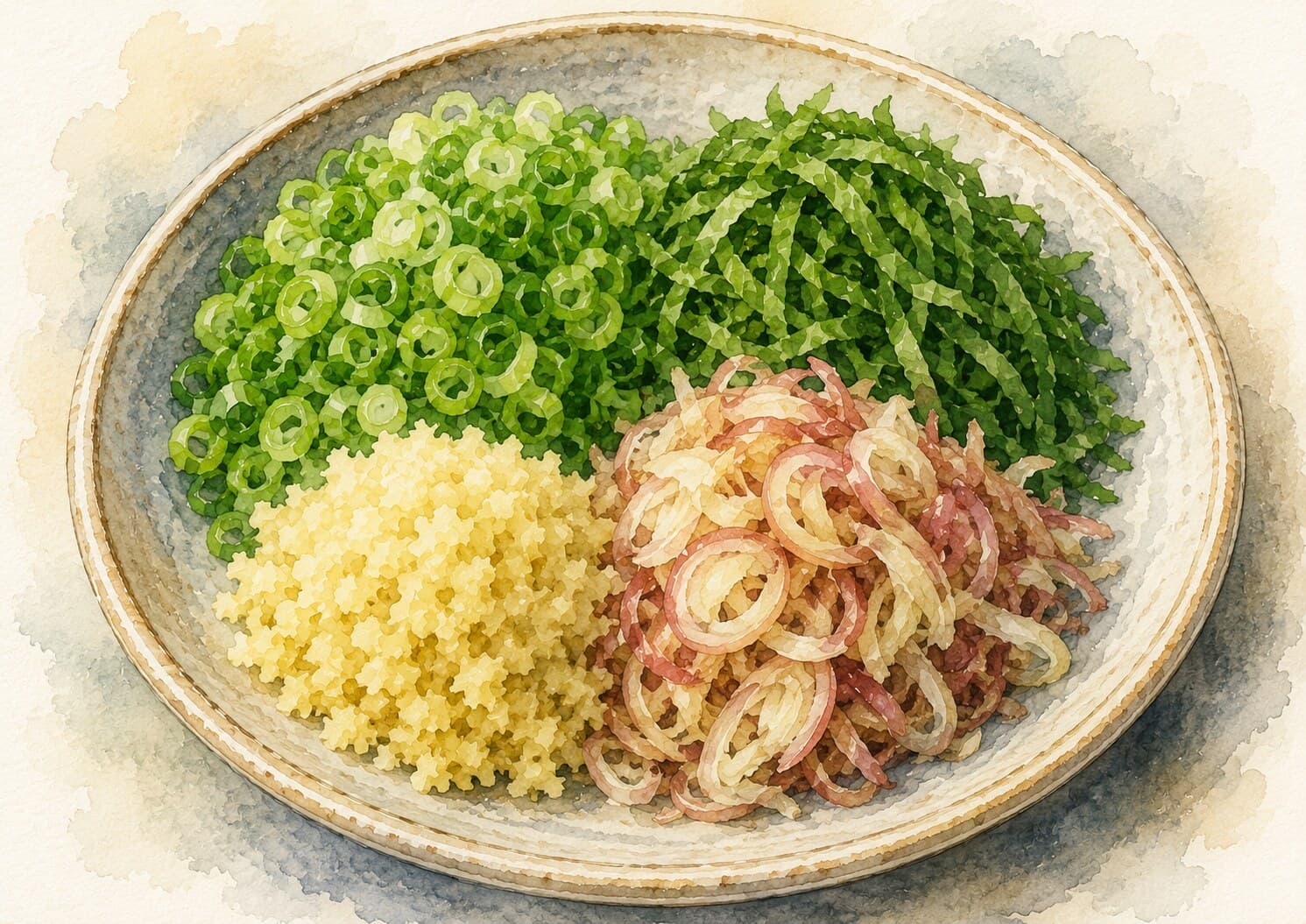
Ingredients
- 4 scallions, finely sliced
- 1 thumb-sized piece of ginger, grated
- 2 myoga, thinly sliced
- 4 shiso leaves, chiffonade
- salt, to taste
Steps
Finely slice the scallions and myoga, grate the ginger, and chiffonade the shiso. Cutting them just before serving keeps the aromas bright and sharp.
Combine all the aromatics in a bowl and toss gently to mix, about 1 minute, so the scents intermingle without bruising the herbs.
Season with a small pinch of salt — just enough to lift the aromas, not to dress the mix. Yakumi is meant to taste fresh and clean, not heavy or salty.
Use immediately as a fresh condiment for chilled noodles, rice, tofu, or grilled fish. The mix is at its best within a few minutes of cutting.
Why this works
The term 'yakumi' refers to aromatic condiments that brighten the flavor of dishes in Japanese cuisine. By focusing on fresh ingredients like scallion, ginger, myoga, and shiso, this recipe showcases the balance of flavors and aromas. The technique of combining these ingredients and allowing them to rest for 5 minutes helps release their essential oils, creating a vibrant and aromatic finish. If the mixture seems too pungent, incorporating a small pinch of sugar can help to mellow the flavors. The combination of soy sauce, rice vinegar, and sesame oil adds depth and umami, enhancing the overall experience. Remember, the freshness of your ingredients is key; wilted or old produce can lead to a dull flavor. By preparing them carefully, you ensure a fragrant and lively condiment that can complement various dishes. Additionally, letting the mixture rest for the specified time allows the flavors to blend harmoniously, ensuring a well-rounded taste that is essential for any yakumi.
Common mistakes
Cutting the aromatics too far ahead.
Target: Slice and grate as close to serving as possible.
Why it matters: The whole point of yakumi is bright, lifted aroma, and the volatile oils in scallion, shiso, and myoga fade and turn flat within an hour of cutting. Prep-ahead yakumi smells dull and tired.
What to do: Cut everything just before the dish goes out. If you must hold it briefly, cover and refrigerate, and keep it to minutes, not hours.
Bruising the herbs instead of slicing cleanly.
Target: Clean, sharp cuts with a well-honed knife.
Why it matters: A dull knife crushes shiso and scallion, smearing their cells and releasing a darker, slightly bitter note rather than the clean fragrance you want. Crushed scallion also weeps and turns slimy.
What to do: Use a sharp knife and slice in single strokes. Stack and roll shiso loosely, then cut a fine chiffonade without sawing.
Rinsing sliced scallion and then not drying it.
Target: Aromatics dry to the touch before mixing.
Why it matters: Many cooks rinse cut scallion to soften its bite, but water left clinging dilutes the flavors and makes the mix wet and clumpy instead of light and loose.
What to do: If you rinse the scallion, wrap it in a towel and squeeze gently, or spin it dry, before combining.
Over-salting and treating it as a dressing.
Target: Just a small pinch of salt — enough to lift the aromas, not to season heavily.
Why it matters: Yakumi is a fresh accent, not a sauce. Too much salt draws water out of the herbs, wilts them, and overwhelms the delicate fragrance that is the whole reason for the mix.
What to do: Add the barest pinch, toss gently, and let the aromatics — not the salt — lead.
What to look for
- The cut aromatics: fine, even, and springy, not crushed or weeping — shiso in thin ribbons, ginger in fluffy grated threads.
- Fresh shiso and myoga: vivid color and a clean, sharp scent the moment they are cut. Dull color or a limp feel means they are past their best.
- The finished mix: light and loose, piling up airily rather than clumping wet, with a fresh, almost cooling fragrance.
- On the plate: the yakumi sits as a bright, fragrant heap that perfumes the dish as you eat — it should smell lively, not muted.
A note on history
The word yakumi (薬味) is written with the characters for "medicine" and "flavor," reflecting an older view of these aromatics as both seasoning and a source of health benefits. The tradition sits within the Japanese idea of ishoku dōgen — that food and medicine share the same origin — and herbs like shiso were valued not only for fragrance but for practical reasons, which is part of why shiso is traditionally placed under sashimi. (Food in Japan, All About Japan)
Get the essays in your inbox — free
Weekly notes on flavor, fermentation, and food history — the writing behind the Atlas of Flavor. No spam; unsubscribe anytime.