
Miso Butter
Miso Butter blends the savory depth of miso with rich butter, creating a versatile condiment for diverse dishes.
Contents (5 sections)▾
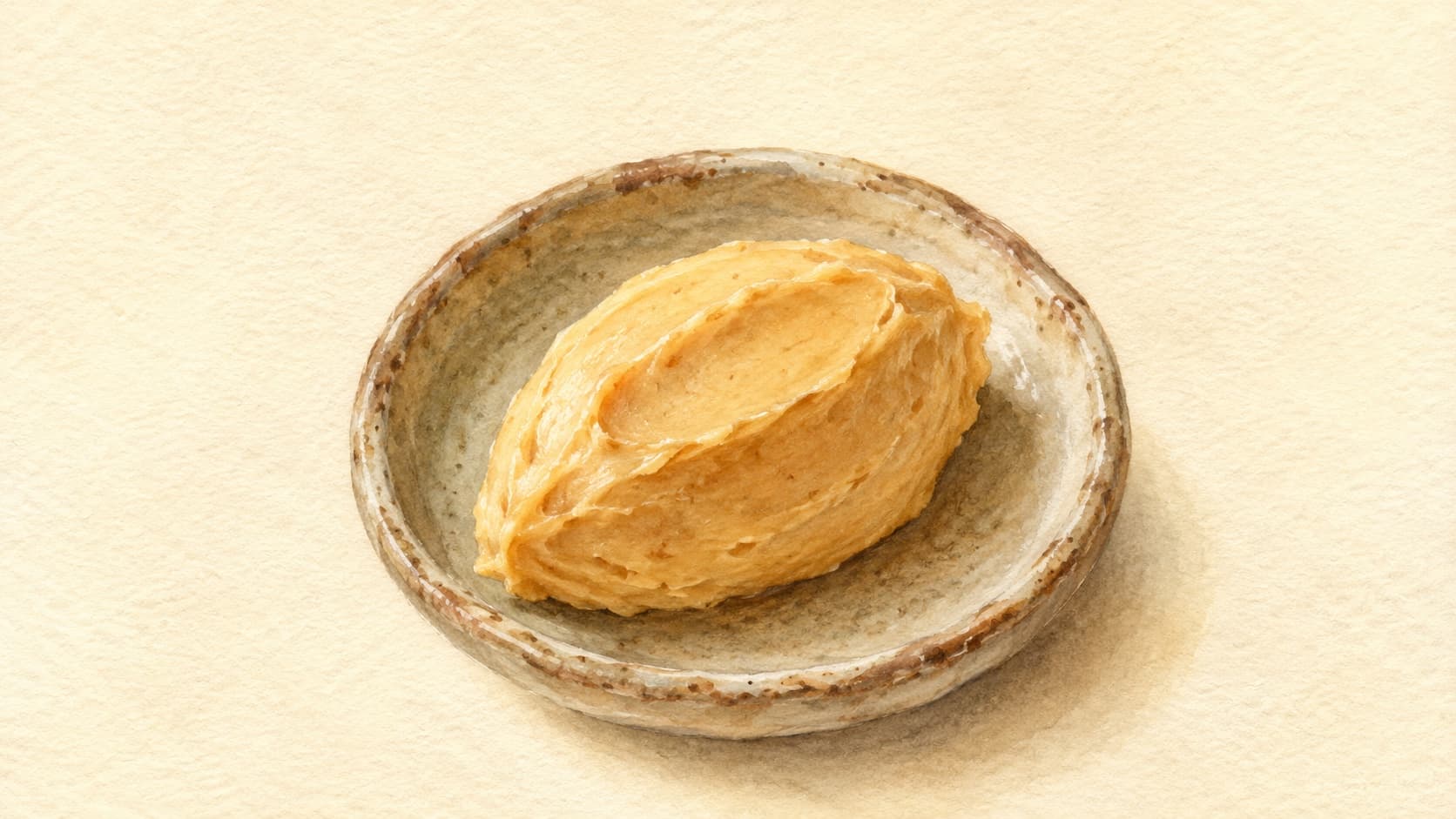
Ingredients
- 100 g unsalted butter, softened
- 30 g white miso paste
- 1 tbsp sake
- 1 tbsp mirin
- 1 tsp soy sauce
- 1 tsp sesame oil
- to taste black pepper
Steps
1. In a mixing bowl, combine 1 cup of softened butter and 1/2 cup of miso paste, mixing for 2 minutes until smooth and well-blended. This will ensure the flavors meld properly.
2. Add 2 tablespoons of sake, 2 tablespoons of mirin, 1 tablespoon of soy sauce, and 1 teaspoon of sesame oil to the mixture. Stir until all ingredients are fully incorporated. This adds depth and umami to the butter.
3. Season with black pepper to taste. Adjust the seasoning according to your preference for a balanced flavor.
4. Transfer the mixture onto a sheet of parchment paper, shape it into a log, and wrap it tightly. Chill in the refrigerator for at least 30 minutes or until firm to the touch.
5. Once firm, slice the butter into rounds, approximately 1/2 inch thick. Serve on grilled meats, vegetables, or even spread on bread. The heat will release the miso's umami flavors beautifully.
Why this works
Miso Butter combines the creamy richness of butter with the savory, fermented notes of miso (a Japanese fermented soybean paste with deep savory-salty flavor), creating a unique compound butter that enhances various dishes. The key to its success lies in the balance of flavors; the miso provides depth, while the sake, mirin (a fermented sweet rice wine used in Japanese cooking), and soy sauce contribute additional layers of umami (the savory "fifth taste" produced by glutamates and other amino acids). If the mixture seems too salty, consider adding a bit more butter to mellow the flavor. Additionally, ensuring the butter is softened before mixing prevents clumping, making it easier to blend. If the butter is too soft after mixing, you can place it back in the fridge for an additional 10-15 minutes to firm up before shaping. This versatility allows it to complement a wide range of cuisines, making it an ideal bridge between Japanese and Western cooking styles. The precise measurements and chilling times ensure a consistent texture and flavor, providing a reliable base for culinary creativity.
Common mistakes
Mixing into cold, hard butter. Target: butter at 18–20°C (cool room temperature), pliable but not greasy. Why it matters: Cold butter resists incorporation and the miso ends up streaked through unincorporated lumps. You will see grainy pockets where miso paste sits next to butter that never softened enough to absorb it. The compound looks marbled and tastes uneven — one bite is plain butter, the next is sharp miso. What to do: Cube the butter and leave it on the counter for 30–60 minutes until it dents under finger pressure but does not smear. If you are in a hurry, grate cold butter on the large holes of a box grater — the shreds soften in a few minutes. Never microwave to "speed it up"; the moment butter melts, the fat separates from the milk solids and the emulsion (the stable fat-and-water mixture that gives butter its creamy body) breaks.
Salting the dish on top. Target: taste before any added salt; miso is already 8–12% salt by weight. Why it matters: Miso paste carries a significant salt load — 30 g of white miso contributes roughly 3 g of salt on its own, plus the soy sauce in the mix. Adding salt by reflex pushes the compound past the savory range into harshness, and you cannot pull salt back out once it is in. What to do: Mix everything except added salt first. Taste a small smear on a piece of bread or warm vegetable — that is how you will actually eat it. Adjust black pepper freely, but treat salt as a finishing decision, not an assumption.
Skipping the chill before slicing. Target: at least 30 minutes wrapped in parchment, refrigerated until firm to the touch. Why it matters: The chill is not cosmetic — it is when the butter recrystallizes around the miso particles and locks the flavor in place. Skip it and the log smears under the knife instead of cutting into clean rounds, and any rounds you do get will weep oily liquid as they sit at room temperature because the fat has not had time to set. What to do: Shape the log on parchment, twist the ends like a sausage, and refrigerate until it feels solid when pressed. For slicing into clean coins, an extra 20 minutes in the freezer beforehand makes the cuts crisper.
Storing it loose in the fridge or freezer. Target: wrapped tight in parchment + an outer layer (foil, beeswax wrap, or zip bag), 1 week refrigerated or 2 months frozen. Why it matters: Compound butter pulls flavors out of an open fridge — onions, garlic, kimchi, last week's curry — because butterfat is an excellent solvent for volatile aromatics. The miso also dries on any exposed face, forming a darker, sharper-tasting crust. Frozen butter left unwrapped develops freezer burn that ruins texture. What to do: Keep it sealed at all times. Slice off what you need and re-wrap immediately. If you see darkened edges, trim them — the interior is still fine.
What to look for
- A smooth, even color when fully mixed. Properly incorporated, the compound is a uniform pale tan — the white of butter tinted by the beige of miso. Streaks of darker paste or visible pockets of plain yellow butter both mean the mix is not done; keep folding until the color is consistent throughout.
- A log that holds its shape when pressed. After chilling, the wrapped log should feel firm and resistant when you press it through the parchment, the way cold cheese does. If it dents and stays dented or feels soft like clay, give it another 20 minutes in the fridge before slicing.
- Clean rounds with no oil weeping. When you slice cold and the knife passes through without smearing, and the cut faces look matte rather than wet, the emulsion is intact. Glossy, weeping faces mean the butter has gotten too warm — wrap and chill again before the next cut.
- Aromatic but not sharp on the first taste. A correctly balanced miso butter smells faintly of sake and miso and tastes like rich, savory butter — the miso is present but not the headline. A sharp, immediately salty hit on the tongue means the proportion of miso has crept too high; soften in more plain butter to bring it back.
A note on history
Miso butter sits at the seam of two long traditions. Miso paste itself is a Japanese staple dating back well over a millennium, while the pairing with butter is much newer — a product of late-20th-century Japanese-French fusion cooking, with home cooks adopting it widely through the 2010s. Hokkaido has a particularly strong association with the miso-and-butter combination, most famously in the region's miso-butter ramen, which a ramen shop popularized in the 1960s in response to the cold northern climate (Sakuraco, KimEcopak).
Get the essays in your inbox — free
Weekly notes on flavor, fermentation, and food history — the writing behind the Atlas of Flavor. No spam; unsubscribe anytime.