
Argentine Beef Empanadas
Delight in these authentic Argentine beef empanadas filled with hand-cut beef and baked to golden perfection.
Contents (5 sections)▾
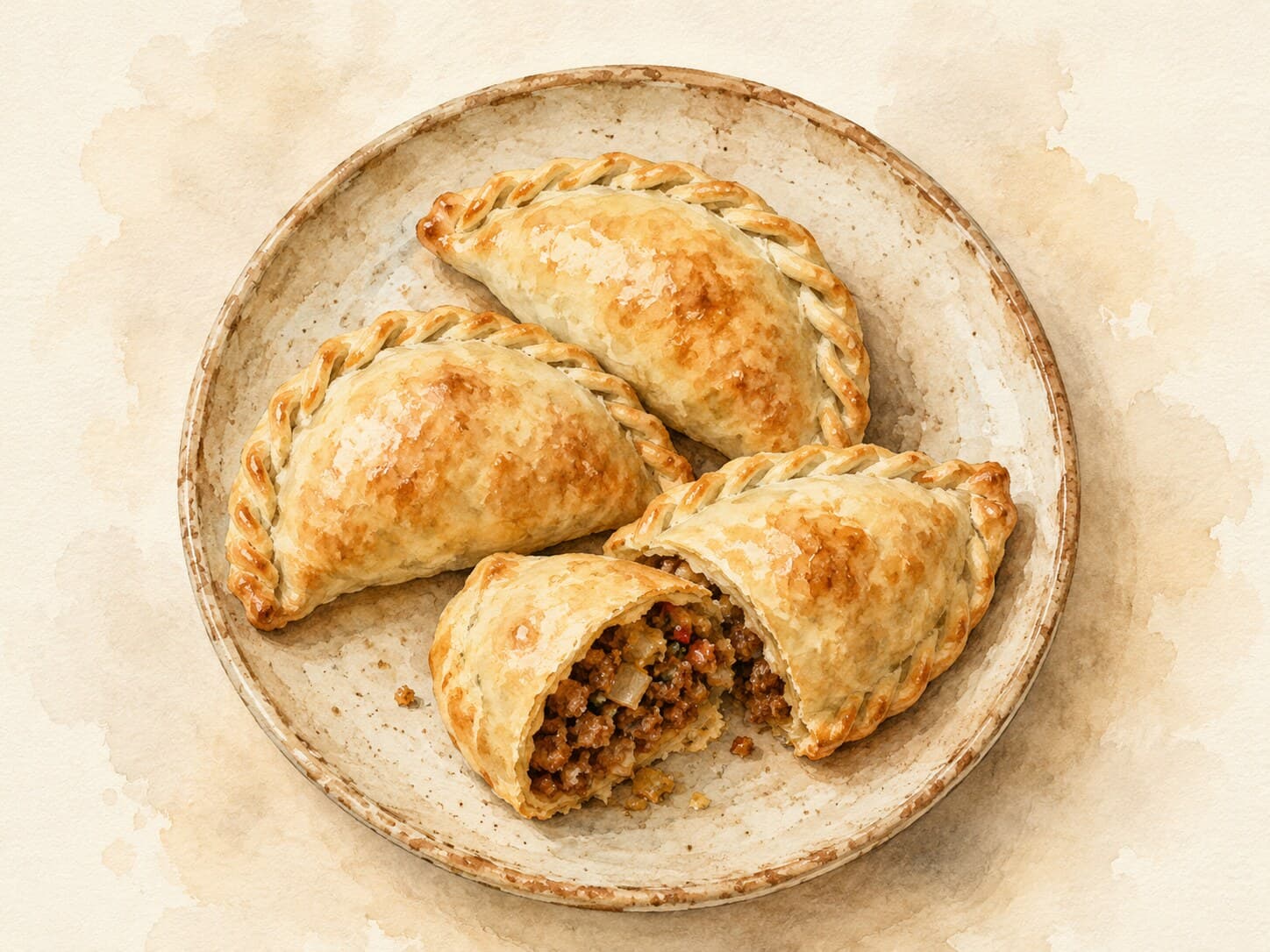
Ingredients
- 500 g beef, finely diced
- 1 medium onion, finely chopped
- 2 cloves garlic, minced
- 1 tsp ground cumin
- 1 tsp paprika
- 1/2 tsp salt
- 1/4 tsp black pepper
- 2 tbsp olive oil
- 2 tbsp fresh parsley, chopped
- 1 package of empanada dough discs (about 12-14 discs)
- 1 egg, beaten (for egg wash)
Steps
In a skillet, heat olive oil over medium heat. Add chopped onion and garlic, sauté until soft, about 5 minutes.
Add diced beef to the skillet, season with cumin, paprika, salt, and pepper. Cook until browned, about 8-10 minutes. Stir in chopped parsley and let the filling cool.
Preheat your oven to 200°C (400°F). Once the beef filling is cool, take one dough disc and place a spoonful of filling in the center. Be careful not to overfill.
Fold the disc over the filling to create a half-moon shape. Crimp the edges using your fingers or a fork to form a repulgue seal. This not only keeps the filling secure but also indicates the empanada's origin.
Place the empanadas on a baking sheet lined with parchment paper. Brush the tops with the beaten egg for a golden finish.
Bake in the preheated oven for 15 minutes or until golden brown. Serve warm.
Why this works
The technique of using a tender pastry to encase a juicy filling is essential for achieving the perfect empanada. The hand-cut beef enhances texture and flavor, while cooling the filling before wrapping prevents the pastry from becoming soggy. The crimping technique, known as repulgue, is not only decorative but functional; it ensures a tight seal that holds the filling during baking. If the edges break while crimping, simply dab them with a bit of water to help them stick back together. Baking at a high temperature allows the empanadas to rise and develop a beautiful golden color, making them visually appealing and delicious. Remember to avoid overfilling, as this can lead to bursting during baking, diminishing the final presentation and flavor.
Common mistakes
Sealing a hot or steaming filling into the dough.
Target: Filling cooled to room temperature (or colder) before it touches a disc.
Why it matters: Warm filling melts the fat in the dough at the seam and releases steam inside the parcel, both of which soften the crimp and force it open in the oven. A cold filling keeps the seal firm until the crust has set.
What to do: Spread the cooked beef on a plate or tray and let it cool fully — chilling it briefly is even better. Only then assemble.
Overfilling the disc.
Target: About one tablespoon of filling per disc, kept clear of the edge.
Why it matters: An overstuffed empanada cannot close cleanly; the edge stays thin and wet, the repulgue won't hold, and the parcel can burst and leak its juices while baking.
What to do: Underfill rather than overfill. Leave a clean dry border so the two layers of dough press together with nothing trapped between them.
Crimping over a greasy or wet edge.
Target: A dry, clean rim of dough to fold and braid.
Why it matters: Fat or filling smeared on the edge stops the dough from bonding to itself, so the repulgue looks closed but separates in the heat.
What to do: Keep filling off the border. If an edge tears or won't grip, dab it with a little water (not egg) and press again before braiding.
Skipping the egg wash, or applying it too thickly.
Target: A thin, even brush of beaten egg over the top only.
Why it matters: With no wash the crust bakes pale and matte; a flooded wash pools in the crimp and bakes into eggy patches rather than an even gloss. The egg is what carries the golden color.
What to do: Brush lightly with a near-dry brush. Wipe off any egg that runs down the seams.
What to look for
- Filling before assembly: cooled, glistening but not pooling with liquid. Moist enough to taste juicy, not so wet that it soaks the dough.
- A finished seal: the braided repulgue is continuous, with no thin or open spots. The parcel feels closed all the way around.
- Egg wash before baking: a thin, even sheen on the dome, not puddles in the folds.
- Out of the oven: deep, even golden-brown across the top, edges set and firm. The crust sounds dry and crisp when tapped, with no raw, pale patches.
A note on history
Empanadas reached Argentina through Spanish colonization, and the form itself traces back further to the Moorish stuffed-pastry tradition of medieval Iberia. In Argentina the repulgue — the folded, braided edge that seals the parcel — became more than decorative: regional styles use distinct crimps, and Tucumán in particular is known for its juicy hand-cut-beef empanadas, celebrated each year at the national empanada festival in Famaillá.
Get the essays in your inbox — free
Weekly notes on flavor, fermentation, and food history — the writing behind the Atlas of Flavor. No spam; unsubscribe anytime.