
Locro
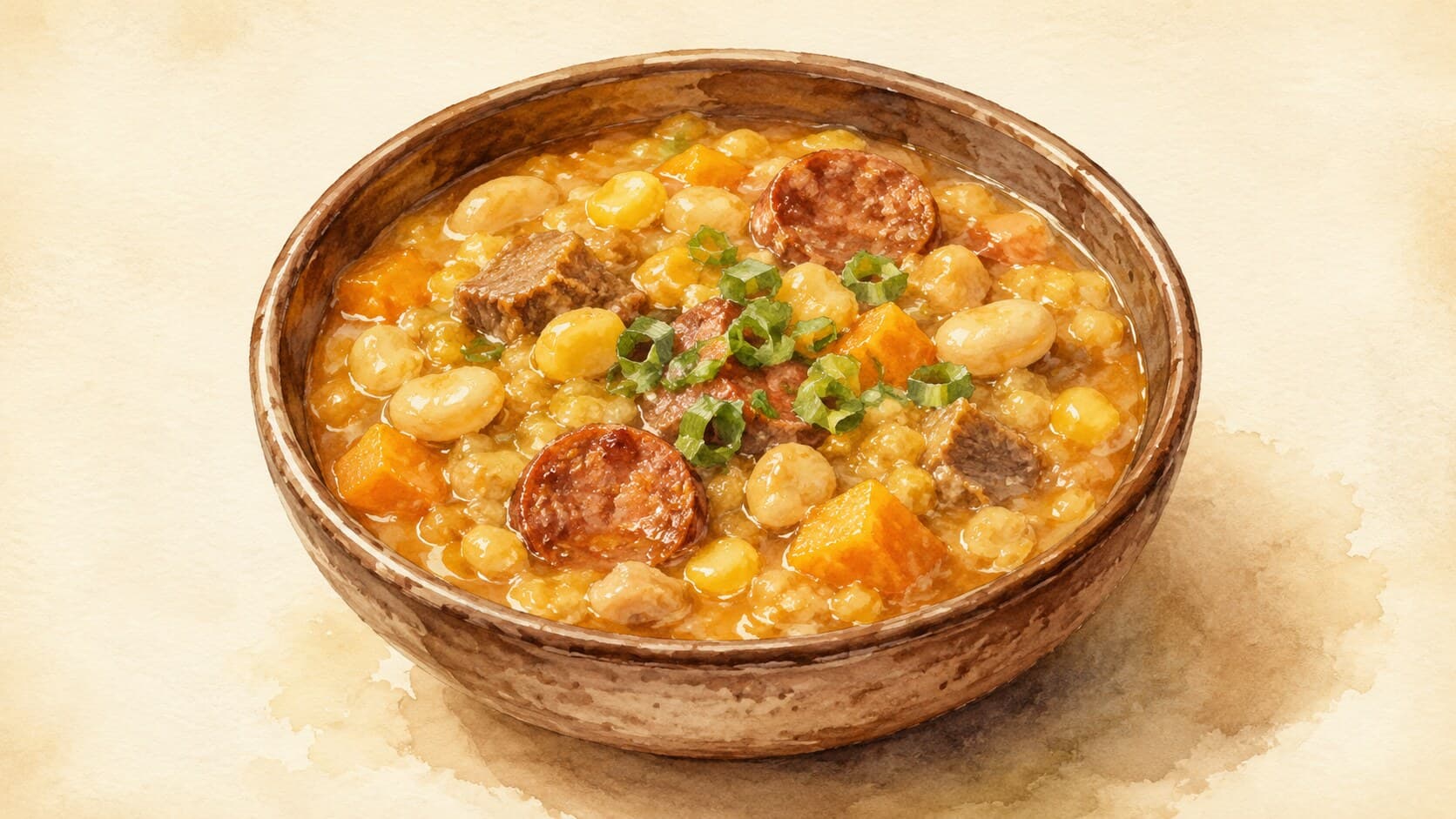
Locro is an Argentine stew made with pumpkin, corn, white beans, and braised pork, showcasing techniques of braising and stewing.
Contents (5 sections)▾
Ingredients
- 500 g braised pork, cubed
- 400 g pumpkin, diced
- 200 g corn kernels, fresh or frozen
- 300 g white beans, soaked overnight
- 1 onion, chopped
- 3 cloves garlic, minced
- 1 tsp smoked paprika
- 2 liters chicken or vegetable broth
- Salt to taste
- Pepper to taste
- Olive oil for sautéing
- Fresh parsley for garnish
Steps
In a large pot, heat 2 tablespoons of olive oil over medium heat. Add the chopped onion and garlic, cooking until translucent, about 5 minutes.
Stir in the braised pork cubes and cook for another 5 minutes until they are browned on all sides.
Add the diced pumpkin, corn, and soaked white beans to the pot, mixing well.
Pour in the chicken or vegetable broth, then add smoked paprika, salt, and pepper. Bring to a gentle simmer over low heat.
Cover the pot and let the stew simmer for about 25 minutes, or until the pumpkin and beans are tender.
Adjust seasoning to taste, and serve hot, garnished with fresh parsley.
Why this works
The technique of low-simmering allows the flavors of the ingredients to meld beautifully, creating a rich, hearty stew. The combination of pumpkin, corn, and white beans provides a variety of textures and complements the tender braised pork. Smoked paprika adds a depth of flavor that enhances the overall dish. If the stew seems too thick, simply add a little more broth or water to reach your desired consistency. Conversely, if it appears too thin, you can continue simmering it uncovered for a few additional minutes to allow it to reduce. This method is forgiving, ensuring that even if you encounter slight variations in ingredient size or moisture content, you can still achieve a satisfying and hearty meal that embodies the warmth of Argentine cuisine.
Common mistakes
Undercooked beans, in a hurry. Locro (an Andean corn-bean-meat stew, now a national dish of Argentina) depends on white beans (alubias / porotos) holding their shape but being fully tender — a half-cooked bean is starchy, gritty, and disappointing. Target: beans soaked overnight (8–12 hours) and simmered until you can crush one against the roof of your mouth with no resistance. Why it matters: undersoaked beans cook unevenly — the outside breaks before the inside softens. Old beans (more than a year on the shelf) may never fully tenderise no matter how long you cook them. What to do: soak with a generous pinch of salt (it actually helps the skin stay intact and the inside cook through, contrary to the old advice). Test 3–4 beans before declaring the pot done.
Pumpkin that turns to mush before the beans are ready. Pumpkin and beans cook on very different clocks. If you add them at the same time, you end up with either crunchy beans or pumpkin puree. Target: beans go in first with the broth; pumpkin joins for the final 25–30 minutes so it holds soft cubes, not slurry. Why it matters: pumpkin cells (full of pectin and starch) collapse around 90°C — once they go, they go fast. You want the pumpkin to hold a spoon-shape, not dissolve into the broth. What to do: start the beans, then add the pumpkin only after the beans are clearly close to tender (about an hour in). If you want some pumpkin to thicken the broth, mash a few cubes against the side of the pot at the end.
Pork that is still pink in the middle. This is a safety line, not a texture preference. Locro is built around braised pork — and pork in a stew has to be cooked all the way through. Target: pork cubes simmered until an instant-read thermometer at the centre reads at least 71°C (160°F), or until the meat shreds easily with a fork. No pink in the middle. Why it matters: undercooked pork can carry pathogens that low-simmering will not kill in a short cook. Stew temperatures (around 85–90°C) are gentle — the meat needs time at that temperature to be safe. What to do: brown the pork well first, then let it simmer covered with the beans for the full braise window. If you cut a cube and see pink, return it to the pot. Beans tender + pork fully cooked through = ready.
Smoked paprika added at the end (so it tastes raw). Smoked paprika needs a little fat and gentle heat to bloom — added at the last minute, it tastes dusty and harsh instead of warm and smoky. Target: paprika stirred into the onion-garlic oil at the start, just for 20–30 seconds before liquid goes in. Why it matters: paprika is fat-soluble. Carotenoids and the smoke-derived aromatics dissolve into the oil and spread through the whole pot. Burned paprika turns bitter in seconds, though — so this is a "bloom and immediately wet" move. What to do: kill the heat under the onions for a beat, stir in the paprika, count to twenty, then add broth. The whole pot will smell deeper for it.
What to look for
- Beans crushing softly against the spoon, not snapping. A bean that snaps is undercooked; a bean that crushes into creamy starch with light pressure is done. Test from the middle of the pot, not the top.
- Broth that coats the back of a spoon but still flows. Locro should be thick — almost a porridge — but not pasty. If a clean line drawn through the back of a spoon holds for a second before slowly closing, the starch has set right.
- Pumpkin holding a cube shape, with some edges blurring into the broth. You want both: some intact pieces for bite, some dissolved for body. If everything is intact, give it ten more minutes; if everything is dissolved, you cooked the pumpkin too long.
- A red-orange film of paprika oil floating on top when you ladle. That oily slick is the smoked paprika doing its job — fat carrying flavour and colour. No film usually means the paprika never bloomed.
A note on history
Locro is older than Argentina itself. The dish traces back to pre-Columbian Andean cooking — Quechua-speaking peoples called it ruqru or luqru and built it from corn, squash, and beans, the staple trio of the highlands (196 flavors, Wikipedia). After Spanish colonisation, pork and beef worked their way in, and by 1810 the Argentine historian Daniel Balmaceda records that locro had spread across the whole territory (Know Argentina). Today it is a patriotic dish, most often served on May 25 (Revolution Day) and July 9 (Independence Day) — a bowl that connects a modern stove to a kitchen tradition four thousand years deep.
Get the essays in your inbox — free
Weekly notes on flavor, fermentation, and food history — the writing behind the Atlas of Flavor. No spam; unsubscribe anytime.