
Empanadas de Carne
Hand-chopped beef empanadas encased in pastry, suitable for various occasions and can be frozen for later use.
Contents (5 sections)▾
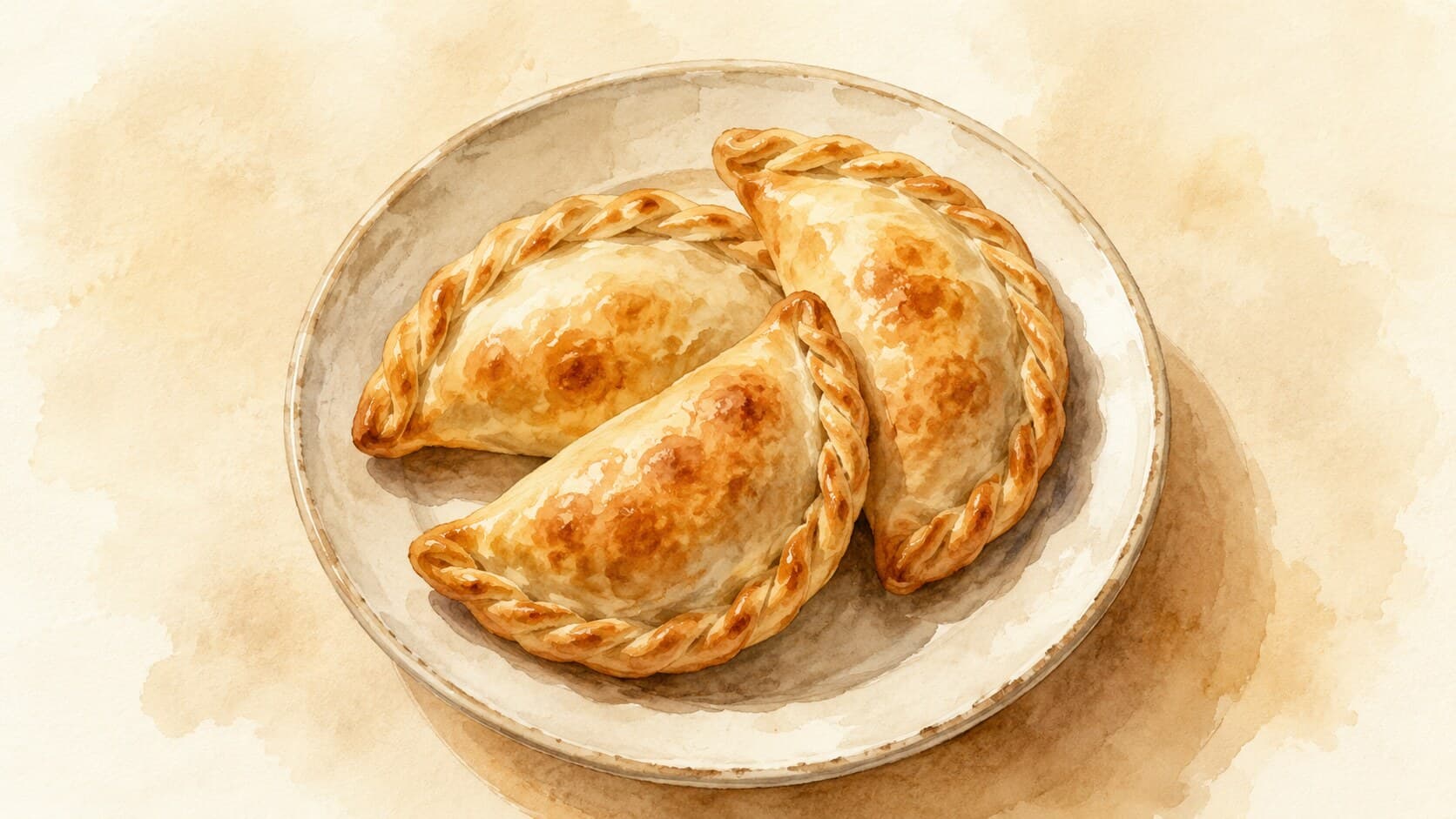
Ingredients
- 500 g ground beef
- 1 medium onion, finely chopped
- 1 red bell pepper, finely chopped
- 2 cloves garlic, minced
- 2 tbsp olive oil
- 1 tsp paprika
- 1 tsp cumin
- Salt to taste
- Pepper to taste
- 12 empanada discs (store-bought or homemade)
- 1 egg, beaten (for egg wash)
Steps
In a skillet, heat the olive oil over medium heat. Add the onion and bell pepper, sauté until softened (about 5-7 minutes).
Add the minced garlic and ground beef, cooking until the beef is browned (about 8-10 minutes). Season with paprika, cumin, salt, and pepper.
Remove the filling from heat and let it cool for about 10 minutes. This prevents the pastry from becoming soggy.
Preheat your oven to 200°C (400°F) if baking, or heat oil in a deep fryer to 180°C (350°F) if frying.
Place a tablespoon of the beef filling on each empanada disc, then fold over to create a half-moon shape. Seal edges by pressing down with your fingers and create a twist (repulgue) for a decorative touch.
Brush the empanadas with the beaten egg for a glossy finish. Place them on a baking sheet lined with parchment paper.
Bake for 15-20 minutes or until golden brown, or fry for about 5 minutes until crispy and golden.
Why this works
This recipe uses hand-chopped beef, which retains moisture and texture better than ground beef. Sealing the empanadas correctly is crucial; if the edges break during cooking, the filling may leak out. Ensure the dough is not too thick when sealing, and use the egg wash to adhere the edges. If the dough is too dry, add a bit of water to the edges before sealing for a tight closure. The spices in the filling enhance the beef's flavor, while baking or frying results in a crispy exterior that contrasts with the tender filling.
Common mistakes
Filling the discs while the meat is still warm.
Target: Filling cooled to room temperature or below before it touches the dough.
Why it matters: Warm filling melts the fat in the pastry and releases steam against the inside of the disc, so the dough goes slack and tears, and the sealed edge weeps open in the oven. The recipe's ten-minute cool is the minimum; cold from the fridge is even safer.
What to do: Spread the cooked filling on a plate to cool fast, and only assemble once it is no longer giving off heat.
Overfilling, then forcing the edge shut.
Target: About one tablespoon per disc, with a clear dry rim of dough left bare for sealing.
Why it matters: An overstuffed empanada cannot close cleanly — filling smears into the seam, the repulgue (the twisted, pleated edge that locks an empanada shut) won't grip, and the seam splits under heat. A modest amount is what lets the pastry actually seal.
What to do: Resist adding "just a bit more." Keep the rim clean; if any filling lands on it, wipe it before folding.
A loose or dry seal.
Target: Edges pressed firmly and crimped, with a light brush of water on the rim if the dough feels dry.
Why it matters: Empanada dough seals by pressure and a little moisture, not by the egg wash — the egg is only for browning the top. A dry, barely-pinched edge springs apart as steam builds inside.
What to do: Dampen the rim if needed, press out trapped air, then fold and crimp or roll the repulgue so the two layers truly bond.
Pulling them out while the beef is still pink.
Target: Beef cooked through to 71°C / 160°F before it ever goes inside the pastry — no pink, juices clear.
Why it matters: The filling is fully enclosed, so the oven mainly crisps the crust rather than cooking the centre. Ground or finely chopped beef must reach a safe temperature in the pan first, because the brief bake won't reliably finish it.
What to do: Brown and cook the beef completely while making the filling; treat the bake as setting the pastry, not cooking the meat.
What to look for
- The cooked filling before assembly: moist but not wet, holding together when pushed with a spoon, no liquid pooling. A puddle of grease or juice will steam the dough; if there's loose liquid, simmer it off first.
- A disc ready to fold: pliable and cool, with a clean dry rim. Cold, stiff dough cracks at the fold; a greasy rim won't seal.
- A well-sealed edge: the repulgue is tight and even, the two layers pressed into one with no gap. Hold it up — nothing should shift or leak at the seam.
- Done in the oven: deep golden and glossy on top, with the seam still closed and dry. A burst seam or a pale crust means it came out too early; even browning is the cue.
A note on history
The word empanada comes from the Spanish verb empanar, "to wrap or coat in bread or dough," and the dish is usually traced to Galicia in northwest Spain, where its ancestor was a large double-crusted pie cut into portions (Britannica: empanada; Wikipedia: Empanada). The earliest known printed reference appears in a Spanish cookbook of the early sixteenth century, and Spanish settlers carried the form to the Americas, where it shrank to the hand-sized pastry we know (Wikipedia: Empanada). In Argentina the empanada became a regional signature, with nearly every province claiming its own filling and fold (Britannica: empanada).
Get the essays in your inbox — free
Weekly notes on flavor, fermentation, and food history — the writing behind the Atlas of Flavor. No spam; unsubscribe anytime.