
Xinjiang Lamb Skewers (Chuan'r)
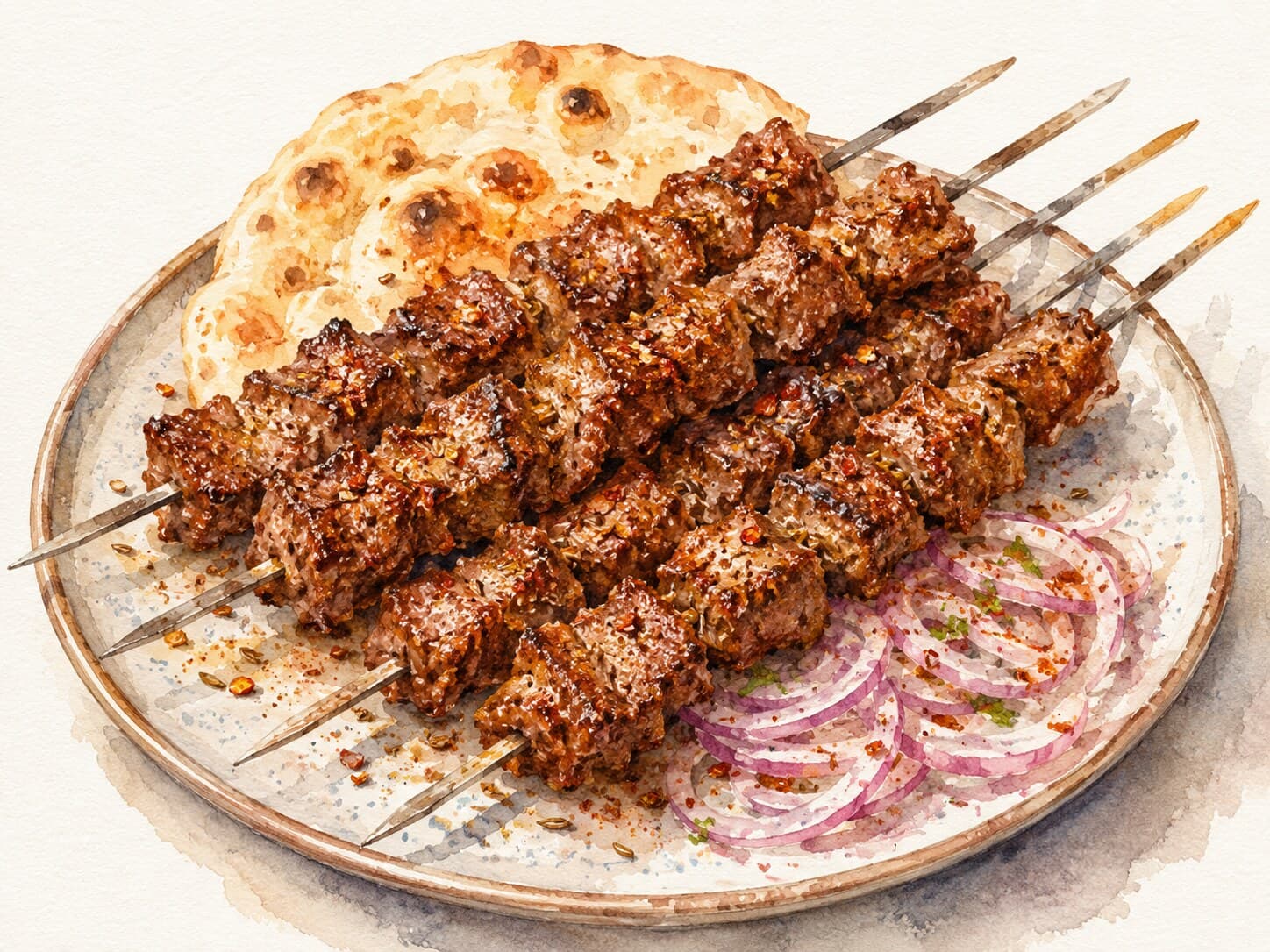
Savor the smoky flavors of Xinjiang Lamb Skewers, featuring tender lamb threaded with luscious fat for a self-basting delight.
Contents (5 sections)▾
Ingredients
- 800 g lamb shoulder, cubed
- 200 g lamb fat, cubed
- 2 tbsp ground cumin
- 1 tbsp chili powder
- 1 tsp salt
- 4 skewers, soaked in water
Steps
1. Pre-soak skewers in water for at least 30 minutes to prevent burning on the grill. This ensures they hold the meat without catching fire.
2. Thread the lamb cubes and fat alternately onto the skewers, ensuring that each skewer has a good balance of meat and fat. The fat will help baste the meat as it grills.
3. Preheat your grill to high heat (about 250°C or 480°F). A hot grill is crucial for achieving a nice char.
4. Grill the skewers for 10-15 minutes, turning occasionally until the lamb is cooked to your liking and has a nice char. This allows the fat to melt and baste the meat.
5. In the last few minutes, dust the skewers with ground cumin, chili powder, and salt to enhance the flavors. This will create a fragrant crust as it toasts on the grill.
6. Remove from the grill and let rest for a few minutes before serving. This lets the skewers come off their peak heat before you bite in.
Why this works
The genius of Xinjiang Lamb Skewers lies in the technique of alternating lamb with cubes of fat. As the skewers grill over high heat, the fat renders and basts the meat, keeping it moist and flavorful. Cumin and chili powder add aromatic layers to the dish, creating a signature flavor that defines Xinjiang street food. A hot grill is essential; if the temperature is too low, the fat won't render properly, resulting in dry meat. If you find the skewers are not charring well, increase the heat and ensure they are not overcrowded on the grill. This technique allows the skewers to develop a beautiful crust, ensuring a delightful bite every time.
Common mistakes
- Skipping the fat cubes between meat.
- Target: One cube of lamb fat for every 2-3 cubes of lean meat.
- Why it matters: Lean lamb dries out fast over coals; the rendering fat (the way solid fat melts and releases its juices in the heat) is what self-bastes the skewer and creates the signature sizzle.
- What to do: Reserve the fat cap when you trim the shoulder, or ask your butcher for extra lamb fat to cube alongside the meat.
- Grilling over a weak fire.
- Target: Coals glowing red-orange, grate hot enough that fat drips and sizzles instantly.
- Why it matters: A cool grill steams the lamb in its own fat instead of charring it, so the crust never forms and the smoke note never develops.
- What to do: Wait until the coals are ashed-over and intense, work directly above them, and feed the fire as it dies.
- Dusting the spice on too early.
- Target: Cumin, chili, and salt added in the last 2-3 minutes of grilling.
- Why it matters: Ground spices added at the start burn into bitterness before the lamb cooks through.
- What to do: Build the char first, then dust the spices on each side and let them toast for under a minute per face.
- Cubing the lamb too small or too large.
- Target: 2 cm cubes, cooked through, opaque to the center with a clear crust.
- Why it matters: Tiny cubes dry out before charring, while large ones char outside and stay underdone inside; small-cube lamb is meant to be eaten cooked through, not pink.
- What to do: Stick to ~2 cm cubes, turn often, and pull when the lamb is uniformly opaque with a deep colour outside.
What to look for
- Fat cubes turning translucent and dripping onto the coals with a hiss.
- Edges of each cube darkened to mahogany with crisp, lacquered corners.
- A toasted-cumin perfume rising over the smoke.
- Skewers heavy in the hand from rendered juices, not light and shrunken.
A note on history
Lamb skewers (yangrou chuan'r 羊肉串 — cubed lamb threaded on sticks and grilled over charcoal) are most strongly associated with the Uyghur and Hui Muslim communities of Xinjiang and are part of a wider tradition of skewer cooking carried along the Silk Road from Central Asia. The character 串 itself visually echoes meat threaded onto a stick, and stone carvings of skewered meat have been found in tombs in present-day Shandong dating to the late Eastern Han (25-220 CE), so the technique has deep roots in China. The modern street-food form began spreading east from Xinjiang during the economic reforms of the 1980s, when Uyghur vendors set up grills in cities like Beijing — which is how cumin-scented lamb skewers became, today, one of China's most universally loved street snacks.
Get the essays in your inbox — free
Weekly notes on flavor, fermentation, and food history — the writing behind the Atlas of Flavor. No spam; unsubscribe anytime.