
Da Pan Ji (Big Plate Chicken)
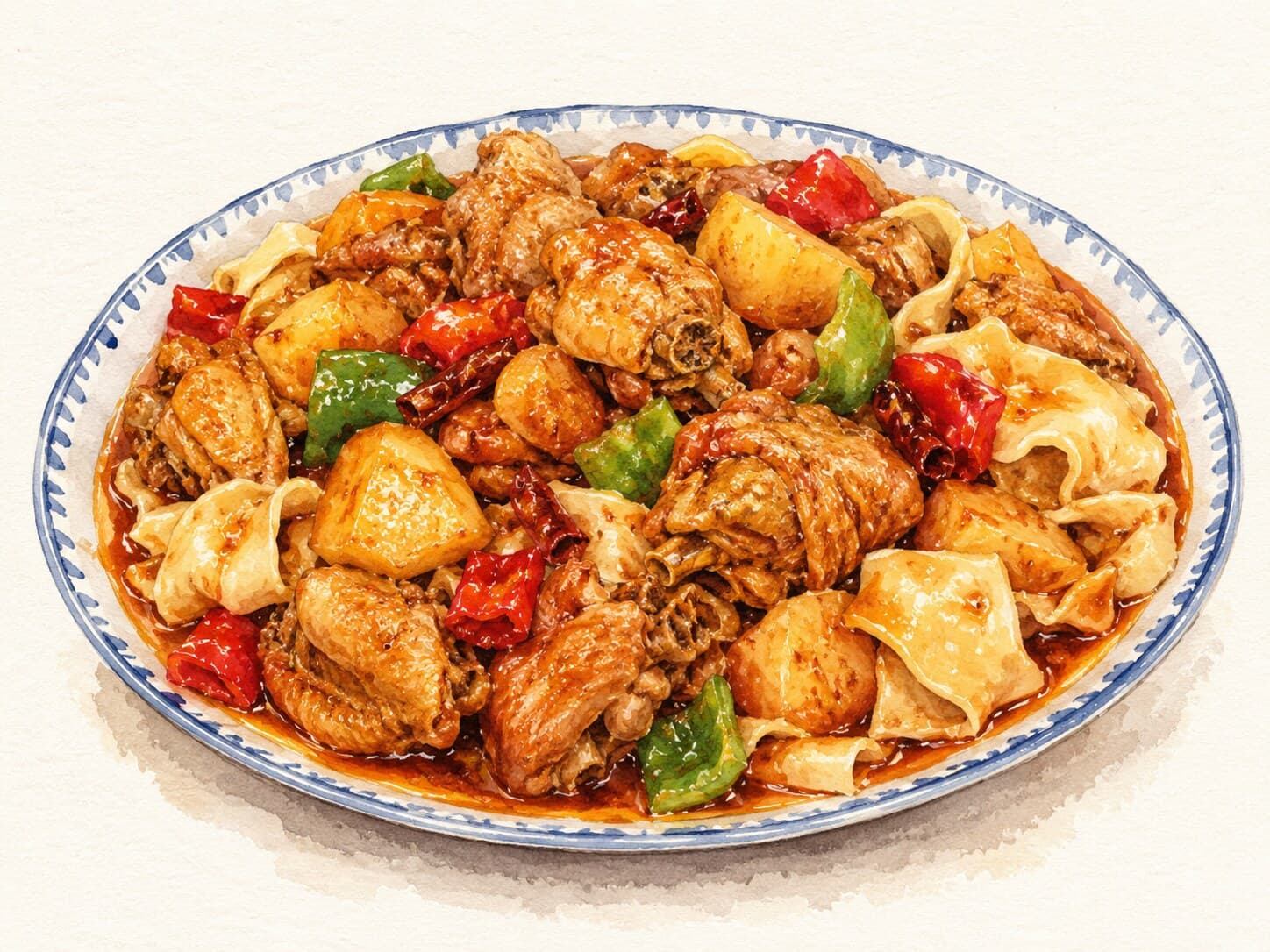
Da Pan Ji is a hearty dish featuring braised chicken and potatoes, served with wide hand-pulled noodles soaking in a rich sauce.
Contents (5 sections)▾
Ingredients
- 1 kg chicken, cut into pieces
- 500 g potatoes, diced
- 2 bell peppers, sliced
- 4 cloves garlic, minced
- 1 onion, chopped
- 2 tbsp ginger, minced
- 3 tbsp vegetable oil
- 2 tbsp soy sauce
- 1 tbsp chili paste
- 2 tsp cumin seeds
- 2 tsp coriander seeds
- 1 tsp black peppercorns
- 1 tsp Sichuan peppercorns
- 1 tbsp salt, or to taste
- 800 ml water
- 300 g wide noodles
- fresh cilantro, for garnish
Steps
In a large pot, heat the vegetable oil over medium heat. Add the cumin, coriander, black peppercorns, and Sichuan peppercorns, cooking for 1-2 minutes until fragrant.
Add the chopped onion, garlic, and ginger to the pot, stirring for another 3-4 minutes until the onion is translucent.
Increase the heat to medium-high and add the chicken pieces. Brown the chicken on all sides for about 5-7 minutes.
Stir in the diced potatoes and sliced bell peppers, followed by the soy sauce, chili paste, salt, and water. Bring to a boil, then reduce heat to low.
Cover and let it simmer for 20 minutes, stirring occasionally until the chicken is cooked through and the potatoes are tender.
While the chicken cooks, prepare the wide noodles according to package instructions. Drain and set aside.
Once the chicken and potatoes are ready, gently lay the cooked noodles into the pot, allowing them to soak in the sauce for about 2 minutes.
Serve the Da Pan Ji on a large plate, garnished with fresh cilantro.
Why this works
The technique of braising the chicken with whole spices and vegetables allows for deep flavor development, creating a rich and aromatic dish. The slow cooking method ensures that the chicken becomes tender, while the potatoes absorb the spices, resulting in a comforting meal. The final step of adding the wide noodles to the pot is crucial; it allows the noodles to soak up the flavorful sauce, turning them from a simple side into an integral part of the dish. If the sauce seems too thick, simply add a little more water to loosen it, ensuring all components remain moist and flavorful. This communal 'big plate' style enhances the dining experience and encourages sharing, reflecting the essence of Xinjiang's culinary culture, where meals are often enjoyed together.
Common mistakes
- Skipping the whole-spice toast.
- Target: 1-2 minutes in hot oil, until the cumin and coriander turn fragrant and the peppercorns sizzle.
- Why it matters: Untoasted whole spices stay flat, and the braise tastes muddy rather than aromatic.
- What to do: Add the spices to oil that already shimmers, swirl, and pull off the heat the moment they smell roasty.
- Crowding the pot when browning the chicken.
- Target: Bone-in pieces in a single layer with space between, 5-7 minutes total.
- Why it matters: Stacked chicken steams instead of browning, so the braise loses the deep Maillard (heat-driven browning that builds savory color and aroma) layer that defines the dish.
- What to do: Brown in two batches if your pot is small; only combine once each piece has color on the skin side.
- Pulling the chicken too early.
- Target: Chicken cooked through to 74°C / 165°F internal at the bone, with potatoes fork-tender.
- Why it matters: Bone-in dark meat needs time both for food safety and to release the gelatin that thickens the sauce.
- What to do: Simmer covered for the full 20 minutes (longer for larger pieces), then check at the thigh joint before adding the noodles.
- Adding the noodles too long before serving.
- Target: 2 minutes in the sauce, just to coat.
- Why it matters: Wide belt noodles bloat fast and turn gummy if they sit, swallowing all the sauce.
- What to do: Boil the noodles separately, drop them in only when the table is set, and serve at once.
What to look for
- A glossy, brick-red sauce clinging to the chicken and potatoes.
- Bell peppers softened but still holding shape, with bright color intact.
- Cumin and Sichuan-pepper aroma lifting off the pot when the lid comes off.
- Wide noodles slicked with sauce, not swimming or sticking in a clump.
A note on history
Dapanji (大盘鸡, literally "big plate chicken" — Xinjiang's family-style braised chicken with potatoes and wide noodles) is generally traced to Shawan County in northern Xinjiang in the late 1980s, where it grew up along the Urumqi-Ili highway as a hearty truck-stop dish for long-distance drivers. The most commonly told origin credits a Han-Chinese migrant cook who folded Sichuan-style chili and peppercorn into a local chicken-and-potato braise; the brand-name registration in Shawan's Xinghua village in 1992 helped spread the dish nationally. Hand-pulled belt noodles, dropped in at the end, reflect the Uyghur noodle tradition that meets Han cooking on this Silk Road route.
Get the essays in your inbox — free
Weekly notes on flavor, fermentation, and food history — the writing behind the Atlas of Flavor. No spam; unsubscribe anytime.